









Weight compensation for alternative powertrains
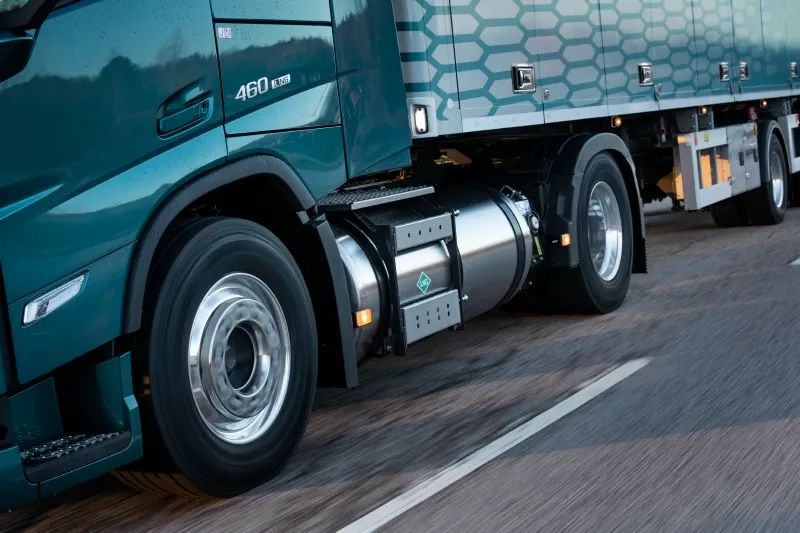
Alternative powertrains are cleaner, but often heavier than conventional diesel trucks. To avoid reducing payload, many trucks with an alternative powertrain are allowed to compensate for the extra weight. What does this rule entail, and in which countries is it in force? And which types of truck does it apply to? Find out more here.
The EU Directive 96/53 sets the maximum weights for trucks in international transport. Many European countries also apply this provision to domestic transport. For cross-border transport, the directive allows a higher maximum weight for vehicles running on alternative fuels such as LNG, and for electric trucks. This compensation scheme ensures that choosing a more sustainable option does not come at the expense of payload.
Which types of vehicle does the compensation scheme apply to?
The scheme now applies to tractor units and rigid trucks, as well as vehicle combinations. The maximum authorised weight (GCW) of trucks or combinations running on alternative fuels may be increased by up to 1 tonne, from 40 to 41 tonnes. Trucks that are entirely zero-emission, for example those with an electric powertrain, may have their maximum weight increased by up to 2 tonnes. However, legal axle loads must never be exceeded, and the scheme applies only to cross-border transport unless it has also been incorporated into the legislation of the country concerned.
Trucks running on an alternative fuel and consequently heavier than a conventional diesel truck are eligible for the compensation scheme. These may include trucks running on LNG, CNG, HVO, biodiesel, DME and other fuels.
In addition, vehicles that are electrically powered are allowed a higher maximum weight of up to 2,000 kg. Trucks running on hydrogen that are heavier than their diesel equivalents are also expected to qualify for similar compensation.
How do I find out the exact additional weight allowed for my vehicles?
The exact additional weight depends on the vehicle and is stated in the official documentation supplied by the manufacturer. It is shown, for example, on the vehicle's Certificate of Conformity (CoC) and on its type plate.
How can I qualify for this compensation scheme?
Once the additional weight is stated on the CoC and type plate, it can be used. In practice, however, many transport companies and their customers are not yet aware of this.
Which countries apply this weight compensation scheme?
The weight compensation scheme for vehicles running on alternative fuels or powered electrically is not yet in force for domestic transport in every country. Many countries are still working to incorporate the provisions into their vehicle legislation. The directive does, however, already apply to cross-border transport.
What are the rules in the Benelux?
The maximum authorised weight in the Benelux has long been set at 44 tonnes. This differs from the EU, where the maximum weight for cross-border transport is 40 tonnes. The Benelux also plans to increase the maximum weight, but it is not yet known when the new provisions will come into force. Once the directive has been incorporated into legislation, vehicles running on an alternative fuel will be allowed a maximum weight of 45 tonnes within the Benelux, while electrically powered trucks will be allowed a maximum combination weight of 46 tonnes. As under the European scheme, the increase in maximum weight depends on the additional weight caused by the alternative fuel or electric powertrain.
Schenk Tanktransport also uses the European compensation scheme for its LNG trucks on cross-border journeys. Its Volvo FH LNG trucks can benefit from a weight allowance of up to 700 kg.
Question about this story? Ask your question
Keep following this
Get an email when a new story is published. No account needed.
- SubjectBouwMat







