









UMS aims to drive the transition forward from its new factory in Arnhem
Text Kees Beijer Beeld UMS, ART-E
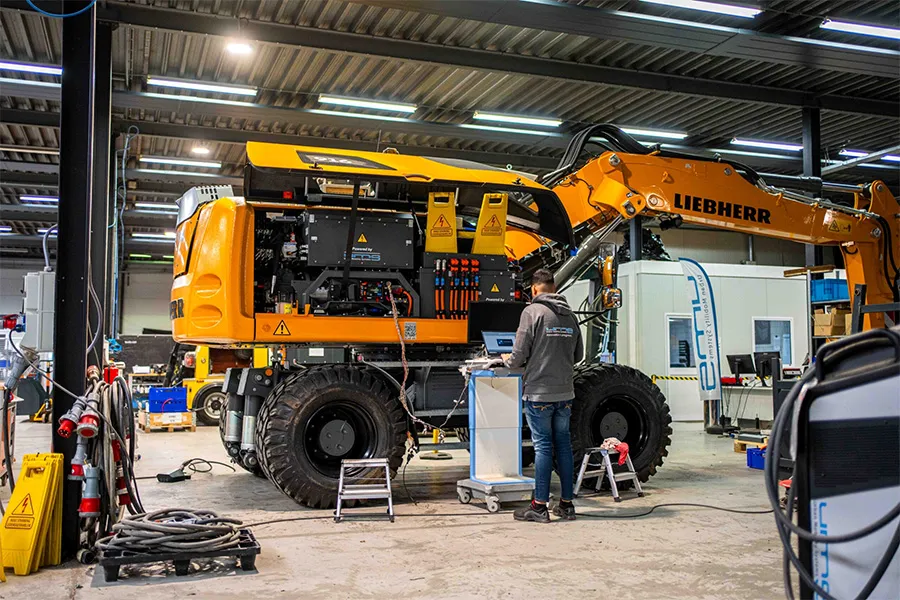
Exciting times lie ahead for Urban Mobility Systems of Oss. Its new factory in Arnhem will be completed in August, and the engineering company is moving there to take the next step in the energy transition. It is set to produce around 3,000 kits a year. The organisation, which currently has around 70 employees, is preparing to double its workforce.

With plenty still to arrange before the move, Lars Kool strides briskly around his company. Along the way, he exchanges a few remarks about the European Football Championship or shares a joke with the postman. Amid all the hustle and bustle, the boss is briefly back at base. The day before, he was in Paris signing a contract to build military specials for a French company, and the following day he was due to fly to America, where he had been invited by the government to speak at a symposium in Washington DC about his main areas of focus: quality and safety. You can tell he is a busy man. Passionate and with a clear vision, he commands admiration in the construction sector, despite the occasional knowing laugh, for driving the transition forward. His outspoken comments about ‘cowboys in the sector’ have not gone down well, but Lars points out that many things have changed for the better since then.
Lars is still not afraid to voice criticism, because the electrification of construction plant matters deeply to him. “The Netherlands is surely the best company in the world? With excellent infrastructure, high-quality healthcare, education for everyone and good social security. People abroad look at that with great admiration. At the same time, there is outrage that such a smart and prosperous country, serving as a testbed for new technological developments, is now being overtaken on all sides when it comes to electrifying its plant fleet. I have said before that subsidies are the death knell of the energy transition. We saw it with hybrid and electric cars, and now we are seeing it with the purchase of zero-emission construction machinery. The moment things get a little tougher in the sector, the brakes are slammed on and sales figures fall. Investing in zero-emission technology should instead be an incentive to build more.”
Looking abroad
Lars sees the transition accelerating all around us, while the Netherlands is increasingly reaching an impasse. One logical consequence is that Urban Mobility Systems (UMS) is turning its attention firmly towards overseas markets. The UK, North America, Australia and countries like them. That does not mean he is ignoring the Netherlands, far from it, but the big volumes are sold elsewhere. “I believe that business owners should be open to collaboration, because genuine innovation is a team effort. In the Netherlands, everyone seems busy trying to outdo one another. There is not much movement in the market at the moment. The path to a sustainable future will only be taken again when the Netherlands opts for a fair distribution of the subsidy pot, for example by rewarding the use of zero-emission plant on construction projects rather than its purchase. Hopefully that realisation comes soon, otherwise all the machines built here will continue to go to Norway, Sweden or Denmark.”
The last thing Lars wants is to give up. So the entrepreneur keeps pushing ahead. The new production site in Arnhem is set to add another chapter to the success story. The former car mechanic and electrical engineer began his mission to tackle vehicle emissions through electrification eighteen years ago. In 2016, he decided to strike out on his own, and Urban Mobility Systems was founded. Within a few months, the company had outgrown its premises and moved to its current site on Galliërsweg in Oss. From three employees at the start, UMS has grown to 70, and the new factory, where battery systems and electric drive kits for the European market will be manufactured, is expected to drive another growth spurt, taking the workforce to 140 to 150. A giant leap, then, that should put the clean-tech engineering company even more firmly on the international map.
Seeking collaboration
The Abu Dhabi facility serves as a production hub for the rest of the world. UMS is set to become the largest producer of battery technology in both regions, with a combined workforce of around 500 in due course. “That’s great, isn’t it?” he says enthusiastically. “But we are not focused on production alone. We will continue to seek collaboration with schools, industry organisations and businesses to help shape the transition to sustainability. We are still only at the beginning, and plenty of developments lie ahead. That is why it is important to keep investing in quality, safety and training. We train teachers at vocational colleges and technical universities, as well as people who work with electric machines or vehicles every day, such as operators, mechanics and inspection engineers. Raising awareness of the dangers of high-voltage electricity is essential. Ultimately, everything comes down to safety. If we are not careful, things could go horribly wrong.”
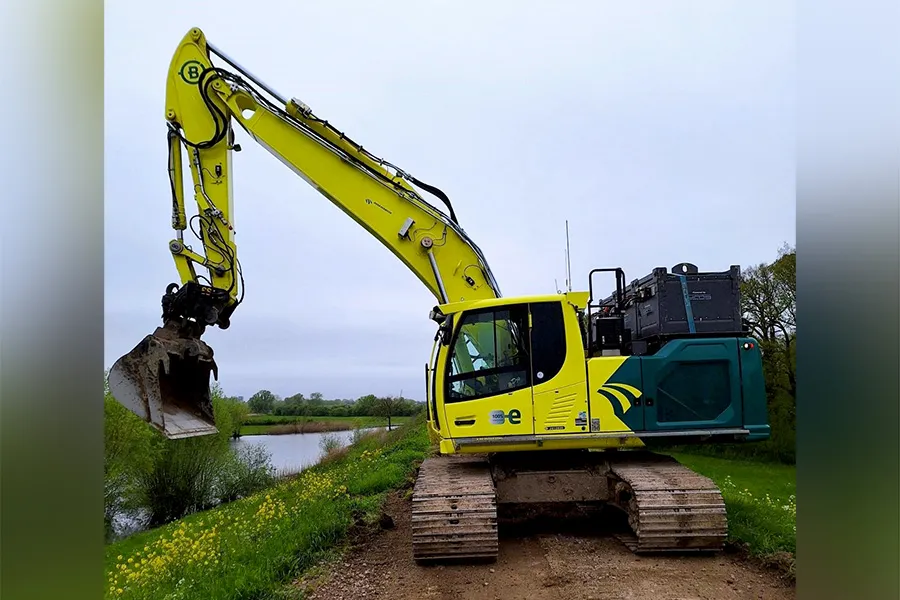
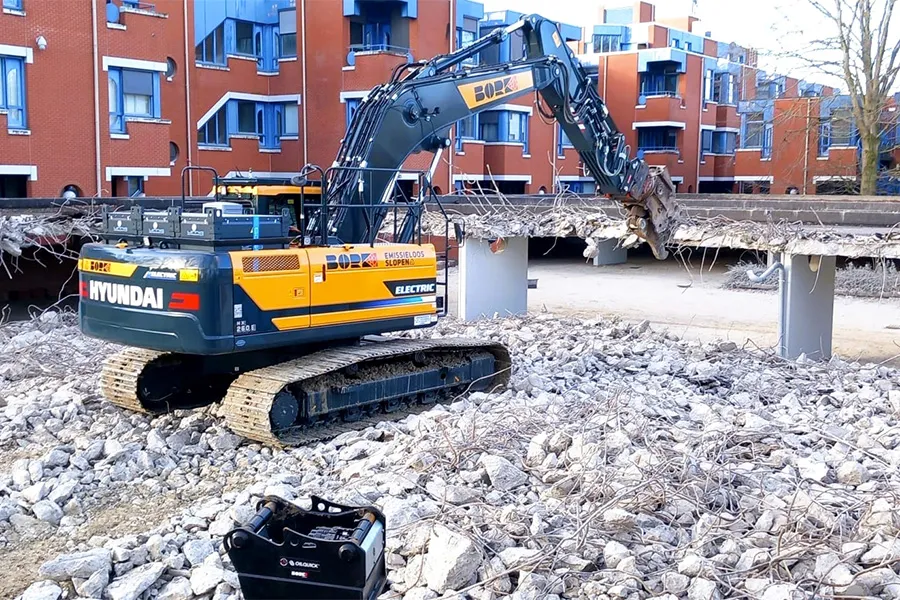
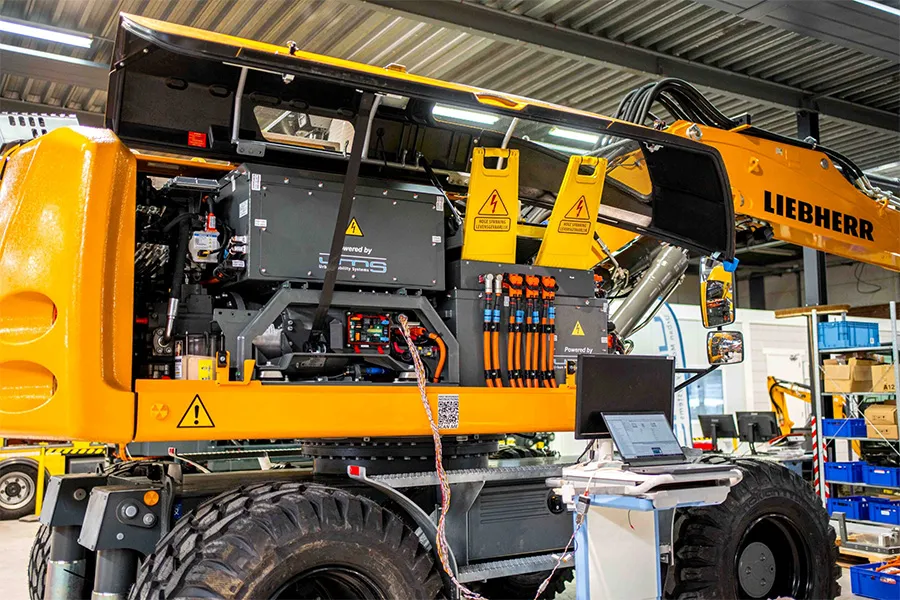
Lars is frustrated by attempts to keep fires involving electric plant out of the media, under the pretext that ‘things are going so well now’. “The fact that the onboard fire suppression system worked properly has so far prevented a disaster. Companies underestimated the charging infrastructure, and all kinds of cowboys are now piling into this market. They barely know what earthing is and ignore all the safety standards. Thankfully, machine manufacturers are now aware of the issue, although there is still room for improvement. UMS is the only OEM in the Netherlands producing medium and heavy construction machinery. Everything is done in close consultation with our partner and the manufacturer. The name Liebherr, Hyundai or Bobcat appears both on the quotations and on the machines themselves.”
EMISSION-FREE ASPHALT TRAIN ON THE WAY
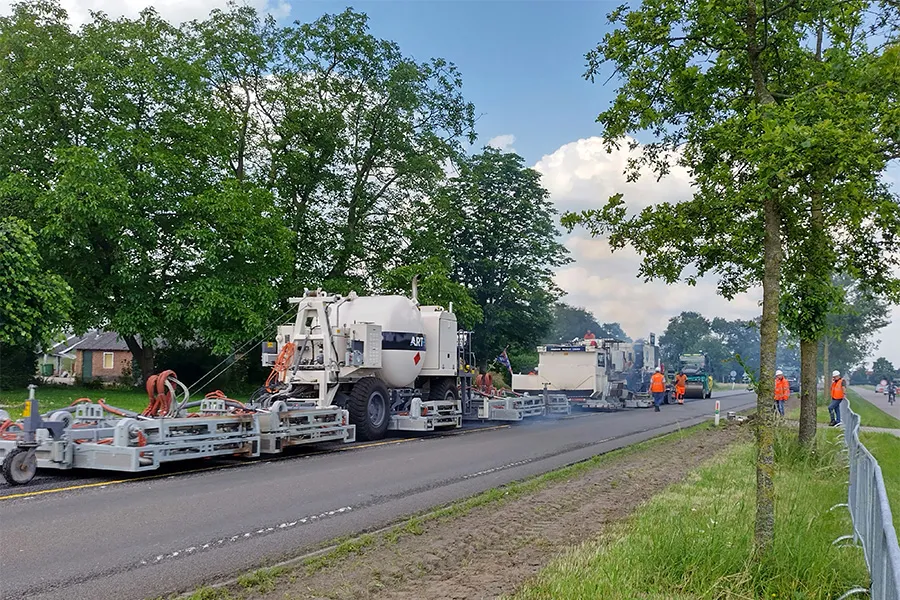
Urban Mobility Systems develops zero-emission construction machinery ranging from 1.9 to around 160 tonnes. As a partner of ART-E BV, it is contributing to the development of a zero-emission Asphalt Recycling Train, or ART-E for short. At the beginning of June, the long-awaited moment finally arrived. ART made its first runs in partnership with Rijkswaterstaat and Provincie Gelderland. And what a success! All those involved look back on a highly successful pilot, in which worn-out asphalt is made new again right before your eyes… The machine ‘eats’ old asphalt and spits new asphalt out onto the road. This makes road-surface maintenance much more sustainable. Rijkswaterstaat is testing the system with a view to using the ART-E on a large scale in future. The asphalt train operates almost 100% circularly and saves around 65% in CO2 emissions.
ART-E BV is a pioneering partnership established with an ambitious goal: to make the infrastructure sector more sustainable in line with the industry’s sustainability targets. The partners aim to do this by validating and implementing the Asphalt Recycling Train as a sustainable maintenance solution. “By joining forces, we aim to develop groundbreaking sustainable innovations and make them available to the market. We believe in the power of collaboration and openness. That is why we offer all market participants the opportunity to use ART in their projects. This allows us to learn and experiment together, and find out what works and what does not when it comes to sustainability measures.”
The concept is not entirely new, of course, as the Remix and Repave methods already existed 30 years ago. One major difference is that those techniques reused 70% of the milled asphalt, whereas the ART ensures 100% reuse. UMS is meanwhile working on the fully zero-emission ART-E, which uses hydrogen burners. “By making knowledge and experience widely accessible, we want to transform the infrastructure sector and help it move towards a more sustainable future. Innovate, Recycle, Create. This year is about completing the validation of the ART, a crucial milestone in the transition to a zero-emission infrastructure sector.”
Question about this story? Ask your question
Keep following this
Get an email when a new story is published. No account needed.
- SubjectBouwMat







