









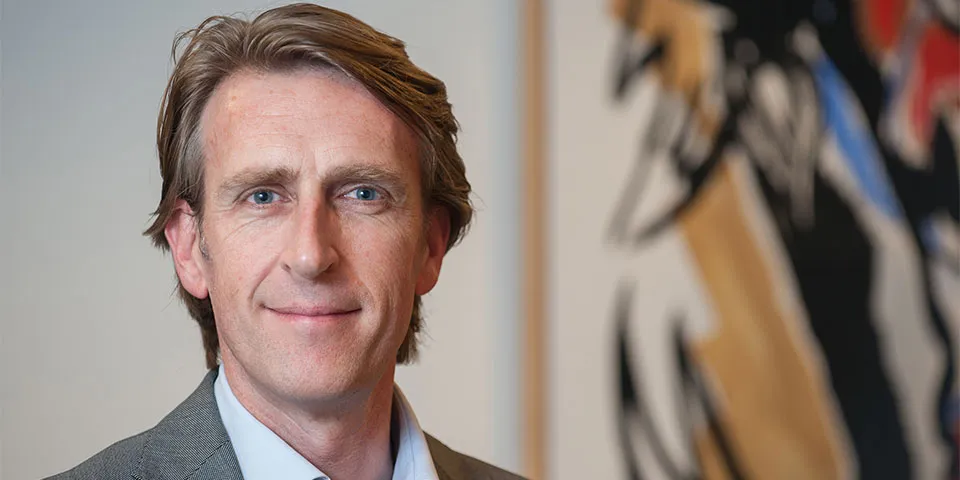
The Pen | Edwin Lokkerbol, Programme Manager, Safety in Construction
The word written and heard most often in 2020 is undoubtedly “corona”. The virus has literally turned the world upside down. The “new normal” is being drummed into us all like a mantra, and most people are following the RIVM guidelines to the letter. We have suddenly become aware of our own role and that of others in ensuring safety, both for ourselves and for those around us. The same applies in the construction industry, where the principle is: “Take good care of yourself first, then your colleagues, and only then get to work.” I cannot think of anyone who would disagree with that.
That is where the crux lies. The Covid-19 virus puts our own safety and that of our loved ones at risk. We therefore have a huge responsibility to deal with this properly. At work too! Good protocols have been developed in construction, and suddenly everyone is able and willing to do their part to work as safely as possible and return home in good health. But isn’t this something we have been advocating in construction for years? Efforts to improve safety for everyone have been under way for years. Often successfully, but sometimes progress is particularly difficult.
Now, because of corona, safety is suddenly under the microscope. Let’s learn from this! Clearly, we are perfectly capable of introducing protocols and agreeing rules of conduct that almost everyone observes. We are looking beyond our own immediate concerns. Critical questions are being asked, such as: “Can two people still sit in a van together?”, “How should we handle situations where we have to lift something together?” and “What is and isn’t acceptable in a site cabin?”
It would be good if this mindset continued in the workplace. Let’s take a close look at what we can learn from the way we are dealing with the situation now, and hold on to the good practices. It should be possible to maintain a critical eye after corona. We have now shown that we can do so. A construction site can give you energy, but it can just as easily cost you your life. Fundamentally, every construction site is a hostile environment: 18 to 20 people die in the construction sector each year. Construction needs to become safer, and we will have to do what is best in the circumstances. Analysis shows that many accidents could have been prevented. Safety, or danger, can sometimes come down to small, tangible things, such as a radio playing too loudly or an untidy construction site. Safety also depends on dialogue. The risk of dangerous situations increases as a construction site gets busier, time pressure sets in and the handover date approaches. We need to learn to take these factors into account.
Initiatives have now been launched to establish a standardised safety briefing. We will need to be stricter with ourselves and more critical of one another. The main question should no longer be “When will the project be finished?” but “When can we complete the project safely?” That alone can make all the difference. Safety is not a contract, nor simply a set of agreements. Employers also have a duty to do everything they can to enable safe working. Be transparent, share information and be willing to learn from one another.
To return to the coronavirus crisis and the measures it has prompted: on one construction project, an employee tested positive for coronavirus. However, no one else on site was infected. This was because everyone followed the protocol to the letter and took the guidelines for working safely together during the coronavirus crisis seriously. So it works, it can be done, is my conclusion.
Question about this story? Ask your question
Keep following this
Get an email when a new story is published. No account needed.
- SubjectBouwMat







