









Temporary pumping installations as Maas flow hits record lows
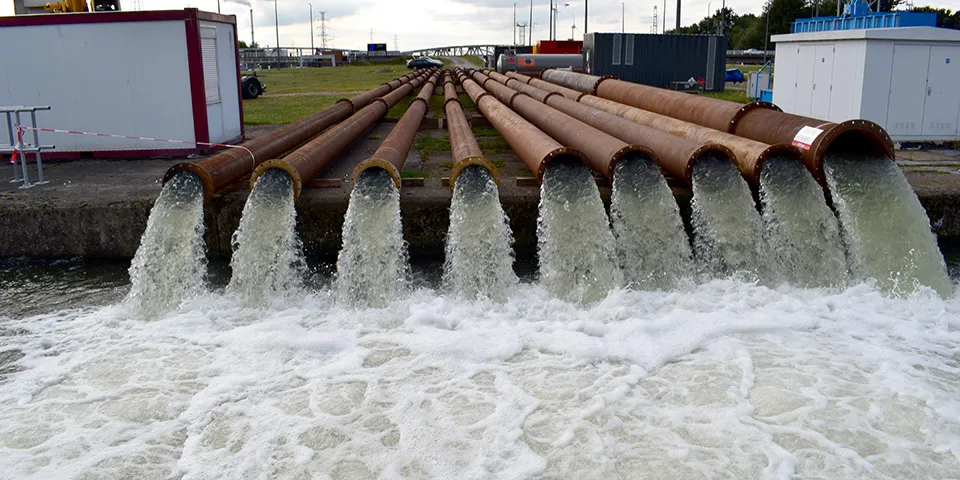
Persistent drought has caused flows in navigable waterways in the Netherlands and Flanders to fall steadily since spring. The rain showers of recent weeks have done little to change this: the Maas flow is still setting record lows. This is causing various problems, including for navigation. Rijkswaterstaat and De Vlaamse Waterweg have therefore joined forces to take action.
The Maas is a typical rain-fed river: depending on how much rain falls, particularly in the Ardennes and north-eastern France, its flow can be very low or very high. The average flow of water through the Maas is 250 m3/s, equivalent to 250,000 litres per second. Following the persistent drought of recent months, the flow of the Maas at Liège, where it branches off into the Albert Canal, is barely 35 m3/s. This has a huge impact, and not only on the navigability of the waterways. The water is also used to produce drinking water, generate energy, supply process water to industry, irrigate farmland and water nature reserves.
Three substantial emergency pumping installations
Given the intensive use of water across the Dutch and Flemish waterway networks, Rijkswaterstaat and De Vlaamse Waterweg have been taking preventive measures in close consultation for some time, to distribute the available water as effectively as possible and minimise draught restrictions. “One of these measures is installing emergency pumping systems to pump back the water lost when locks are operated,” says André van der Tuin of Eekels Pompen. “At the beginning of September, we installed substantial emergency pumping systems at three locations on the Albert Canal in a very short time. They continuously pump large volumes of water from the downstream to the upstream side. The pumping systems consist of large submersible pumps, steel pipework and their own power supplies. At two locations, each system pumps 5,000 m3/hour; at the other location, it pumps no less than 10,000 m3/hour. This was a rush job in every sense. On Friday, we received a call that was treated internally as an emergency, with the systems needing to be ‘up and running’ at very short notice. The emergency pumps will remain in operation until sufficient rain has fallen. We have also installed emergency pumps at various locations in the Netherlands, primarily to safeguard the supply of cooling water to industry.”
Have a business enquiry for Eekels Pompen? Get in touch
Companies in this story

Keep following this
Get an email when a new story is published. No account needed.
- SubjectBouwMat
- CompanyEekels Pompen







