









South African hardwood for Groningen canal
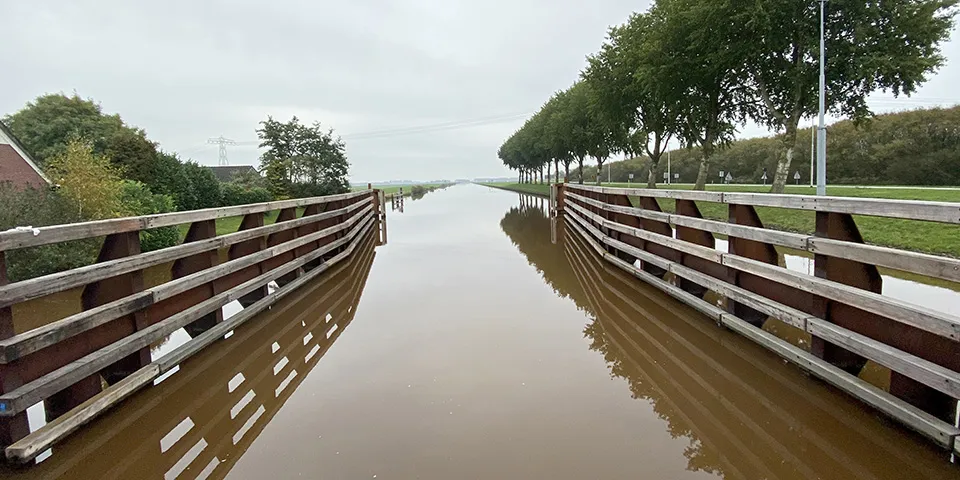
To enable larger vessels to navigate the A.G. Wildervanckkanaal and Winschoterdiep in the future, the Groningen canal is currently being upgraded. The fender systems at seven bridges over the canal are being enlarged. Hupkes Houthandel supplied around 285 m3 of rubbing beams, fully prepared and ready for installation, made from tropical African hardwood.
The A.G. Wildervanckkanaal was constructed as a shipping canal at the end of the 1950s. The canal is also being used increasingly by industry, thanks to its connection with Winschoterdiep, an important waterway in eastern Groningen. In response to the growing size of vessels, the province of Groningen decided to upgrade the canal. “This included modifying the fender systems at five bridges on Winschoterdiep and two bridges on the A.G. Wildervankkanaal,” says Harry Post of main contractor Beens Groep, based in Genemuiden, a water engineering company operating nationwide. “The bridge at Farmsum (Groningen Seaports) was also included in the project and now has new fender systems.”
Prefabricated
The fender systems protect bridges and vessels from damage. Post says: “We replaced the fender systems in phases. Work on the first bridge began in November 2018, and work on the fender system at the last bridge was completed on 1 October this year.” Beens Groep produced a bespoke design for each site, with the length and diameter of the steel tubular pile foundations varying. “After dismantling the existing fender systems, we installed new steel tubular piles. The steel framework for the fender systems was fully prefabricated in the workshop of Holland Metaal in IJsselmuiden, with projections added to support the wooden rubbing beams. On site, all that remained was to weld the framework to the two tubular piles.”
Azobé
The bottom two layers of rubbing beams were also fitted to the framework in the workshop. “This meant we did not have to carry out any work below the waterline on site,” says Post. “The six rows of wooden rubbing beams were made in different durability classes, ranging from D35 to D70. Hupkes took care of everything for us. The rubbing beams above and below the waterline are made from Azobé in strength class D70, as they are subject to the most wear. A different requirement applies above the waterline. During the preparatory phase, Hupkes put forward several options to ensure the best possible fit. The timber merchant also validated our drawings and calculations for the rubbing beams.”
Hupkes fully prepared the rubbing beams for each site. At five of the seven bridges, the fender systems are 19.40 metres long. The other two are angled and measure 19.20 metres plus a further 15 metres. The fender system at the bridge in Farmsum is 15 metres long. “Hupkes delivered all the beams neatly bundled, ready to install, complete with holes (7,000 in total), bevelled edges and, of course, cut to length. All in all, we look back on a very positive collaboration,” concludes Harry Post. The project’s success was also helped by Hupkes’ ability to supply the first deliveries at short notice from its own stock and sawmill.
Question about this story? Ask your question
Keep following this
Get an email when a new story is published. No account needed.
- SubjectBouwMat







