









Safety standards in construction
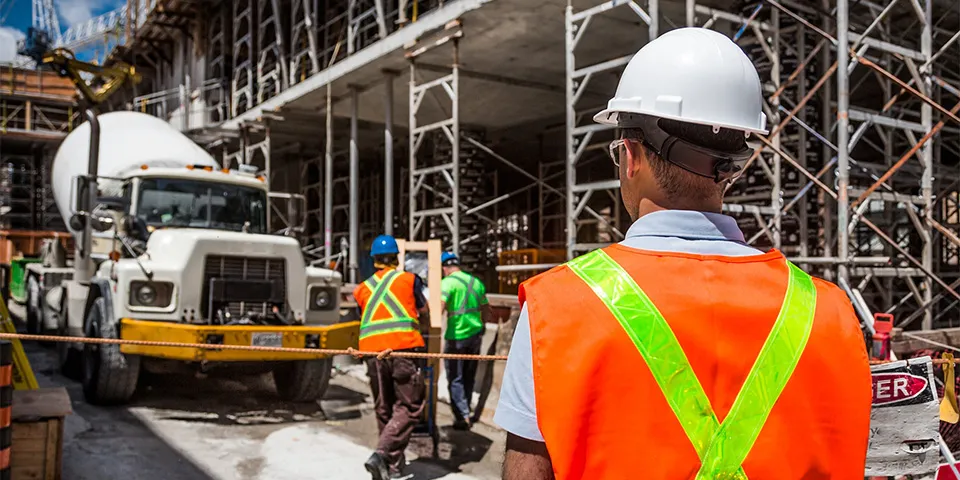
Physical strain is the leading cause of occupational illness in construction. A large proportion of accidents in the sector are caused by falls and trips. Another cause of accidents is working at height without adequate protection. Falls from height often result in serious injury or even death.
Occupational health and safety
Just over half of construction companies have a risk inventory and evaluation (RI&E), even though this is a legal requirement for all companies. However, many companies have not documented all the risks present. Almost half of construction companies have a written action plan, which is also a legal requirement for all companies. The most common occupational risks in construction are lifting, pushing, pulling and carrying. Awkward and/or static working postures are also common. Working at height is a very specific risk. Working with machinery and in confined spaces also poses a real risk to employees.
Occupational illness
The most frequently reported occupational illnesses in construction are hearing disorders and musculoskeletal disorders. Together, these account for 91% of all reported occupational illnesses.
Personal protective equipment
To work safely, individual employees may need personal protective equipment. Equipment designed to protect vital areas such as the head, eyes, ears, hands and feet can significantly reduce the risk of (permanent) injury. Fall protection must prevent falls from great heights.
There are three categories of personal protective equipment (PPE):
- Category I: protection against low risks, such as sunglasses, rainwear and basic gloves.
- Category II: protection against medium risks, such as safety glasses and a safety helmet.
- Category III: protection against high risks, such as a safety harness.
To ensure your employees are optimally protected, employers must purchase suitable protective equipment. At Bowork, you can be sure that the equipment complies with the Dutch Commodities Act Decree on Personal Protective Equipment. The safety requirements vary according to risk category.
Quality requirements
PPE may only be used if it meets certain quality requirements. It is important that PPE carries a CE marking and comes with instructions for use. The manufacturer must compile a technical file for the product and specify the level of protection that can be expected from the PPE. It goes without saying that the requirements are highest for Category III. The production of the protective equipment must be covered by a quality assurance system recognised by the European Community. Respiratory protective equipment is one example.
With the right equipment and good information, you can protect employees against many risks. Always choose certified protective equipment.
Question about this story? Ask your question
Keep following this
Get an email when a new story is published. No account needed.
- SubjectBouwMat







