









Safety standards for construction work boots
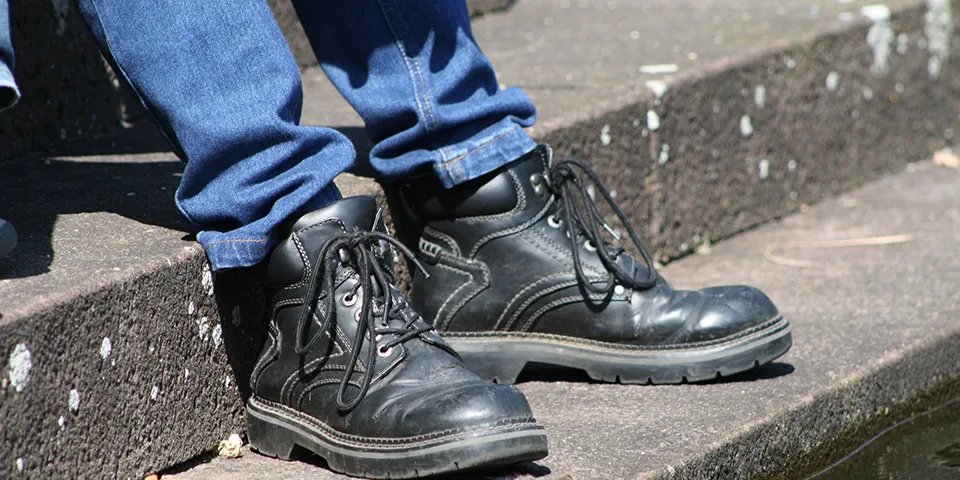
Many people in the Netherlands wear safety footwear. This is due to the large number of department stores and warehouses in the country. These businesses often use dangerous machines that move around the warehouse. They also handle large pallets full of products that could crush your foot. In this blog, you’ll read about the minimum requirements for good safety footwear that will keep you safe.
These minimum requirements are there to protect employees, even if they mean a higher price tag.
The requirements
The main purpose of safety footwear is, of course, to protect your feet. One of the European safety standards for safety footwear is a penetration-resistant sole. This protection ensures that no materials can penetrate the sole. This helps prevent you from stepping on a rusty nail, with all the unpleasant consequences that entails.
Once the soles of your feet are protected, it is also important to ensure that falling objects cannot penetrate your safety footwear. That is why, as another European safety requirement, safety footwear must have a protective toe cap. This prevents falling objects, such as large pallets, from crushing your foot.
Additional requirements
Although these requirements are not mandatory under European Union rules, they are often required in the Netherlands. This is partly because the Netherlands has stricter working conditions than other countries that are also members of the European Union. One recommended feature of safety footwear is an anti-slip sole. It helps prevent you from slipping on smooth surfaces. There are several ratings indicating the surfaces for which the footwear provides slip resistance. SRA applies only to ceramic floors that may be wet. SRB is intended for steel floors, where glycerol can make conditions challenging. SRC guarantees both SRA and SRB performance, providing slip resistance on the relevant surfaces.
Maintenance
Safety footwear is an essential part of your workwear and should therefore be well cared for. This prevents wear and tear outside the workplace. If your employer does not provide somewhere to store it, you should take it home with you. It is advisable to keep safety footwear dry. For example, you can use a hygrometer to keep track of the humidity in the room where you store your footwear.
Question about this story? Ask your question
Keep following this
Get an email when a new story is published. No account needed.
- SubjectBouwMat







