









Report: from test drive to production line
Text Roel van Gils Images DAF Trucks
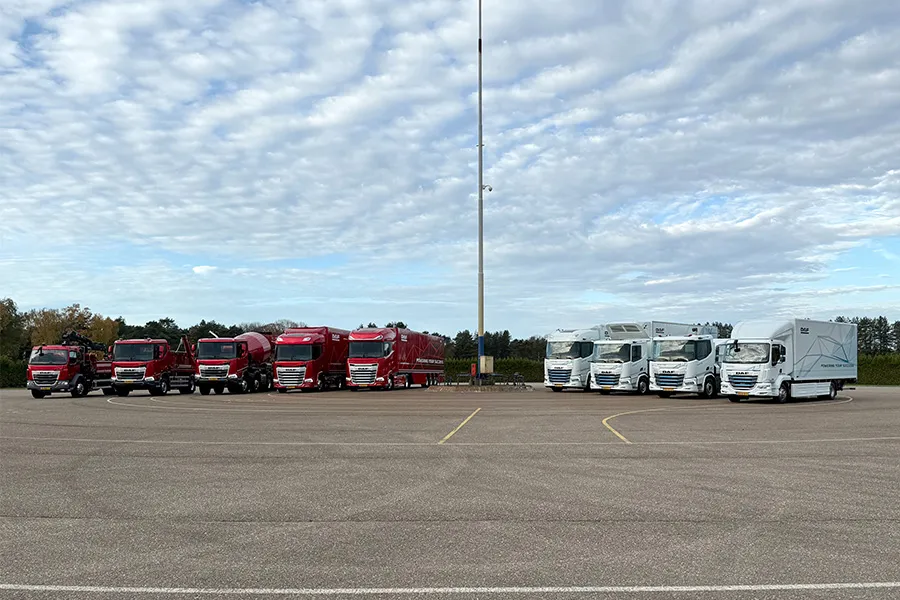
It is still early when we gather at the DAF Proefbaan in Sint-Oedenrode for a fully catered DAF Experience, an event DAF sales organisations typically invite their dealers and customers to. It promises to be a wonderful day: as well as getting to drive the latest trucks ourselves, both diesel and electric, we will also tour the factory and round off the day with a visit to the museum.
Our ‘experience’ begins on the site where every new truck racks up its first ‘years on the road’ in just a few months. As the test drivers greet us, another truck and trailer combination races past. The track simulates potholes, cobbles, bends and gradients, together amounting to the equivalent of a million kilometres. Brake systems are pushed to the limit here, as is the entire chassis. This is a place where no detail is left to chance. And today, we get to experience it for ourselves.
International Truck of the Year 2026
A wide range of the latest-generation trucks is at our disposal, including a selection of battery-electric trucks that we put through their paces in depth in the previous issue of GWW. It is only here on the test track, as we switch from a diesel truck into an identical model with electric drive, that the comfort of electric driving and the quality of the electric trucks really stand out. The quiet inside the cab is impressive, and the advanced powertrain, comprising two separate electric motors and a central, integrated three-speed transmission, works phenomenally well. Gear changes are imperceptible. DAF’s New Generation XD and XF Electric have recently been named International Truck of the Year 2026. The jury praised the trucks for their exceptional energy efficiency, refined and powerful powertrain, and advanced technical architecture.
More engines than trucks
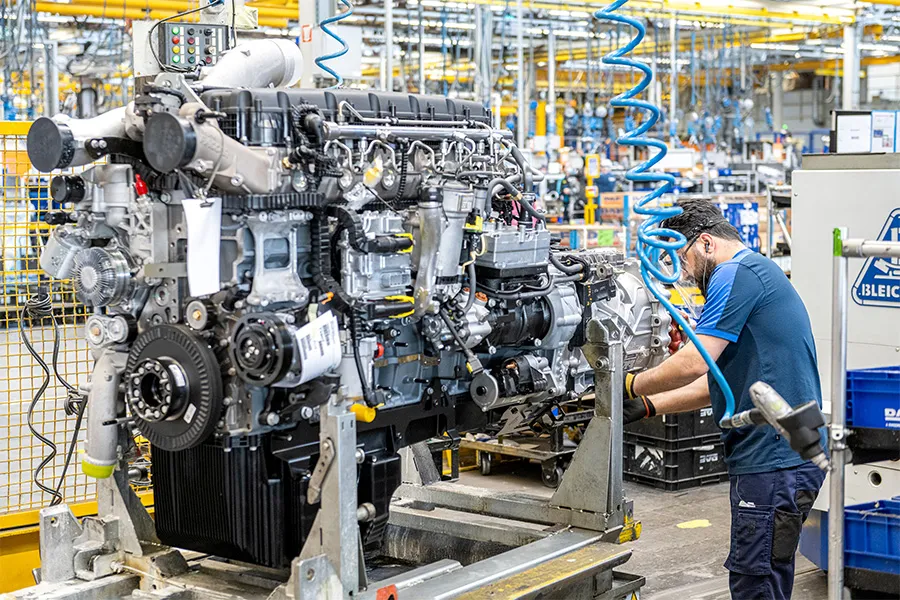
From the test track, we head for Eindhoven for a tour of the factory. This impressive complex dates back to 1950, but has been continuously modernised. The new engine plant opened in 2024, where PACCAR engines are built across three shifts. Notably, 10 to 15 per cent more engines are produced than trucks, as the engines are also used in buses, coaches and special-purpose vehicles.
20,000 components
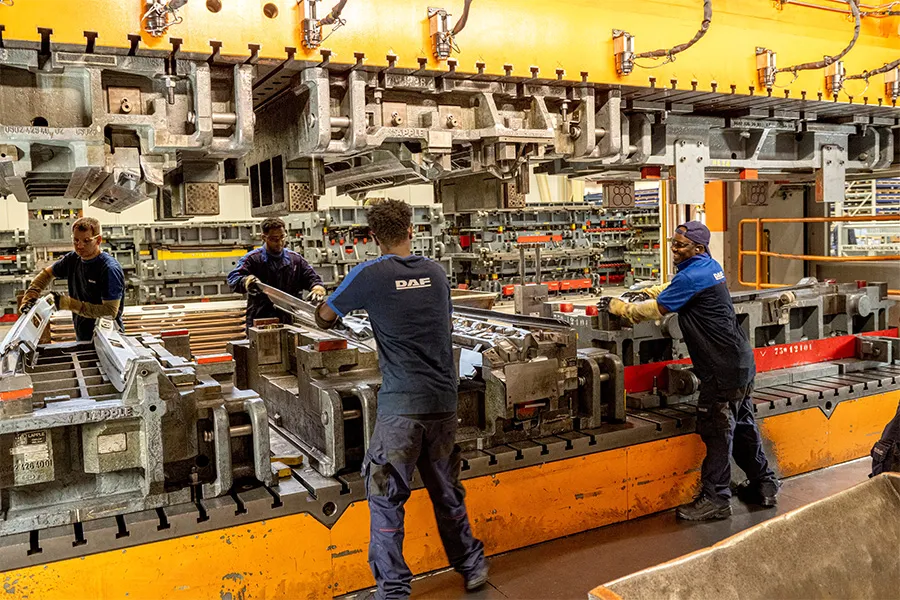
The tour continues through the sheet metal components plant, where 20,000 different parts are made. The latest press dominates the hall: 11 metres tall and weighing 680 tonnes, with a pressing force of 2,500 tonnes and foundations extending 20 metres into the ground. Four enormous dampers keep vibrations from affecting the surrounding area. We also see robots welding with sparkling arcs of light, alongside skilled workers who still finish small batches by hand. Exhaust pipes are sawn, bent and insulated, while bumpers are glued and spot-welded.
One line
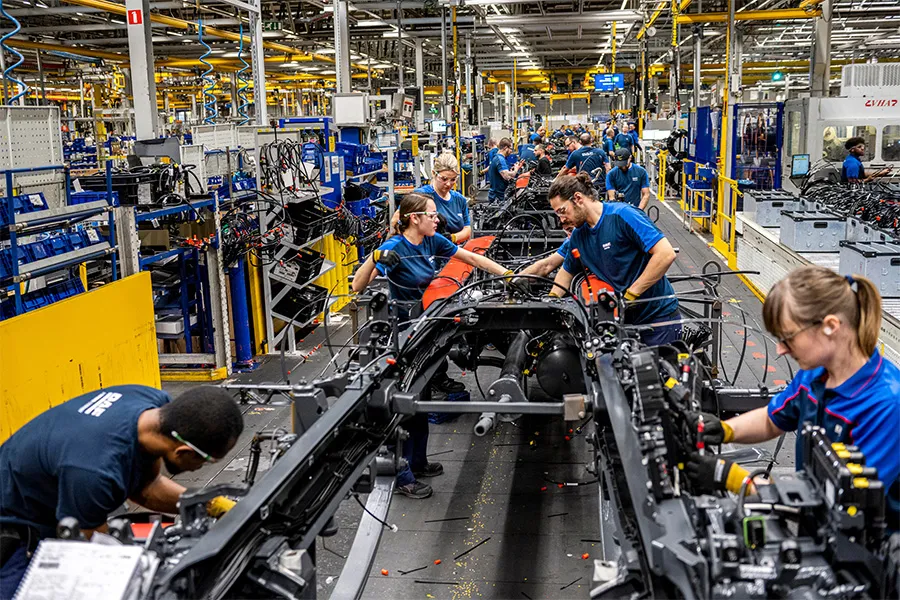
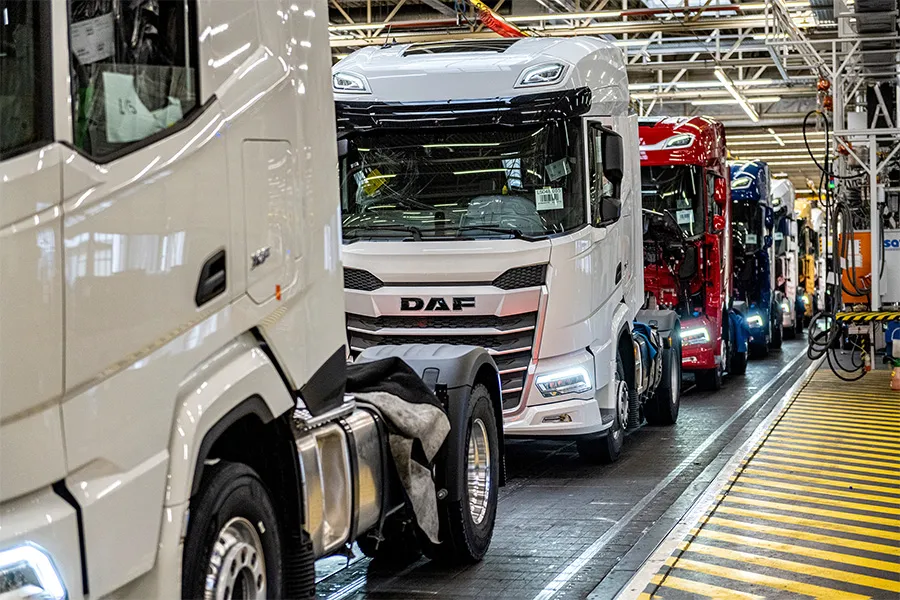
Diesel and electric trucks are built side by side on the assembly line. The electric versions bypass the diesel stages and are temporarily taken to a separate area for the installation of batteries and high-voltage components. They then return for final assembly. The ambition is clear: in future, everything should come together seamlessly on a single line.
In-house supermarket
The modular chassis, suitable for two, three or four axles and a range of drive options, is delivered completely flat. Axles, sourced from Westerloo in Belgium, where the cabs are also built, are fitted before the chassis is tilted for further assembly. Components arrive just in time from the in-house ‘supermarket’: every fifteen minutes, a supply train sets off towards the line. PACCAR’s lean methodology is evident everywhere.
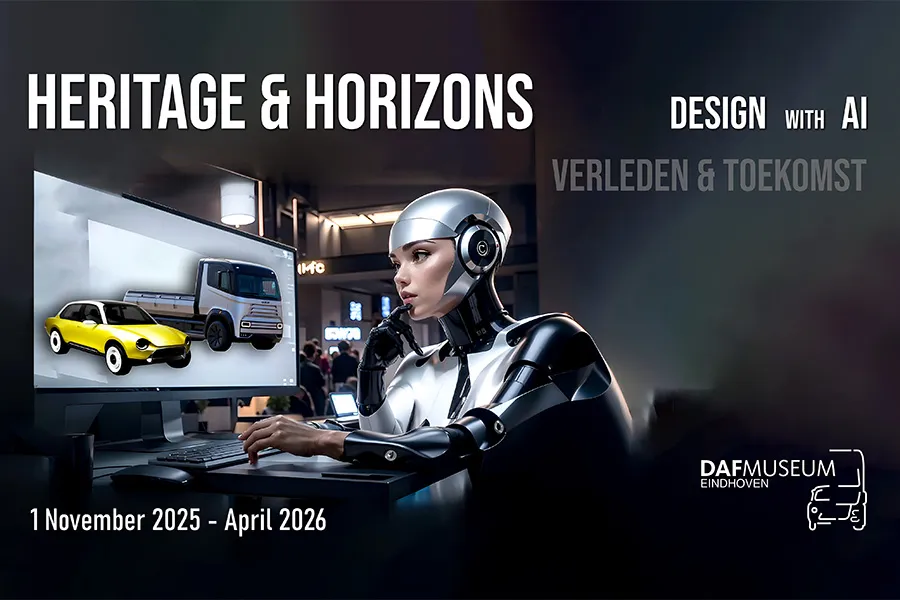
Towards the end of the afternoon, we reach the final stage. It is almost hard to believe that a complete truck is assembled in just ten hours. As a brand-new truck in one of 3,000 possible colours slowly rolls out, we realise just how streamlined this vast process is. We round off the day at the DAF Museum, where the tranquillity contrasts with the rigours of the test track and the rhythm of the factory. The museum shows just how far technology has come, and its latest exhibition, ‘Design with Artificial Intelligence, Past & Future’, takes things a step further. Highly recommended, and a fitting end to a day full of innovation, history and craftsmanship.
Question about this story? Ask your question
Keep following this
Get an email when a new story is published. No account needed.
- SubjectBouwMat







