









Pen | ‘A nation that lives builds its future’
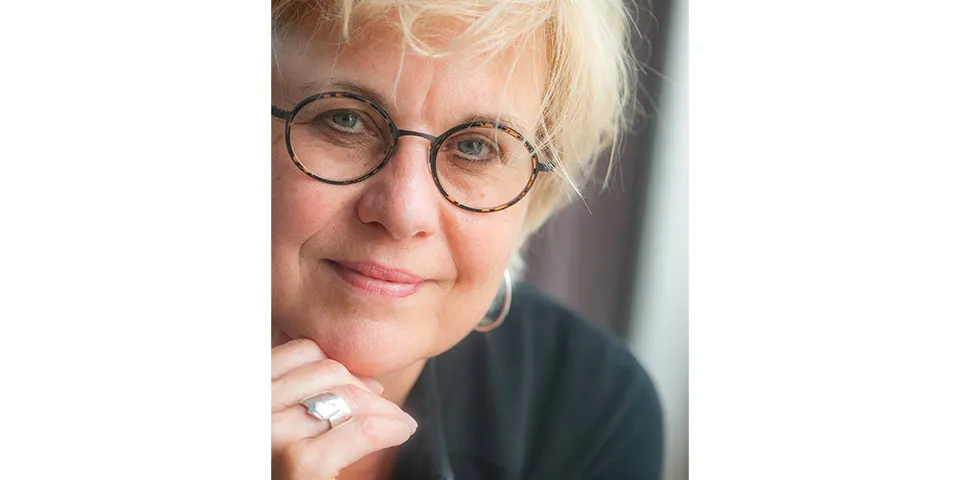
The 10th anniversary of this trade magazine is a good opportunity to take stock of where the civil engineering sector stands in 2019. The World Economic Forum has a clear view on the matter. According to this leading organisation, our infrastructure ranks among the world’s top four this year.
Look at our country through the eyes of a foreign visitor and you can understand the admiration. The Netherlands is a vast open-air exhibition of sustainable civil engineering landmarks. Some fine examples have also been delivered over the past ten years.
Take the A2 land tunnel in Maastricht, for example. Since it opened to traffic in 2016, through traffic has no longer polluted the city. Neighbourhoods that had been divided by the A2 for years are now connected again. A green corridor has been created above the 2.3-kilometre-long tunnel, providing new space for recreation and housing.
Another landmark, for me, is Markerwadden. The first island in this archipelago opened in September 2018, providing a healthy habitat for birds, fish and aquatic plants. It is a fine example of sustainable collaboration between Rijkswaterstaat, Natuurmonumenten and the contractor.
A third example of sustainable innovation is the circular viaduct near Kampen. We developed it with the market over the past year, and it has since been successfully dismantled. While conventional viaducts are demolished after 30 to 50 years, this circular viaduct has a service life of 200 years, around six times as long.
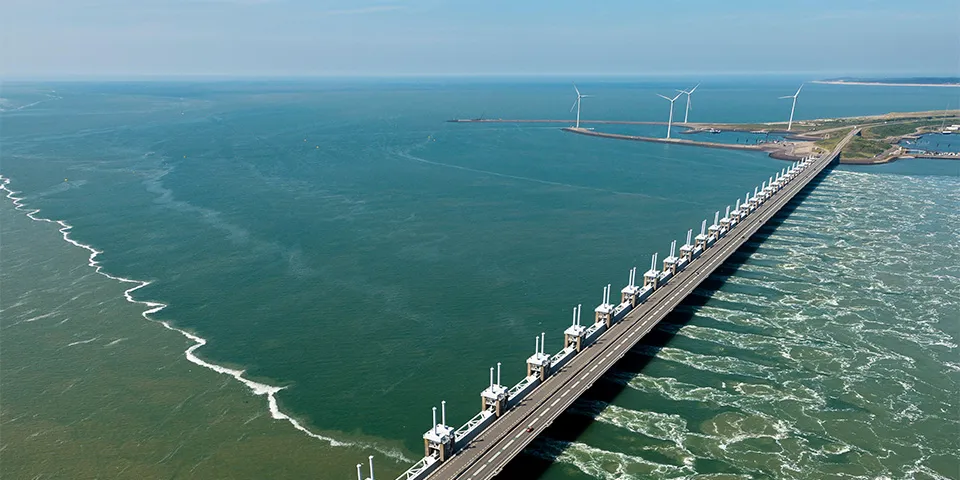
Aerial view of the Oosterscheldekering (Image: Thomas Fasting)
Each of these examples shows that creating a healthy, natural living environment has become one of our core competencies. Our knowledge and experience are more valuable than ever. Society is changing ever more rapidly and profoundly. Consider the energy transition, population growth, climate change, the government’s sustainability ambitions and increasing mobility. All these developments affect health and the environment, as well as the way we shape public spaces.
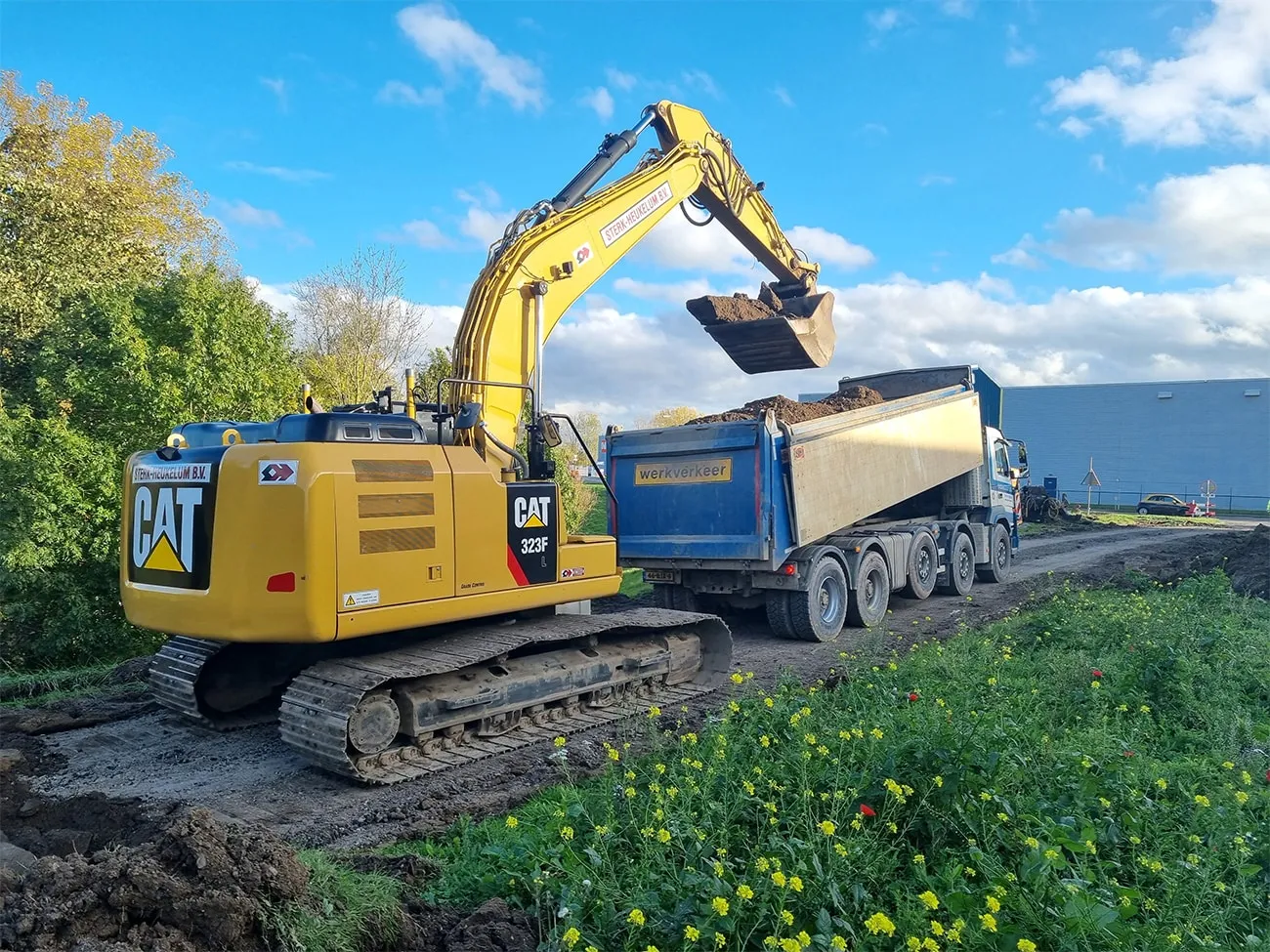
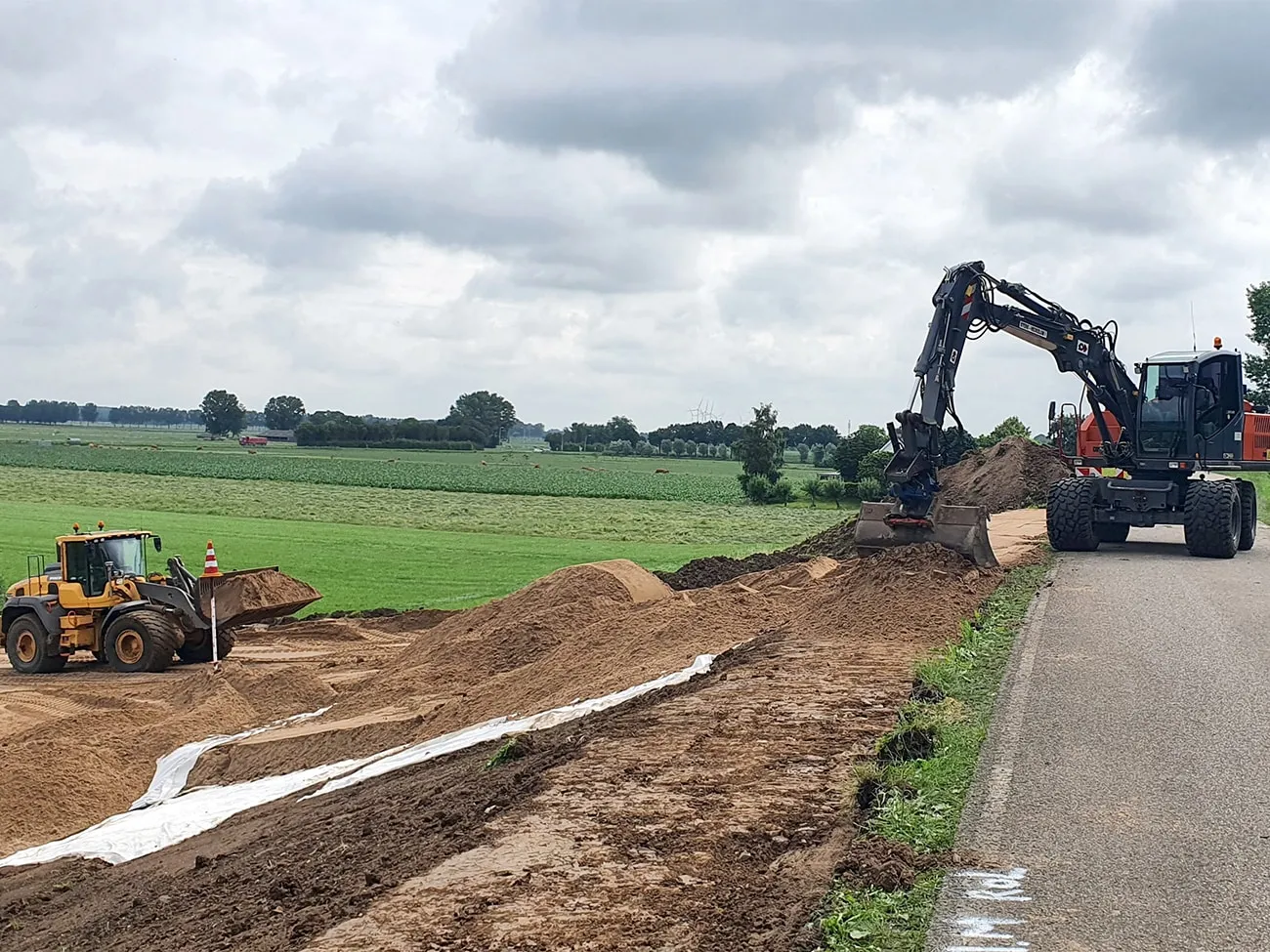
Our country will continue to undergo major changes in the decades ahead. Not only to build homes and develop wind and solar farms, but also to add many extra lanes to ease traffic bottlenecks. As far as infrastructure is concerned, much of our work will be about ‘maintaining what we have’. Hundreds of bridges, viaducts, locks and weirs need refurbishment or replacement.
That promises to be a major and complex task. We will be working everywhere, but the Netherlands must not grind to a halt. Our challenge is to minimise disruption for traffic and local residents. In line with the Environment and Planning Act, which comes into force in 2010, we will involve the public even more closely in every intervention in the living environment.
The statue of Cornelis Lely. The striking inscription on the bronze plaque beneath the monument reads: ‘A nation that lives builds its future’. (Image: Henri Comont)
We will also need to work in increasingly climate-neutral and circular ways. The nitrogen and PFAS issues present us with an enormously complex puzzle to solve. We are doing all we can to keep the Netherlands moving, but planning infrastructure projects has become no easier.
We therefore face a challenging future in which we can no longer do everything as we are used to. Is our sector ready for this? I put that question to consultancy McKinsey at the end of 2018. Its conclusion was: ‘Success is only possible with a vibrant, healthy, innovative and sustainable market.’ This has implications for both the market and Rijkswaterstaat. The sector will need to become more productive, reduce the cost of failure and improve returns.
Rijkswaterstaat, too, will need to change in its role as client. It is time to come down from our ivory tower. We must learn to shift from ‘lots of paperwork to getting our hands dirty’. Rijkswaterstaat will need to improve project management and take a more substantive approach to commissioning. We also want to invest in different forms of contract and a fairer allocation of project risks, so that companies working for us receive fair payment for their work.
We can also make much better use of new technologies, ICT and data, for example to make our country more climate-resilient, but also to make our infrastructure smarter. ‘Renew, innovate and make sustainable’ is our motto. When renovating a road, we can make it more sustainable and prepare it for future mobility needs at the same time.
The Afsluitdijk will be the landmark for renewal, innovation and sustainability. (Image: Ivo Vrancken)
We can only succeed by working together. We will increasingly need to involve other sectors in our work and learn to operate in changing partnerships. Civil engineering will no longer automatically be the lead contractor on major projects. Where the task calls for it, ICT or electrical engineering companies will increasingly take the lead.
In short, future challenges require a transition across the entire construction sector, for both clients and contractors. I am now working with the market on an action plan. On that basis, I want to help build a vibrant sector capable of delivering the construction and maintenance work our country needs.
However challenging the task may seem, I know it can be done. Even now, our country has landmarks that bear witness to sustainable innovation and new forms of collaboration.
The renovation of the IJsselbruggen on the A12 is a fine example of innovative client practice. Rijkswaterstaat will divide the renovation process into two phases. We will only determine the price for the components with the greatest risks once we are able to assess those risks properly. We will also experiment with so-called portfolio contracts. These give the sector opportunities to innovate and allow investments to be recouped across multiple projects.
The renovation of the Wantijbrug between Papendrecht and Dordrecht is a model for making use of data and IT in our work. It will be the first bridge to have the new ‘3B-Bouwblok’ installed. This building block will make the bridge smarter and more efficient to operate and manage, and help keep it fault-free. With this new software and hardware, Rijkswaterstaat can also prepare other tunnels, locks and bridges for the future in a standardised way.
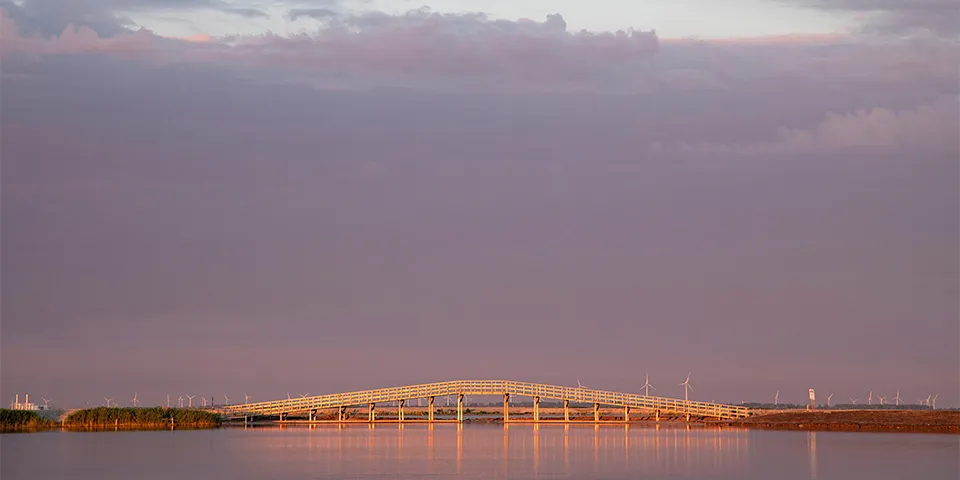
Bridge on Markerwadden. (Image: Shutterstock)
Finally, there is the Afsluitdijk. By 2022, we will have transformed this 87-year-old water safety landmark into a safe, sustainable and smart dike. It will be the landmark for renewal, innovation and sustainability, with a new covering of 75,000 giant concrete blocks, new high-capacity sluices, a sustainable fish migration river and technologies to generate energy from seawater.
One thing about the new Afsluitdijk will remain unchanged. The statue of the great Cornelis Lely will still stand where the dike was once closed. The striking inscription on the bronze plaque beneath the monument reads: ‘A nation that lives builds its future’.
For me, that is the motto that continues to inspire us today. In the decades ahead, we will once again shape the Netherlands with our own hands, by working together on sustainable innovations that we carefully integrate into the living environment of our children and grandchildren.
I wish the civil engineering sector a sustainable and challenging future!
Michèle Blom,
Director-General of Rijkswaterstaat.
Question about this story? Ask your question
Keep following this
Get an email when a new story is published. No account needed.
- SubjectBouwMat







