









New Klic reports let you do so much more
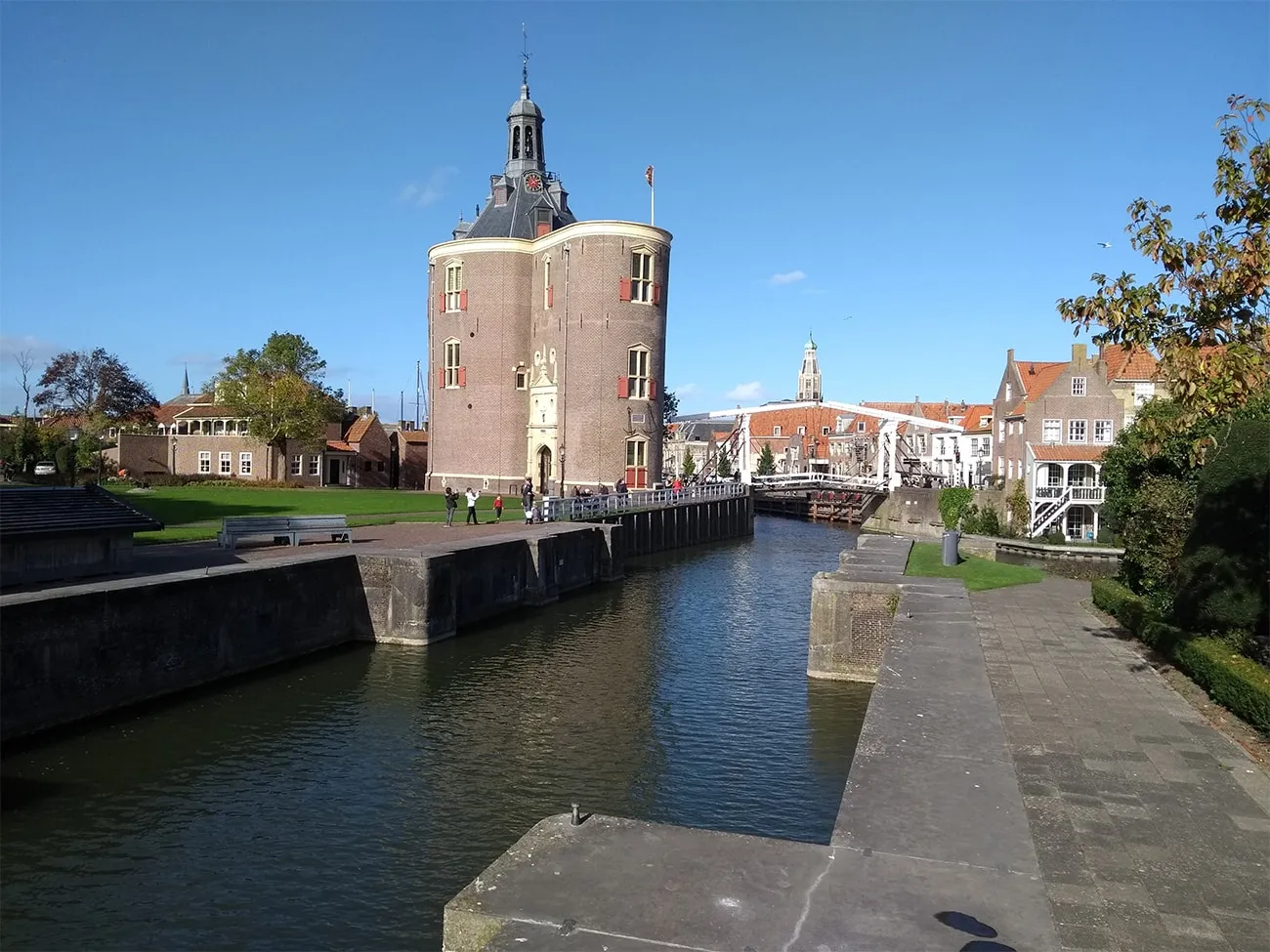
The provision of information on cables and pipelines is undergoing a major transformation. This is due to the Kadaster’s new way of working. As well as providing a legal framework, KLIC now offers a wide range of opportunities for accessing data. We spoke to Floris Konings, who was involved in the Kadaster’s testing phase on behalf of Heijmans Infra.
First, a little background. For several years, the Kadaster has been modernising the Klic report process to bring it into line with legislation and regulations. This KLIC-WIN project has resulted in an approach that makes information exchange compliant with both the Dutch WIBON Act and the European INSPIRE Directive. The transition period began on 1 January, but the entire civil engineering sector must have made the switch by 1 July.
Far-reaching impact
The new approach has major implications for everyone who works with information on cables and pipelines. First, network operators can now upload their cable and pipeline data to a central Kadaster database. The Kadaster can then share it quickly and efficiently with applicants. The added value lies in the fact that the information is now supplied in vector format. This means all the accompanying data can be used far more easily in, for example, CAD systems. This is important because the information now covers more than just location: it also includes a wide range of additional details, from materials and diameters to symbols for joints and valves, for instance. The Klic report process has changed for legal reasons, but the new approach also brings major benefits in terms of quality and efficiency.
Quick to spot the potential
Floris Konings, lead engineer in the Cable and Pipeline Systems department at Heijmans Infra, has already seen the benefits in practice. The department designs cable and pipeline routes, including water pipelines and district heating networks. He was quick to take an interest when he heard about KLIC-WIN. “We deal with all kinds of cable and pipeline projects. Sometimes they’re small, standard diversions in urban areas, but we also work on complete cable routes for large wind farms. So we deal with a wide range of Klic reports. We’re also always on the lookout for ways to improve our drawings and work more efficiently.
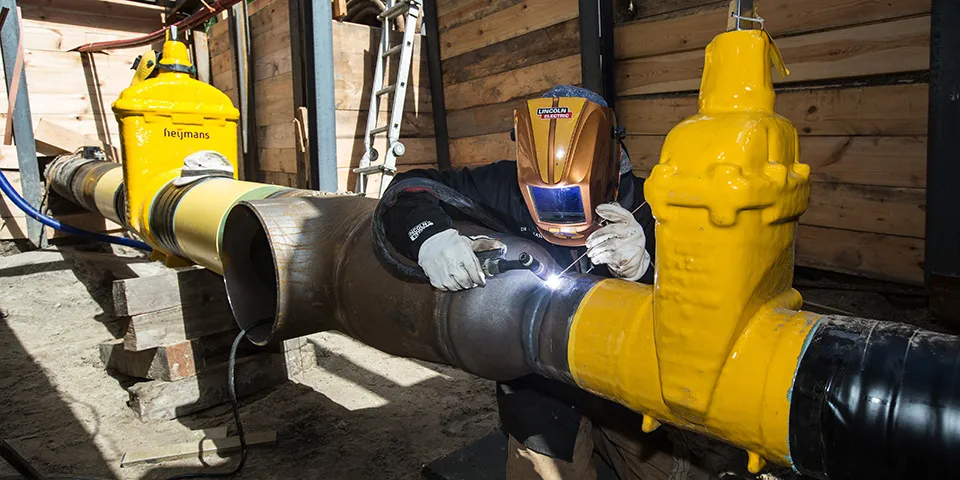
Preparing a horizontal directional drilling operation for the transport water pipeline from Loosbroek to Oss (Photo: Maikel Samuels).
We saw this new approach from the Kadaster as an opportunity, especially when we became involved in the Keten AcceptatieTest for KLIC-WIN through Bouwend Nederland.”
The Kadaster set up the test to check whether the new approach was suited to the day-to-day needs of applicants and other users. “It was a great learning experience,” says Floris. “Especially because all the additional information is now made available ‘automatically’. We could see straight away that this had to lead to a major efficiency gain. And that’s before you even consider the possibilities for BIM …”
The right software
Floris also found that software plays a major role. Heijmans Infra has long used InfraCAD, including for processing Klic reports. During the Keten AcceptatieTest, however, InfraCAD did not recognise the Klic reports. “So the test gave us data, but we couldn’t do anything with it yet.” To check whether the data was usable, it had to be linked to the software. Floris therefore decided to contact CAD Accent, the supplier of InfraCAD. It turned out there was already good news: CAD Accent had been working for some time on a new KLIC module for InfraCAD Map, which will replace the KLIC module in InfraCAD. “We got to work together on testing the new approach.”
Richer data
For a year or two, Floris had an idea of what the new approach could deliver. That idea was quickly confirmed. “What a wealth of data!” says Floris. “Everything is much faster, clearer, more accurate and more complete … And yet you need very few buttons and functions. With the new Klic reports, you can do so much more.”
In the old system, ‘details’ in drawings would often disappear. “What used to appear as a vague blur of pixels is now, as it should be, clearly recognisable as a valve. And five lines that are close together now show up as five lines instead of one. Symbols and ducts are now clearly defined, you can click through to attachments, the precautionary measures are clearly displayed, and object data appears in handy pop-ups … KLIC is suddenly so much more than a legal framework. Together with InfraCAD Map, it represents a huge leap in the quality of your drawings.”
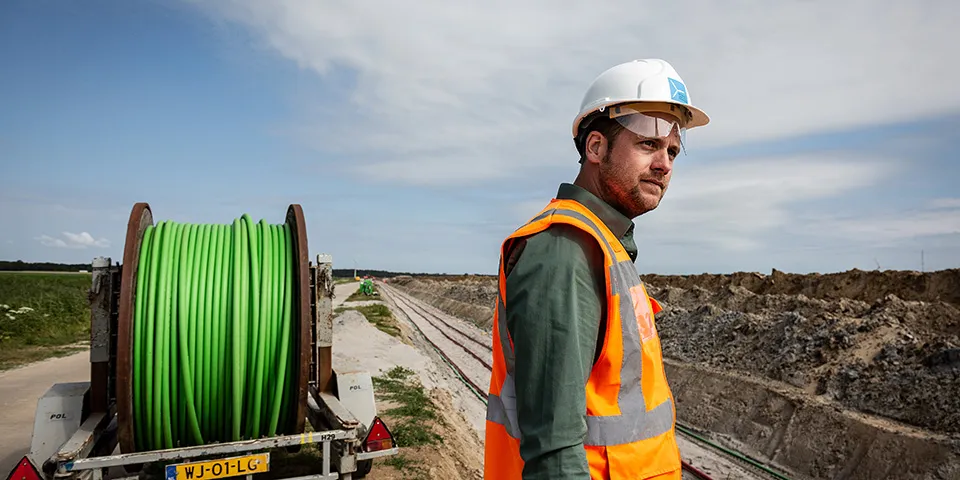
Installing cables for Windpark Wieringermeer (Image: Martine Krekelaar).
Efficiency
Heijmans also found that the new Klic module makes work more efficient. There’s no need to clean up drawings first, and you can now import multiple Klic reports as a single batch. “These may seem like minor things to an outsider, but every draughtsperson will know how frustrating it is to have to clean up a drawing. Now you can get straight to work! It saves time, which is useful during a tender, but more importantly, it makes the work so much more enjoyable.” All in all, the wait for KLIC-WIN was worth it, Floris concludes. “Together with InfraCAD Map, it really marks the start of a new era.”
Transition period: until 1 July 2019
The whole sector faces a significant transition to the new vector-based cable and pipeline information. That is why the Kadaster has introduced a transition period. Network operators can continue to provide their data in the ‘traditional’ way, as raster data, until 1 July. After that, they must provide it as vector data. From 1 July, everyone will therefore have to work with vector data only.
Question about this story? Ask your question
Keep following this
Get an email when a new story is published. No account needed.
- SubjectBouwMat







