









Magnetite: the perfect mineral for sustainable heat storage
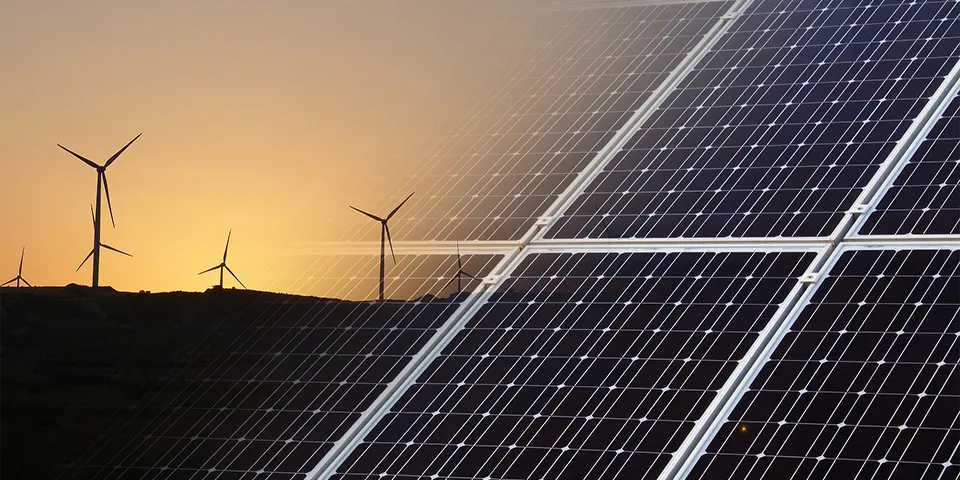
The mineral magnetite is proving ideal for energy storage. LKAB Minerals in Moerdijk is working with the University of Barcelona and international research institute CIC EnergiGUNE to investigate how magnetite can be used effectively for thermal energy storage. The first results from a pilot plant with thermal energy storage (TES) tanks in Morocco show that magnetite can deliver high energy storage efficiency. “Energy storage in magnetite is also exceptionally well suited to applications in the Netherlands,” says Leon Hendriks, Business Development Manager Magnetite at LKAB.
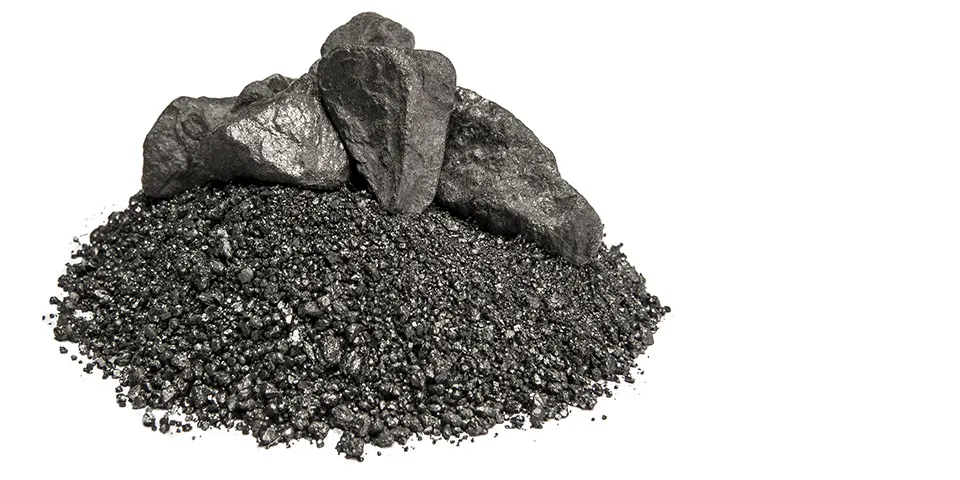
Efficient and sustainable thermal energy storage is attracting increasing attention. The mineral magnetite (Fe304) is highly suitable for storing energy sustainably. Magnetite, a form of iron ore, is mined in northern Sweden at depths of more than a thousand metres. It is an inert, environmentally friendly material, widely used in construction to produce heavy concrete.
European funding for heat storage using magnetite
The ORC-PLUS project was recently carried out under the ‘Horizon 2020’ banner (European funding programme). The project aims to equip a solar power plant with heat storage. First, scientific research was carried out to identify the most suitable mineral. The findings showed that magnetite is the most suitable because of its:
- Heat capacity: 0.89kJ/kg*K
- Good thermal conductivity: 3.4W/m*K
- Density: 4.8 t/m3 (volumetric heat capacity 4272 kJ/m3*K)
- Thermally stable at high temperatures (1000˚C is no problem)
- Thermomechanically stable (very little loss after many cycles)
- Excellent availability and price.
High temperatures for more efficient storage
Magnetite’s density gives it a volumetric heat capacity comparable to that of water (>4 MJ/m3*K). However, magnetite’s major advantage over water is that it can easily store heat at temperatures of up to 1000˚C, whereas water is limited to 90˚C. “This makes the heat stored in magnetite an ideal energy source for high-temperature systems,” says Ana Inés Fernández, researcher and lecturer in the Faculty of Materials Science & Physical Chemistry at the University of Barcelona. Magnetite conducts heat readily, so it can be used again immediately. “Thermal conductivity plays an important role in keeping heat storage at a steady level, even when energy supply fluctuates. Magnetite’s antiferromagnetic properties in particular enable it to conduct heat quickly at high temperatures,” Fernández explains. “At present, solar power plants store heat in molten salts. One drawback of molten salts is that they do not work at temperatures above 565 ˚C, although solutions that can do so have been sought. The higher the temperature, the more efficiently electricity can be generated,” Fernández explains.
The economic value of heat storage
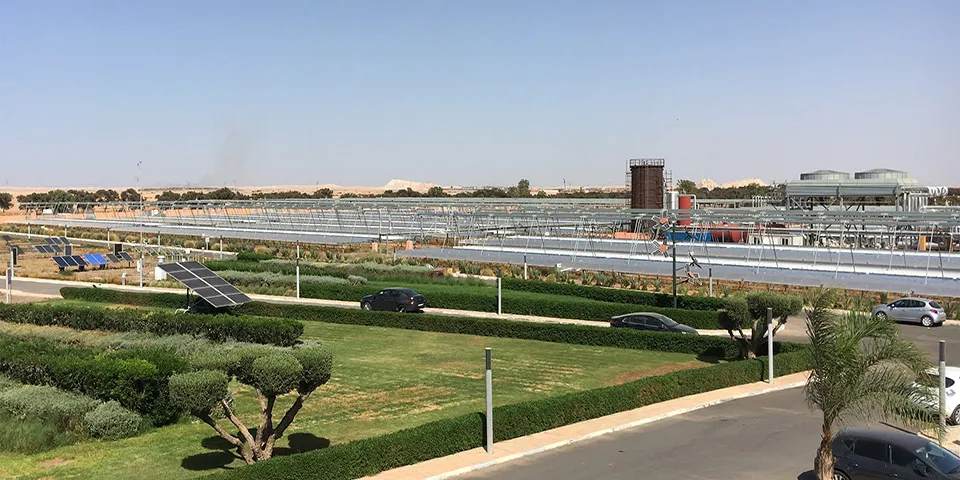
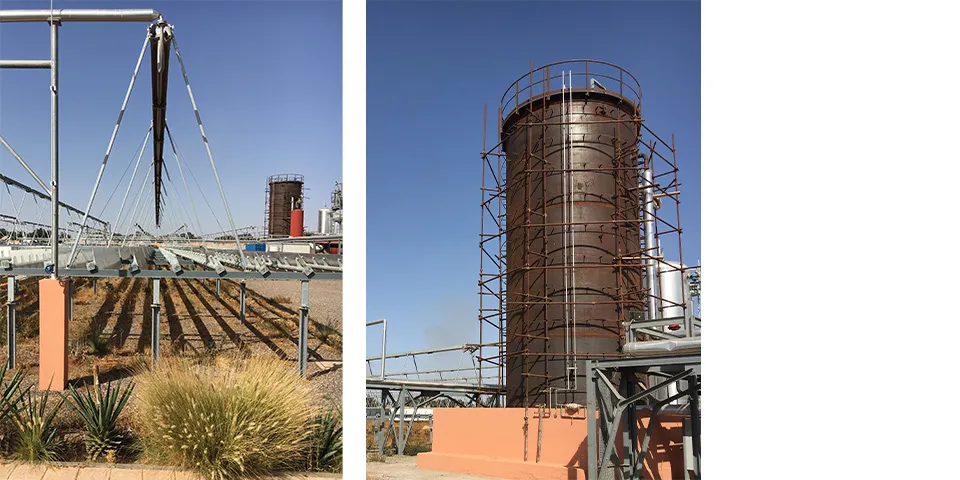
The ORC-PLUS project power plant is located in Ben Guerir, Morocco, where heat storage in magnetite is being tested. The solar power plant uses mirrors to reflect the sun’s heat, which is used to heat organic oil. The oil then transports the heat to a turbine that generates electricity. First, the oil flows through a large storage vessel containing magnetite granules, heating the magnetite during the day. Thanks to this heat storage, the plant can continue operating at full capacity for another four hours after sunset. The search for new heat storage concepts for renewable energy prompted this research.
From research to practice
“For this pilot project, we used magnetite supplied by LKAB Minerals. We carried out tests heating the mineral to 1000 oC and measured how much heat it retained over a period of 21 days,” explains Dr. Abdessamad Faik, pilot project manager and Group Leader at CIC EnergiGUNE. “We established that magnetite remains thermally stable at these higher temperatures. We also found that heat can be stored at high temperatures for a longer period. This provides a stable heat source that can be used to generate electricity continuously. The power plant can keep running at night too, when the sun is not shining,” says Faik.
Industrial heat storage
LKAB Minerals supplied the mineral for this pilot. According to Leon Hendriks of LKAB Minerals, heat storage has a range of potential industrial applications. “Heat from energy sources other than solar power plants can also be stored very effectively in magnetite,” says Hendriks. This is particularly interesting for companies that use heat: waste heat can be stored for later reuse. In addition, because converting electricity into heat results in virtually no losses, the potential applications are even broader. Companies can therefore use a thermal battery to buy electricity flexibly for their industrial heating. It also becomes possible to store temporary surplus green energy from solar panels or wind turbines. “The mineral magnetite is environmentally friendly, inexpensive and readily available,” says Hendriks. “The use of magnetite for heat storage is not yet widely known. We are therefore looking for partners and specialists who can develop applications that allow the heat stored in magnetite to be reused sustainably,” Hendriks concludes.
Background: heat storage using magnetite
Heating with heat storage: flexible electricity purchasing
Differences between daytime and night-time electricity prices create an incentive to use electricity when it is cheaper, at night, and convert it into heat for storage in a storage heater. During the day, the heat stored in the magnetite blocks is gradually released. This allows users to draw on heat during the day that they bought at a lower rate overnight. This application is particularly common in countries where there is a large price difference between peak and off-peak rates. LKAB Minerals has been supplying magnetite for this application for more than 25 years.
Solar power plant
Energy company Enerray, part of Maccaferri Group, has set up a pilot solar power plant in Ben Guerir, Morocco. It is currently testing the use of magnetite in a Thermal Energy Storage Tank (TES). When the sun is shining, the heat transfer fluid, oil, is circulated through the TES and the magnetite, which stores the energy as heat. After sunset, the magnetite releases the heat and the turbine continues to generate electricity. Detailed information is available at: https://www.enerray.com/solar-services/epc/case-studies/csp-iresen-morocco/
Question about this story? Ask your question
Keep following this
Get an email when a new story is published. No account needed.
- SubjectBouwMat







