









Magnetite: the perfect mineral for sustainable heat storage
The mineral magnetite has proved ideal for storing energy. LKAB Minerals in Moerdijk is investigating how magnetite can be used effectively for thermal energy storage, in collaboration with the University of Barcelona and international research institute CIC EnergiGUNE. The first results from a pilot plant with thermal energy storage (TES) tanks in Morocco show that magnetite can deliver high energy-storage efficiency. “Energy storage in magnetite is also exceptionally well suited to the Netherlands,” says Leon Hendriks, Business Development Manager Magnetite at LKAB.
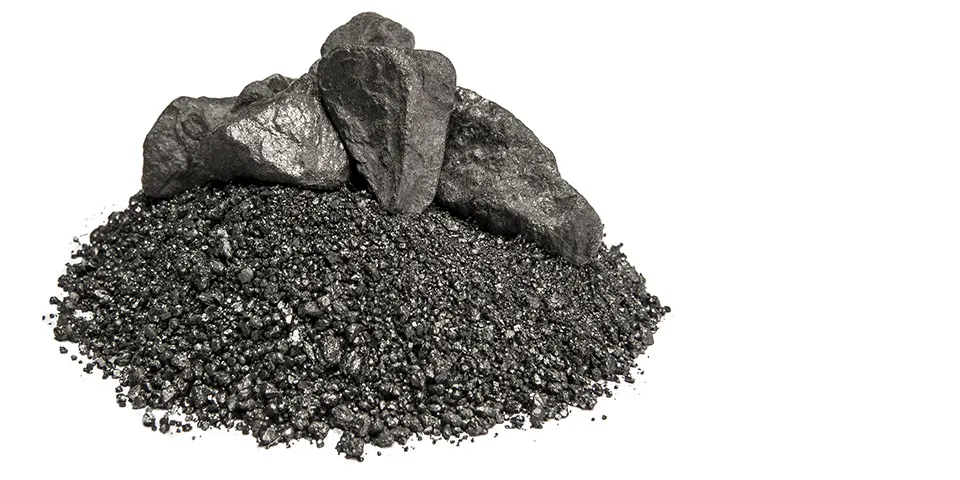
Efficient and sustainable thermal energy storage is attracting increasing attention. The mineral magnetite (Fe304) is highly suitable for storing energy sustainably. Magnetite, a form of iron ore, is mined at depths of more than 1,000 metres in northern Sweden. It is an inert, environmentally friendly material, widely used in construction to produce heavyweight concrete.
European funding for heat storage using magnetite
The ORC-PLUS project was recently carried out under the ‘Horizon 2020’ programme (European funding scheme). The project aims to equip a solar power plant with heat storage. First, scientific research was conducted to identify the most suitable mineral. The results showed that magnetite is the best choice because of its:
- Heat capacity: 0.89 kJ/kg*K
- Good thermal conductivity: 3.4 W/m*K
- Density: 4.8 t/m3 (volumetric heat capacity 4,272 kJ/m3*K)
- Thermal stability at high temperatures (1,000˚C is no problem)
- Thermomechanical stability (very little loss after many cycles)
- Excellent availability and price.
High temperatures for more efficient storage
Magnetite’s density means that its volumetric heat capacity is comparable to that of water (>4 MJ/m3*K). However, magnetite’s major advantage over water is that it can easily store heat at temperatures of up to 1,000˚C, whereas water is limited to 90˚C. “This makes the heat stored in magnetite an ideal energy source for high-temperature systems,” says Ana Inés Fernández, researcher and lecturer at the Faculty of Materials Science & Physical Chemistry at the University of Barcelona. Magnetite conducts heat readily, allowing it to be used again straight away. “Thermal conductivity plays an important role in keeping heat storage at a constant level, even when energy supply fluctuates. Magnetite’s antiferromagnetic properties in particular enable it to conduct heat rapidly at high temperatures,” Fernández explains. “At present, solar power plants store heat in molten salts. One drawback of molten salts is that they cannot be used above 565 ˚C, despite efforts to find solutions that can. The higher the temperature, the more efficiently electricity can be generated,” Fernández explains.
The economic value of heat storage
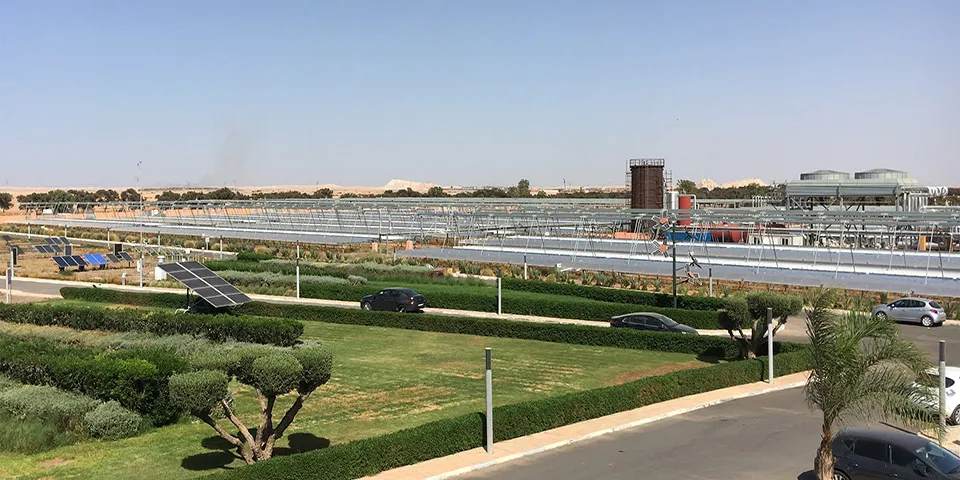
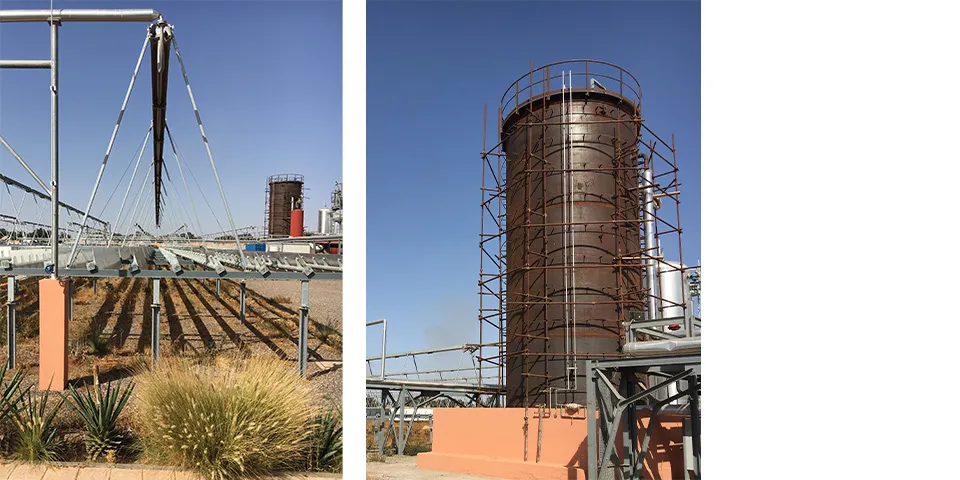
The ORC-PLUS project’s power plant is located in Ben Guerir, Morocco, where heat storage using magnetite is being tested. The solar power plant uses mirrors to concentrate the sun’s heat, which is used to heat organic oil. The oil then carries the heat to a turbine that generates electricity. First, the oil flows through a large storage vessel filled with magnetite granules, heating the magnetite throughout the day. This heat storage allows the plant to continue operating at full capacity for another four hours after sunset. The search for new concepts for storing renewable energy as heat prompted this research.
From research to practice
“For this pilot project, we used magnetite supplied by LKAB Minerals. We conducted tests heating the mineral to 1,000 oC and measured how much heat it retained over a 21-day period,” explains Dr. Abdessamad Faik, project manager for the pilot and Group Leader at CIC EnergiGUNE. “We found that magnetite remains thermally stable at these higher temperatures. It can also store heat at high temperatures for an extended period. This provides a stable heat source that can generate electricity continuously. The power plant can keep running at night, when the sun is not shining,” says Faik.
Industrial heat storage
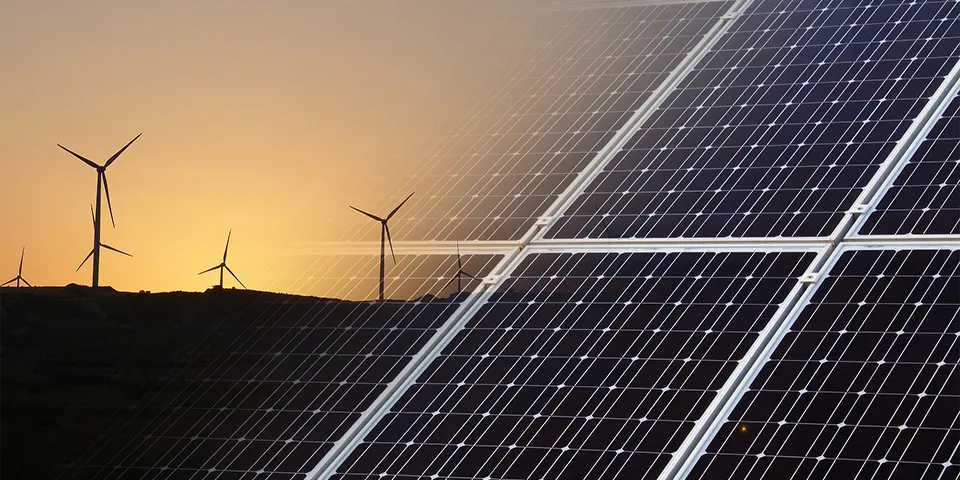
LKAB Minerals supplied the mineral for this pilot. According to Leon Hendriks of LKAB Minerals, heat storage has a range of potential industrial applications. “Heat from energy sources other than solar power plants can also be stored very effectively in magnetite,” says Hendriks. This is particularly relevant to businesses that use heat: waste heat can be stored for later reuse. In addition, because converting electricity into heat involves virtually no losses, the potential applications are much broader. Businesses can therefore use a heat battery to buy electricity flexibly for industrial heating. It will also be possible to store temporary surplus renewable energy from solar panels or wind turbines. “Magnetite is environmentally friendly, inexpensive and readily available,” says Hendriks. “Using magnetite for heat storage is still relatively unknown. We are therefore looking for partners and specialists who can develop applications that enable the heat stored in magnetite to be reused sustainably,” Hendriks concludes.
In focus: heat storage using magnetite
Heating with heat storage: flexible electricity purchasing
Differences between day and night electricity prices create an incentive to use electricity when it is cheaper, at night, and convert it into heat for storage in a storage heater. During the day, the heat stored in the magnetite blocks is released gradually. Users can then benefit from heat generated using electricity bought at a lower rate overnight. This application is particularly common in countries with a large price difference between peak and off-peak rates. LKAB Minerals has been supplying magnetite for this application for more than 25 years.
Solar power plant
Energy company Enerray, part of Maccaferri Group, has established a pilot solar power plant in Ben Guerir, Morocco. It is now testing the use of magnetite in a Thermal Energy Storage Tank (TES). When the sun is shining, the heat-transfer fluid, oil, flows through the TES and the magnetite, which stores the energy as heat. After sunset, the magnetite releases the heat and the turbine continues to generate electricity. Further information is available at: https://www.enerray.com/solar-services/epc/case-studies/csp-iresen-morocco/
Question about this story? Ask your question
Keep following this
Get an email when a new story is published. No account needed.
- SubjectBouwMat







