









Knikmops conquers the Netherlands, Germany, Scandinavia and the ABC Islands
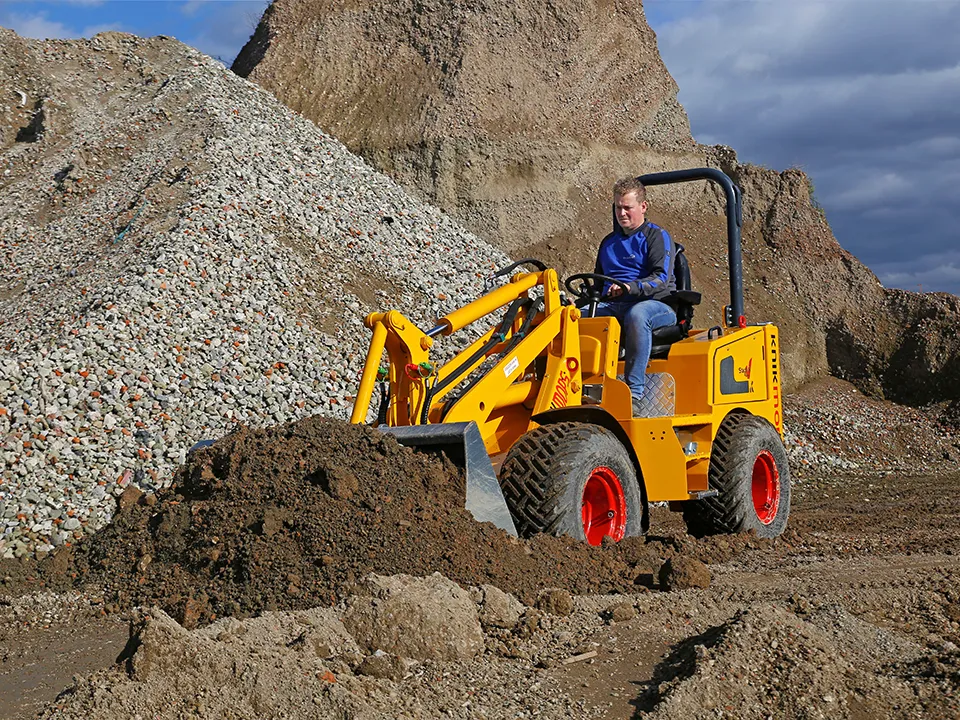
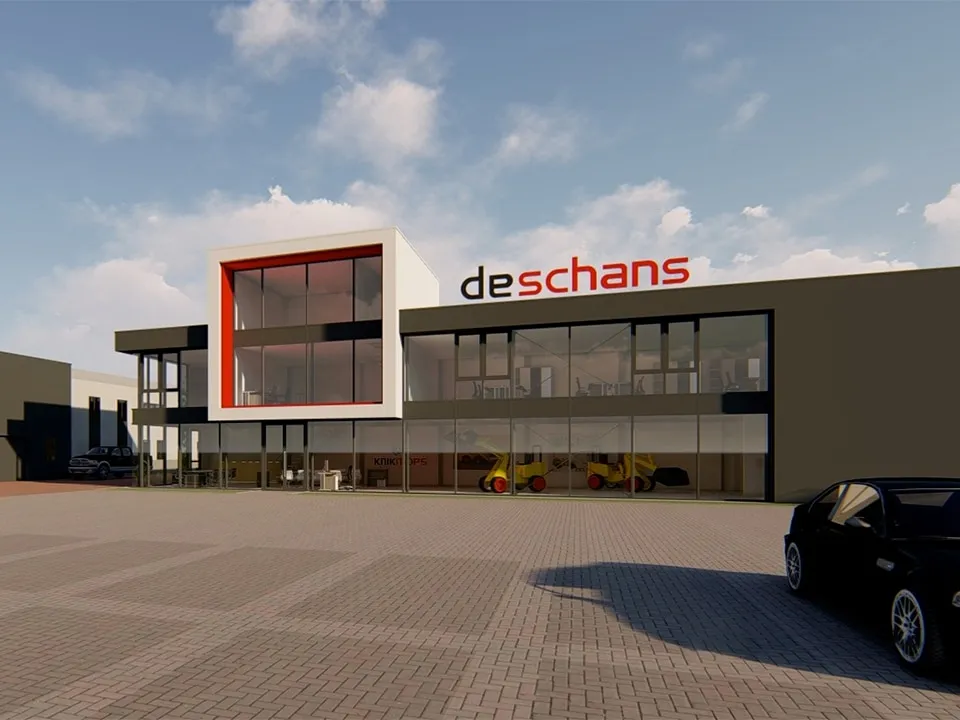
De Schans has been in business for over 25 years. Although it has sold more machines than ever, the company still sees plenty of opportunities for growth. A major expansion of its premises has prepared it for the future.
In 1994, Reinoud van der Schans first brought the Rollmops brand to people’s attention. “But he did more than that,” says Jan-Willem Slegh, Sales Manager at De Schans. “He also found out what users, the paving contractors, needed. He discovered that they wanted a powerful, compact mini loader with a low pivot point, easy access, four-wheel drive, a range of attachments and good transport options.”
The Knikmops becomes a reality
Van der Schans incorporated all these requirements into a design, and in 1997 the Gebr. Geens brothers began production of it in Hoogstraten, Belgium. The Knikmops was born: a handy mini loader with everything paving contractors had been waiting for.
The future is electric
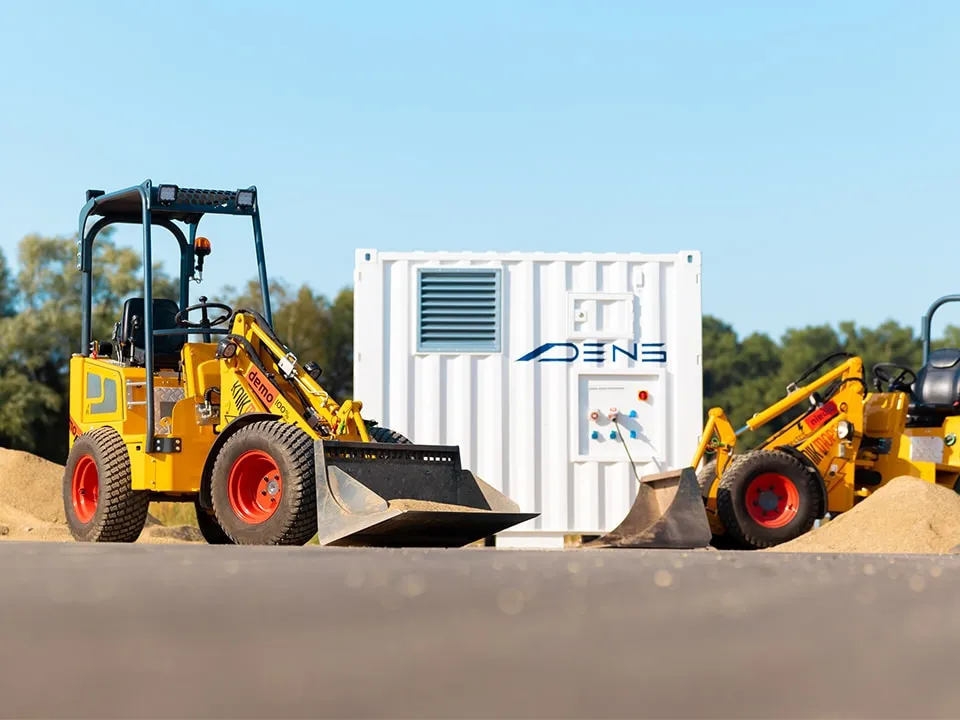
As demand for an electric Knikmops grew in the Netherlands, De Schans decided to develop one too. Its partner Gebr. Geens took responsibility for bringing the Knikmops range into line with Stage V requirements. De Schans worked with UMS, from the automotive sector, on the electric motor and battery pack. It ordered the machines from the Knikmops factory in Belgium, which supplied them without an engine.
Ready for the new regulations
This led to the launch of two electric Knikmops models in 2019, the KM130 (1,650 kg) and the KM180 (2,450 kg). “The machines can run for a full day,” says Slegh, “depending on how they are used. The electric Knikmops models also meet rapidly changing government requirements for low-emission or zero-emission working.”
Powerful performance
The electric Knikmops is more powerful than its diesel counterpart. The electric motor delivers constant power, while a diesel engine only provides maximum torque at a particular engine speed. With a battery capacity of 37 kWh, the electric Knikmops has the largest battery currently available for a compact wheel loader. This capacity is achieved with a battery voltage of 350 volts and a battery capacity of 105 Ah. “This gives the electric Knikmops an output of 36.75 kWh,” Slegh explains.
Further development
Developing two electric Knikmops models is no reason for De Schans to sit back. The electric Knikmops drivetrain is already being further developed to extend operating time. De Schans is also continuing to talk to users to identify further needs for electric machinery.
The construction site of the future
The number of projects requiring zero-emission working is increasing significantly, but charging electric machinery on site without emissions remains a challenge, even in built-up areas. DENS’s Hydrozine generator offers a solution. It runs on hydrozine, a liquid hydrogen carrier, and generates electricity without emitting harmful emissions. Because the fuel is liquid, the generator can be refuelled in much the same way as a conventional diesel generator. DENS’s first model on the market is the X2, which, with a rated output of 20 kW, can generate almost half a megawatt per day. Its 60 kW internal battery pack makes it a hybrid system, ensuring efficient fuel consumption. This generator will soon be available to rent through DENS, see www.dens.one.
Question about this story? Ask your question
Keep following this
Get an email when a new story is published. No account needed.
- SubjectBouwMat







