









Investing in climate-resilient measures is hugely important
The Netherlands is currently experiencing four climate trends: temperatures are rising, conditions are becoming drier,
rainfall is becoming more extreme and sea levels are rising. The effects and consequences vary from sector to sector. In every case, however, adaptive measures are needed to prevent major
problems and high costs.
Waterlogging on the one hand, drought on the other
It is not only waterlogging that causes problems in the short and long term: drought does too. We are seeing that a persistently low groundwater level can damage timber pile foundations through wood rot, or cause settlement of shallow foundations. For roads, railways, cables and pipelines, this leads to (differential) settlement, which can result in unplanned maintenance and speed restrictions, among other things. However, a persistently high groundwater level also affects buildings and infrastructure. This can lead to waterlogging and structural damage. To tackle these kinds of problems, we need to learn from the past and try to prevent future impacts by taking action and investing NOW.
But how? Fugro has an idea. Fugro is the world’s leading geo-data specialist, collecting extensive information about the Earth and everything people have built on it. “But our work does not stop at collecting data,” says Leo Zwang,
Director Water Europe at Fugro. He observes that action is being taken in response to the challenges posed by climate change, but geotechnical expertise remains overlooked. “Current climate stress tests do not call for geotechnical experience, even though geotechnics plays a huge role in the problems we have just described. Fugro makes those connections, ensuring that opportunities are not missed. We are keen to get involved as early as possible and contribute to the design with regard to the subsurface. This can help reduce long-term management and maintenance costs.”
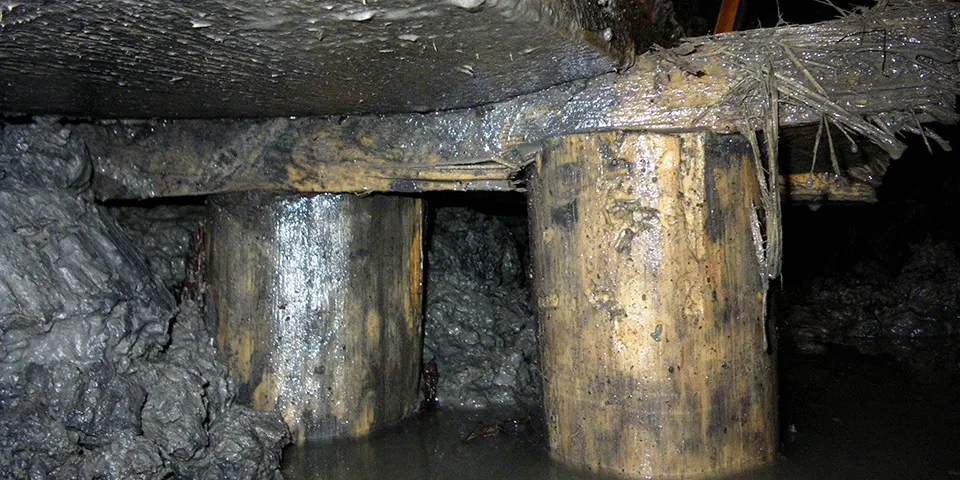
Damage to timber pile foundations caused by exposure to air.
Taking climate change into account in current designs
“We are currently seeing more and more circular roads being built. That is a positive development. However, this often relates only to the road layout and the use of more sustainable materials above ground. Rainwater is still often drained in the traditional way, via roadside ditches into the water system. There are significant gains to be made here, particularly in areas affected by drought,” says Zwang.
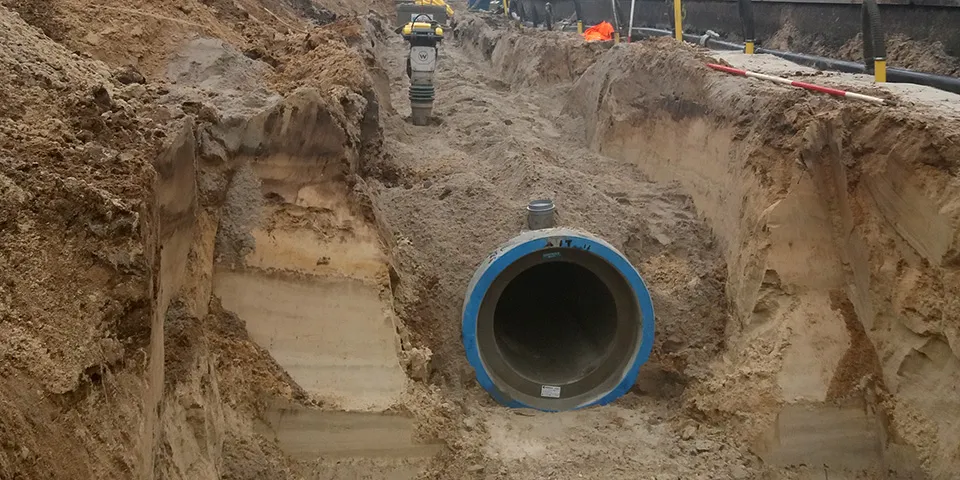
“A good example of this kind of project is the provincial road Epe-Heerde (N-794), where Fugro developed a climate-resilient geohydrological design. The road is on the edge of the Veluwe. From a geohydrological perspective, this is a challenging area. This is due to major fluctuations in groundwater levels, variations in the road’s ground level and the presence of ecologically valuable streams into which rainwater from the road surface cannot be discharged. Waterlogging had been reported at several locations along the road. The drainage system was designed as a bespoke solution, tailored to the limited space available for the design. Various new and existing techniques were used, including DSI rainwater infiltration wells, to meet the requirements. This approach delivered a road reconstruction that meets the required standards, with sustainable drainage and the waterlogging issues affecting local residents also resolved.”
Climate-resilient urban areas
“Creating climate-resilient urban areas is one of our goals,” adds Wouter Kooijman, Senior Hydrology Consultant at Fugro. “But we also look at climate resilience in agriculture, infrastructure and real estate. It is not possible to design climate-resilient areas without taking the soil and water management into account.” Kooijman believes that new contract models will create opportunities to do this. “When developing a proposal for climate-resilient design, Fugro assesses at an early stage whether the soil and hydrological conditions are suitable for a particular solution. If they are not, we then investigate whether the area can be made suitable. If that is not possible either, we ask whether other design choices can be made. Fugro advises throughout this process. We also look for ways to store surplus water in winter and use it during periods of drought.” Zwang concludes: “We are already seeing sustainability measures and climate adaptation above ground, but there is also much more that can be done proactively below ground. We are more than happy to contribute our ideas. We also have unique technology, such as permeability cone penetration tests (HPT), to reliably verify our designs.”
A business enquiry for Fugro? Get in touch
Companies in this story
Keep following this
Get an email when a new story is published. No account needed.
- SubjectBouwMat
- CompanyFugro







