









Installing power cables using pure water power
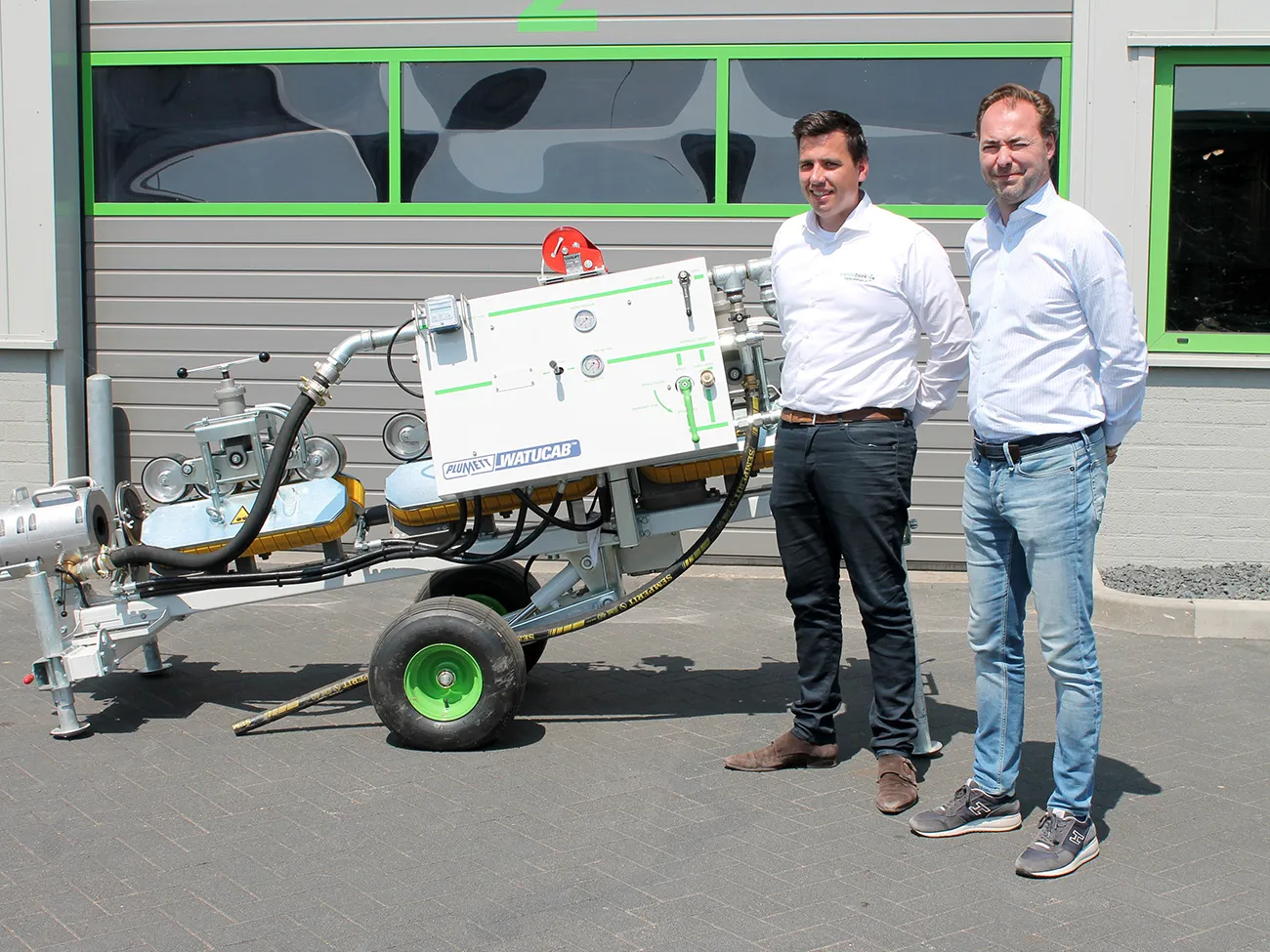
The company specialises in installing cables and pipelines, electrical and fibre-optic cable installation, and horizontal directional drilling. Van de Beek Kabels en Leidingen, based in Neerijnen, has been delivering projects involving the installation or pulling of cables and pipelines since 1977. The family business puts quality first and is constantly innovating. “It’s all for the benefit of our clients, who want their projects to run smoothly and be completed on time,” explains Arie van de Beek. Van de Beek has been doing successful business with HMS Machines from Gouda for more than 25 years. HMS Machines’ latest ‘achievement’ is called ‘WATUCAB’. It is no coincidence that we find this machine, which uses water power to push power cables through ducts, at Van de Beek first. “We’re always looking for innovative solutions and like to work with the very latest equipment. WATUCAB is an excellent complement to our traditional methods of pulling cables and blowing in fibre-optic cables.”
Push, don’t pull
“The main advantage of WATUCAB is that the cable is pushed through the duct, propelled by water power. This puts virtually no strain on the cable itself, unlike pulling it with a winch,” Arie explains. “WATUCAB also reduces disruption to the surrounding area. Take a 2-kilometre cable route, for example. Normally, you would work in stages, depending on the length of cable being installed. If you use a winch in a trench, the entire length on the reel has to be exposed by digging and drilling in one go.
With WATUCAB, the cable is installed entirely inside a protective duct. This means that a protective duct is also installed along the route between any sections requiring drilling. If necessary, the trench can be backfilled at the end of each day. This greatly reduces disruption to the surrounding area.”
Another major advantage is that the cable experiences very little friction against the duct, because a film of water forms between the cable and the duct wall. “So there’s much less pulling force on the cable, and it experiences virtually no friction. The forces on the cable are therefore significantly lower than with traditional methods. This keeps the cable optimally protected and prevents potential damage that might need to be repaired or could even require the cable to be replaced. You can imagine how pleased the network operator is about that. A repair involving a joint is costly, and every joint is a potential weak point in the electricity network.”
How long do you want the cable?
WATUCAB makes it possible to install longer cables than with traditional methods. Arie explains: “The total length of cable that fits on the reel is now the limiting factor. The water pump delivers continuous pressure, determined by what the duct can withstand. You can keep feeding in cable, up to lengths of around 2 kilometres.” Another benefit is that WATUCAB requires fewer operators. “At a time when there’s a shortage of people on the ground, that’s a very welcome bonus,” says Arie. “Taken together, all these factors add up to a clear net gain: longer cable runs installed in one go, fewer joints, less risk of cable damage, and valuable data generated by WATUCAB’s computer. We have high expectations for this new machine.”
Testing beyond the limits
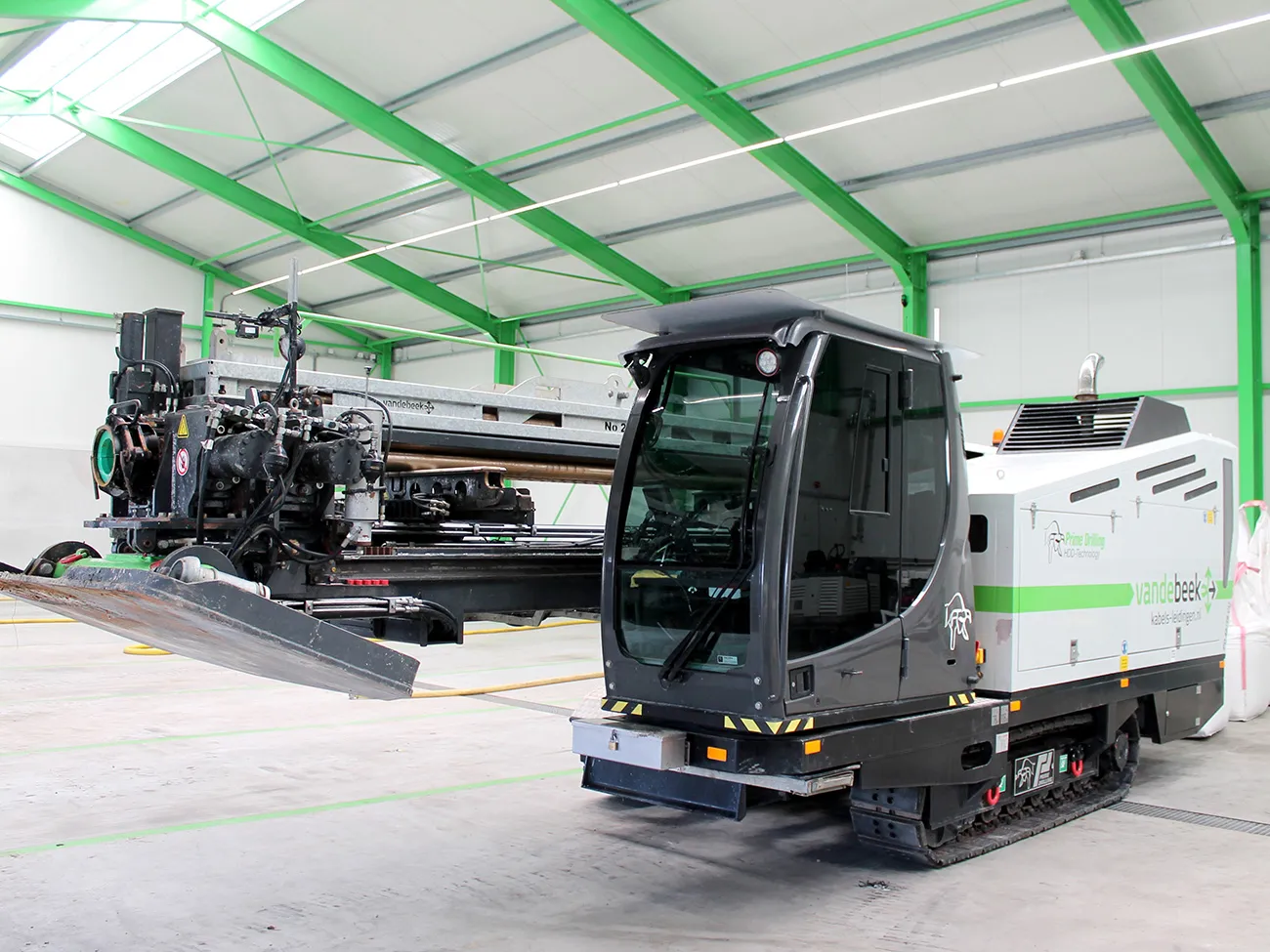
Van de Beek carries out its own tests on the equipment it uses. “We’ve built a test route with several drilled sections, through which we fed a medium-voltage cable inside a protective duct. The route includes some extreme bends, the sort you’re unlikely ever to encounter in practice. There’s a transparent section of duct on the route, giving us a view of the propulsion process. Our engineering department worked with Willem Griffioen from Plumett, HMS Machines’ parent company. Together, we designed the test route and carried out the tests. We already have a job lined up for WATUCAB, and our client will come and see for themselves how well this method works.”
Total Cost of Ownership comes down
“We’ve been working in close partnership with Van de Beek Kabels en Leidingen for more than 25 years,” says Friso Talsma of HMS Machines. “We’re more or less the ‘preferred supplier’ in Neerijnen, and we work closely together to raise standards in the cable and pipeline installation market. On the one hand, this means taking as much of the burden as possible off our clients; on the other, it means responding to the increasingly demanding requirements placed on the work. Minimising disruption is one such requirement, and it will only become more stringent. Reducing cable damage makes economic sense and helps ensure continuity for the Netherlands as a whole.”
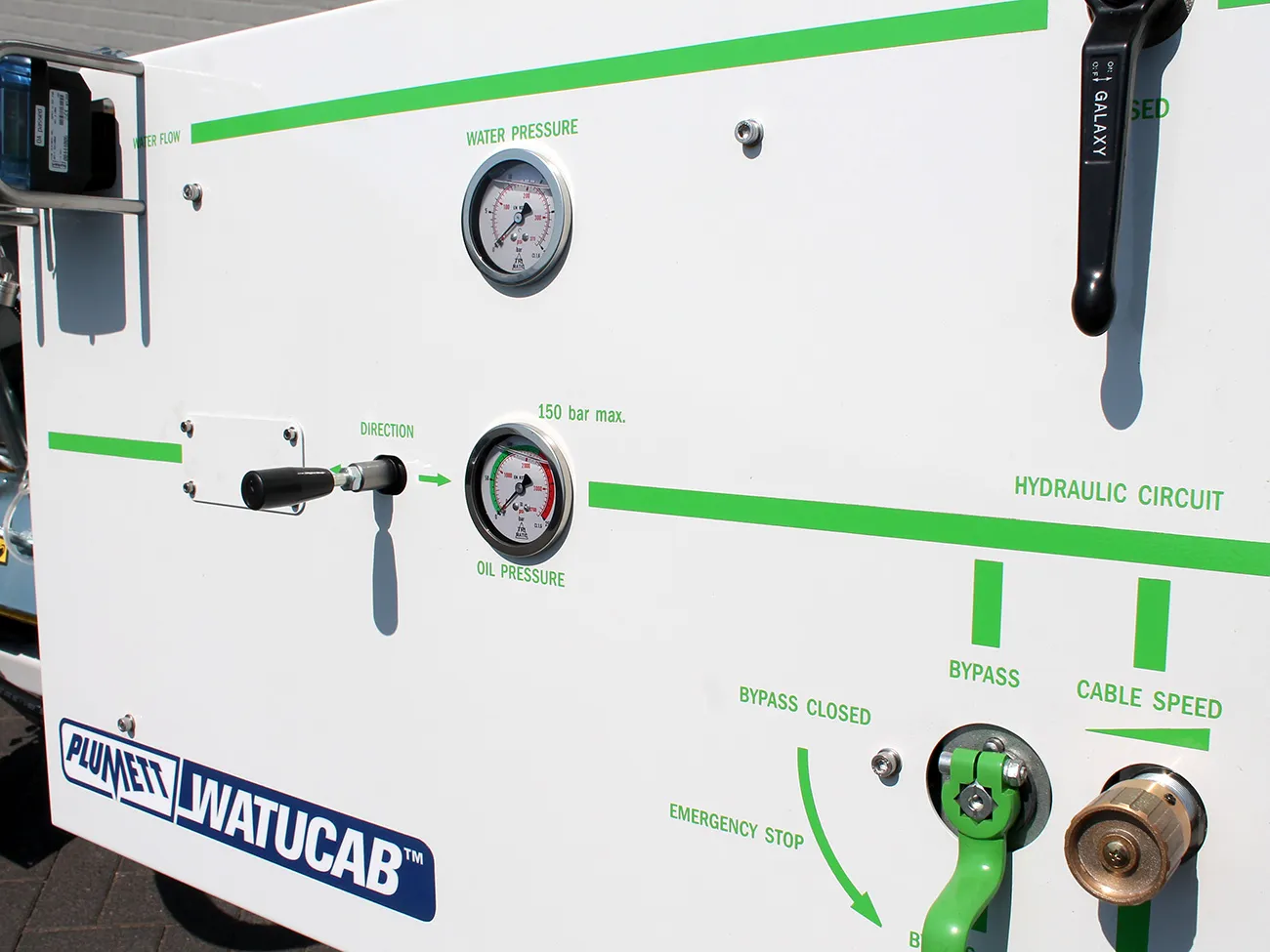
Asked whether using WATUCAB pushes up costs, Friso replies: “Quite the opposite. Look at the overall cost, and you’ll see that the benefits of this new system bring down the TCO (Total Cost of Ownership). This method can’t be compared with traditional cable pulling. As well as using a completely different approach, WATUCAB is also at the forefront when it comes to generating valuable data. The machine logs a wealth of data, and you can see the condition of the cable in real time. We chose to introduce WATUCAB at Van de Beek first not just because of our good relationship, but also because of the testing facilities in Neerijnen.” Arie adds: “We have the technology to measure ducts to the nearest centimetre. We use a gyro, which we pull through the route to log its position to centimetre accuracy. We then enter the route data into the WATUCAB computer, which calculates how much water is needed.” Friso says: “The WATUCAB data dump is 100% compatible with Jet Planner software. The result is no longer an estimate, but accurate as-built data.” Arie adds: “This is the most intelligent and controlled way of installing cables we’ve ever seen. It also reduces the number of coordination points, because the cable is installed in one go.”
WATUCAB supports the customer promise
In closing, Arie says: “Van de Beek Kabels en Leidingen isn’t looking to increase its market share. What matters to us is delivering on our promises to clients. We’re driven by quality, not volume. That will help us further strengthen our existing position in the market. WATUCAB helps us do that.”
Question about this story? Ask your question
Keep following this
Get an email when a new story is published. No account needed.
- SubjectBouwMat







