









‘Identification guide for work equipment updated’
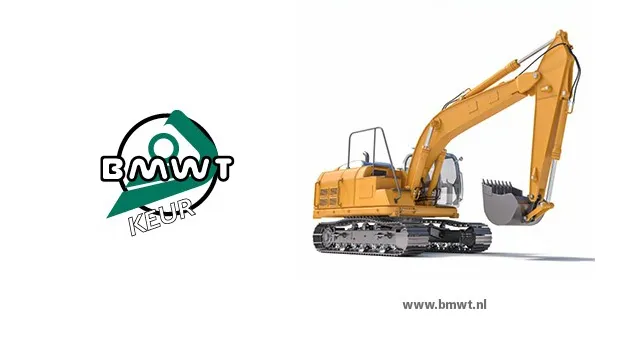
To combat crime involving work equipment and transport, BMWT drew up the ‘Identification guide for work equipment’ several years ago, together with the Vehicle Crime Insurance Bureau (VbV).
BMWT has now given the guide a makeover. The update applies not only to the cover: the inside has also been revised to include the latest information.
The guide provides an overview of the terminology and technical knowledge needed to carry out an identity check when work equipment is stolen or goes missing.
Work equipment worth millions of euros is stolen every year. This equipment includes excavators, rollers, tractors, telehandlers and dumpers. Hand tools are not covered by the guide.
Registration requirement
Since 1 January 2021, it has been possible to register all existing slow-moving motor vehicles online with the RDW. New machines are fitted with a registration number when delivered. Registering work equipment makes theft significantly more difficult and helps the authorities recover stolen machinery. There are exceptions to the registration requirement. Motor vehicles that are not driven on public roads, or that have a maximum design speed of less than 6 km/h, are exempt.
Since 21 June this year, applicants have been required to submit a photo of the type plate/Vehicle Identification Number (VIN) when registering a slow-moving motor vehicle (MMBS) or equipment towed by one of these vehicles. In addition to the VIN, other details are required, including the vehicle make, trade name and type. Registration is not possible without the required vehicle details. This identification guide helps users locate the type plates on machinery.
A unique identity reduces the risk of fraud
The mandatory VIN gives the vehicle a unique identity. The VIN is also known as the vehicle’s ‘fingerprint’. It significantly reduces the risk of vehicle fraud.
Purpose of the identification guide
The guide aims to provide information about the problems associated with work equipment theft. It explains what to look out for and provides the technical knowledge needed to carry out identity checks. The guide also includes an overview of terminology relating to work equipment, helping to raise awareness among enforcement agencies such as the police, the Human Environment and Transport Inspectorate and the Inspectorate SZW.
BMWT represents the interests of suppliers of construction machinery, warehouse equipment, road construction machinery and transport equipment. It creates added value for its members and their customers in the areas of safe, skilled and sustainable working.
BMWT-Keur safeguards the quality of safety inspections carried out by participating companies. BMWT-Train offers badges and certificates for operating work equipment, while BMWT-CERT safeguards the quality of SOG examinations and examinations for recovering refrigerant from mobile air-conditioning systems.
In the area of sustainability, BMWT offers the Sustainable Business Operations certification, the Efficiency Label for traction equipment, Het Nieuwe Draaien and Het Nieuwe Heffen.
As at 1 January this year, BMWT had 98 members and 115 companies were certified to carry out inspections under the BMWT-Keur quality system.
The Vehicle Crime Insurance Bureau (VbV) is a joint initiative by all Dutch non-life insurers to combat crime involving vehicles, vessels, work equipment and transport. It represents the collective interests of Dutch non-life insurers, leasing companies and rental companies in recovering and returning stolen vehicles.
Question about this story? Ask your question
Companies in this story
Keep following this
Get an email when a new story is published. No account needed.
- SubjectBouwMat
- CompanyBMWT







