









Exploring deep soil layers cost-effectively
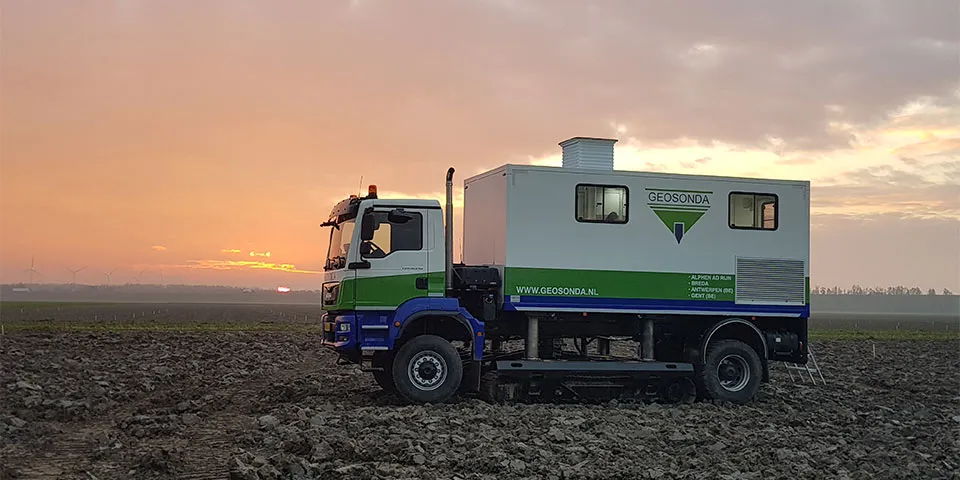
Geosonda specialises in site investigation in the broadest sense and has been one of the pioneers in geotechnical investigation since 1971.
“Cone penetration testing is a relatively cost-effective way to explore deep soil layers. Every year, we are involved in around 1,500 projects, all of which we deliver safely, to a high standard and cost-effectively,” says Aad van der Burg of Geosonda.
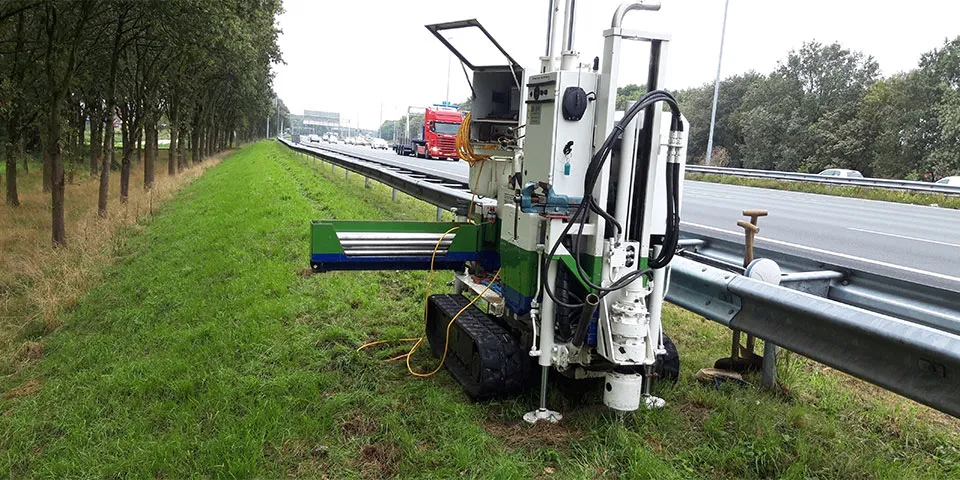
Before a construction project can get under way, a ground investigation must first be carried out to assess the subsurface. “We have advanced equipment for investigating the ground,” Van der Burg continues. “Our equipment ranges from large tracked cone penetration testing rigs to smaller tracked vehicles and even dismantleable equipment for sites that are difficult to access. The data we generate through ground investigations is used for foundation design advice, excavation support advice, settlement calculations and so on. If required, our sister company Geomet can provide geotechnical advice.”
Geosonda is commissioned by architects, structural engineers and local authorities, as well as by fellow geotechnical consultancies to carry out fieldwork. “In those cases, we act as a subcontractor on a project and carry out only the cone penetration tests,” Van der Burg explains. “We have extensive experience carrying out cone penetration tests on all kinds of infrastructure projects, such as the construction of new roads, railway lines, viaducts and traffic gantries along national roads. Gantries and masts are getting larger and larger, and are structures in their own right. Ground investigation is often a requirement for them too. We are fully VCA certified and familiar with all relevant laws and regulations.”
As well as carrying out cone penetration tests, the geotechnical service provider also specialises in geomonitoring, including surveying and installing inclinometer casings and settlement gauges. “Inclinometer casings can be used to measure horizontal movements,” Van der Burg continues. “They are often installed next to a sheet-pile wall or an excavation. Settlement gauges allow us to determine changes in the elevation of deeper soil layers. Our third area of work is monitoring groundwater levels and flows over a specified period. This data is then used as the basis for a geohydrological assessment.”
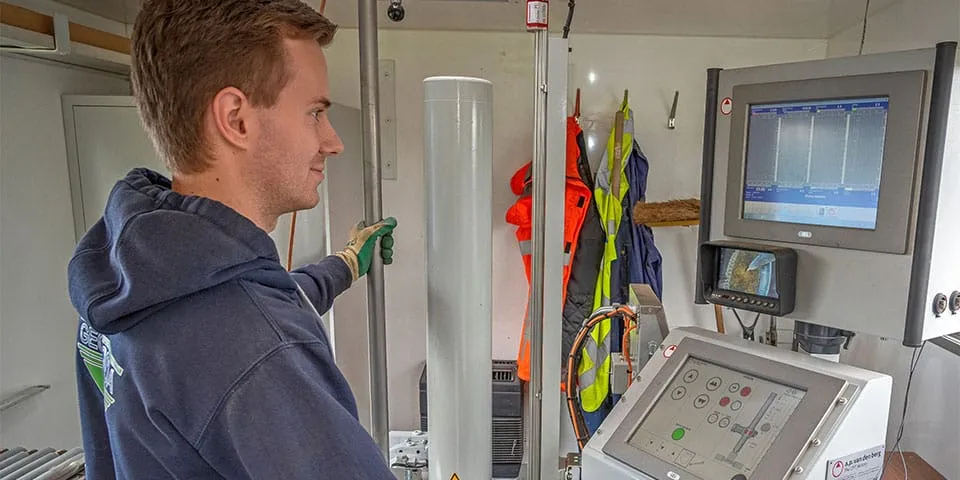
According to Van der Burg, Geosonda’s strengths are its flexibility, ability to respond quickly and ease of scaling up capacity. “That last point is particularly valuable on infrastructure projects, for example when carrying out cone penetration tests at night on and around roads and railways. We operate nationwide from our branches in Alphen aan den Rijn and Breda. Recent major infrastructure projects we have worked on include the Leidsche Rijntunnel and the RijnlandRoute.”
Question about this story? Ask your question
Keep following this
Get an email when a new story is published. No account needed.
- SubjectBouwMat







