









Every day is Climate Day
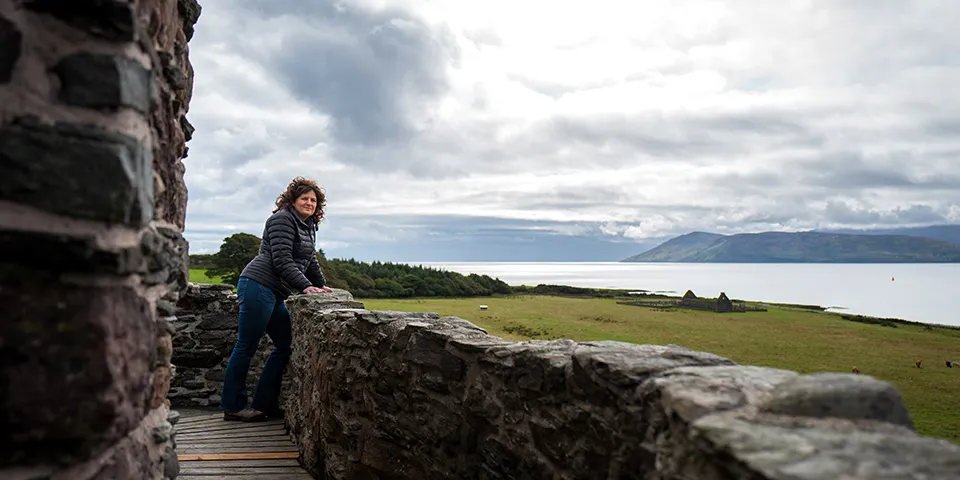
Skipness Castle, Kintyre Peninsula, Scotland. Scotland is dotted with the magnificent remains of castles. Some are so old that only a few walls remain, serving at most to fire the imagination. Skipness Castle is an exception. Several of its rooms are still intact. When you see a monument like this, you wonder: how did they keep it warm without gas? We are seeing history become topical again today. The need for ways to heat historic buildings without gas is more urgent than ever. And that is just one of the problems we will face in the years ahead.
At the end of December 2018, the long-awaited draft Climate Agreement was published. In it, five sector groups (the built environment, mobility, agriculture and land use, electricity and industry), led by the Climate Council, set out their provisional plans for reducing CO2 emissions. Subsequently, on Tuesday 28 May, the Senate voted in favour of the Climate Act. This Act enshrines the main principles of climate policy. The pathway for achieving our climate targets is now set. But what does the Act mean in practice? And what mechanisms will we have at our disposal to ensure we stay on course to meet those targets?
The Climate Act is, first and foremost, a framework act: legislation that sets out general principles, responsibilities and procedures. Its central framework consists of three clear targets: greenhouse gas emissions must be cut by 49% by 2030 compared with the 1990 baseline year. By 2050, the reduction must be 95%. At the same time, the share of greenhouse gas-neutral electricity must rise to 100% by 2050.
How we are to achieve these targets will be set out in the Climate Plan, which the government must draw up every five years. The plan will contain the main decisions the government intends to take on climate policy in the years that follow. It will also include, among other things, the maximum CO2 emissions for each sector over a five-year period and five-yearly energy-saving targets. Six to twelve months before the Climate Plan is finalised, the Netherlands Environmental Assessment Agency (PBL) will model its impact. That will help keep us on our toes.
The political message is clear: this is serious. Given the targets, the Climate Act will come into force as soon as possible, probably this year. The Climate Act’s success in practice depends on the final Climate Agreement: the package of concrete measures that businesses, organisations and the government are still negotiating at the sector tables, and which will form part of the first Climate Plan. The Climate Agreement is expected to be announced in late June or early July.
The Climate Plan will provide a framework for the annual Climate Report, the government’s response to the Climate and Energy Outlook, which the PBL will publish on the fourth Thursday of every October and which will contain the latest figures and other up-to-date information on the climate. To keep the promises made alive, this day will henceforth be known as Climate Day. But with ambitious climate targets in mind, from now on every day is really Climate Day for us!
Liesbeth Schippers, partner and lawyer at Pels Rijcken
Question about this story? Ask your question
Keep following this
Get an email when a new story is published. No account needed.
- SubjectBouwMat







