









Earthworks are an art
We can’t say it often enough: “Earthworks are an art”. Unfortunately, we still see unsafe excavations every day. In the Netherlands, we have developed the management of groundwater and the protection of our land from rising sea levels into a highly specialised field. So why aren’t we applying the same level of expertise to earthworks?
A project’s success often depends closely on how the earthworks are carried out. There is more to digging a hole or trench than meets the eye. Before starting to dig, it is important to know what soil layers are present and where the groundwater level is. Excavating with natural side slopes is only possible if you understand the location and the soil layers. After all, a slope in clay and loam is more likely to remain stable than one in loose sand. A natural slope is therefore not always equally steep, nor can its steepness be determined solely by the space available.
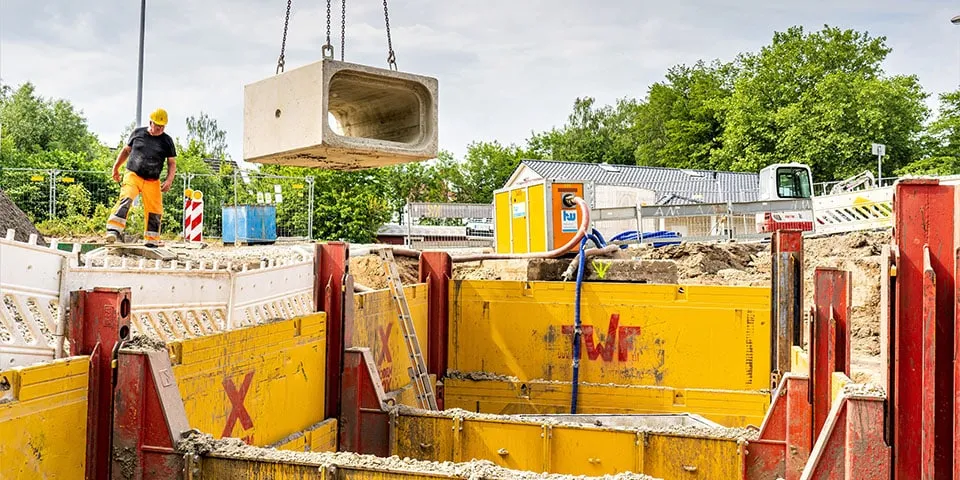
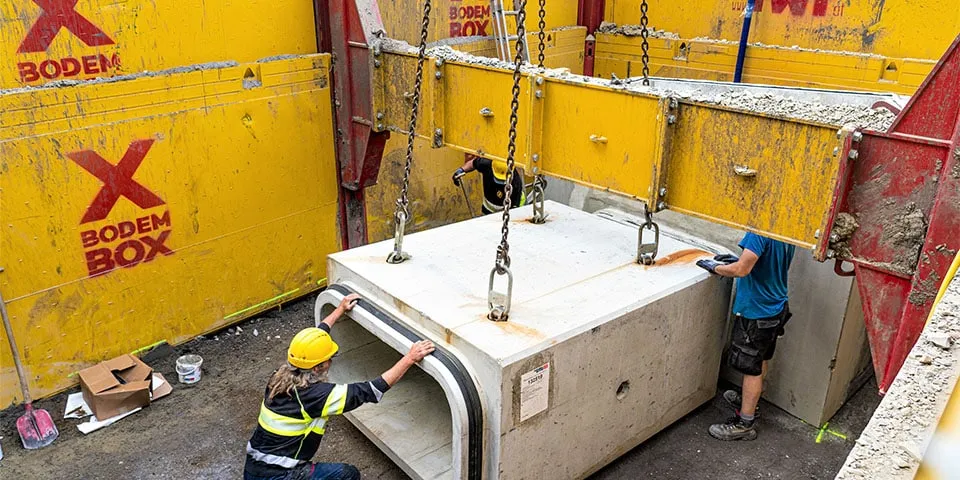
Lifting a sewer chamber into a closed construction pit by BodemBoX, using a Dubbelgeleide BoX-systeem.
A slope that is too steep may remain stable in some cases, but things can also go badly wrong. Factors such as rainfall, groundwater and the load behind the slope can cause it to fail without warning, leading to ground settlement. The consequences may include settlement affecting nearby buildings, sewers and/or cables and pipelines. The risks to workers in the trench are obvious.
Of course, the consequences described above will not necessarily occur, and there are plenty of situations where everything goes well. But if the consequences of settlement can be so serious, why would you even consider excavating without shoring in a situation where there is any doubt? It is like wearing PPE or using fall protection: the risks involved in the work are clear, and you protect yourself in case something goes wrong. Because when it does, it can go very badly wrong.
In light of the above, choosing to use a BoX-systeem should be an easy decision. The opposite is true, because using a BoX-systeem has implications for your project. But it offers many other benefits besides safety. Less earthworks are needed because there are no slopes to excavate and backfill afterwards. This means less working space is required, and loads in the form of equipment and material storage can be placed directly behind the pit or trench. This offers many logistical advantages that can help with planning and project duration. Other benefits include fall protection if you choose to have the BoX-systeem extend above ground level, or the option to clamp on a fence.
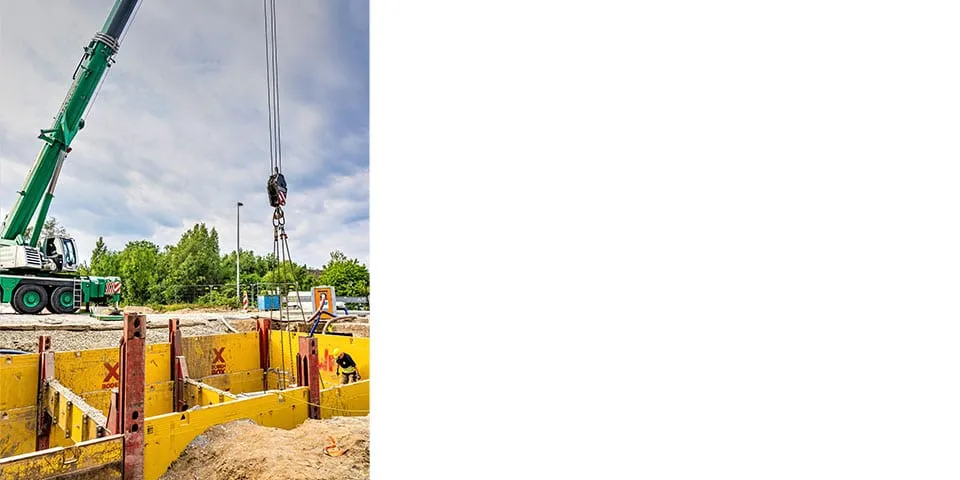
A common criticism of trench shoring is that it causes delays. Assembling BoX-systemen takes time, and installation does not always go smoothly, which can add to the time required. Is that really the case? The key to assembling a BoX-systeem quickly is proper preparation and instruction. At BodemBoX, they make sure that site workers have the right knowledge to assemble a BoX-systeem correctly from the outset. They do this by providing a detailed execution drawing tailored to your project. A manual is also provided with each delivery of BoX-systemen. It is not a lengthy document, but a single, clear work sheet. With every BoX-systeem you hire, you can also get free on-site instruction from one of their trained instructors. Last but not least, BodemBoX can provide the extra hands needed to assemble the BoX-systeem and assist with installation. This way, you are guaranteed a safe pit or trench while also ensuring a fast, practical construction method. You handle the earthworks, and BodemBoX creates the work of art!
Question about this story? Ask your question
Keep following this
Get an email when a new story is published. No account needed.
- SubjectBouwMat







