









Climate change the greatest threat to the global economy
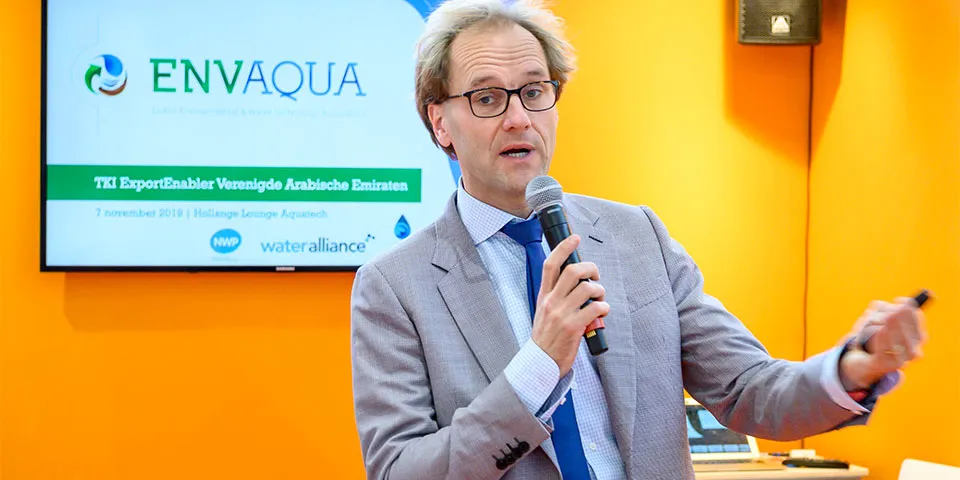
World leaders meet in Davos every year at the World Economic Forum (WEF) to discuss the opportunities and threats facing the global economy. The resulting Global Risks Report 2020 identifies climate change as the greatest threat. Water plays a crucial role, both in terms of drought and flooding. According to Ignaz Worm, director of Envaqua, the trade association for companies in water and environmental technology, it is a powerful report that offers plenty of opportunities for the civil engineering sector.
“The WEF Global Risks Report 2020 highlights a number of interesting issues for our sector,” Worm begins. “World leaders are deeply concerned about the impact of climate change, which is hitting harder than expected, and in particular about the inability to take measures quickly. What makes the latest report interesting is that it compares its findings with those of earlier reports from 2007 to 2020. Back then, the environment did not even feature among the top 5 potential risks to the global economy. In 2020, almost every risk is linked to climate change and how we manage our living environment. For the civil engineering sector, and more specifically for Envaqua’s members, this means they operate in a field that world leaders see as the greatest threat to the global economy.”
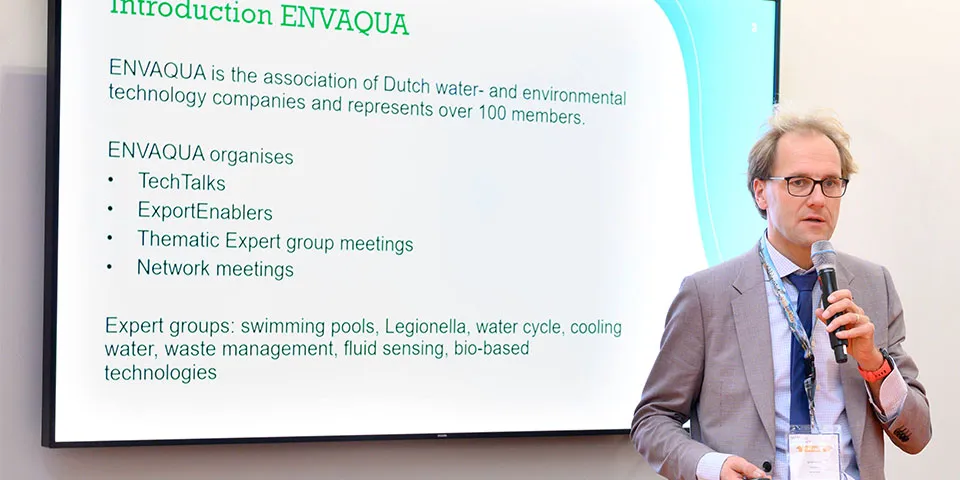
As a trade association, Enqavua works to bring social issues to the fore.
Automatic water-level management
“The risks of flooding on the one hand and severe drought on the other are becoming increasingly apparent and widely acknowledged,” says Worm. “The report indirectly encourages stakeholders to invest in water and environmental technology to reduce future risks. Discharging excess rainwater and mitigating drought are issues we can no longer afford to ignore. It is therefore encouraging that the urgency of the problem is being recognised so explicitly.”
According to Worm, the solutions are often already available. “It is a question of willingness and implementation,” he says. One example: “Automatic water-level management on farmland around cities could deliver a useful win-win. By monitoring at plot level what water level is desirable, or the maximum permissible level, beneath farmland, it can be possible at certain times to speed up the discharge of water from cities without having to build expensive storage basins in urban areas. The reverse applies when it comes to preventing farmland from drying out. This interaction gives water boards an even more active role in urban water management. Automatic water-level management is also a way to prevent the fresh-saltwater interface from rising. In short, there are plenty of possibilities, and all the technology already exists.”
As a trade association, Enqavua works to bring social issues to the fore. Worm says: “Every year, we organise several TechTalks, inviting clients (water boards, local authorities, industries, regulators, …) to present their problems or challenges. We then bring in a number of market players, technology companies, to address them. Both sides are hugely willing to tackle problems, analyse them and work together to find solutions. There are some great topics on the agenda again this year. In this and many other ways, we try to bring water and environmental technology actively to people’s attention. With the backing of our world leaders, the future looks bright for our sector.”
Question about this story? Ask your question
Keep following this
Get an email when a new story is published. No account needed.
- SubjectBouwMat







