









Climate change the greatest threat to the global economy
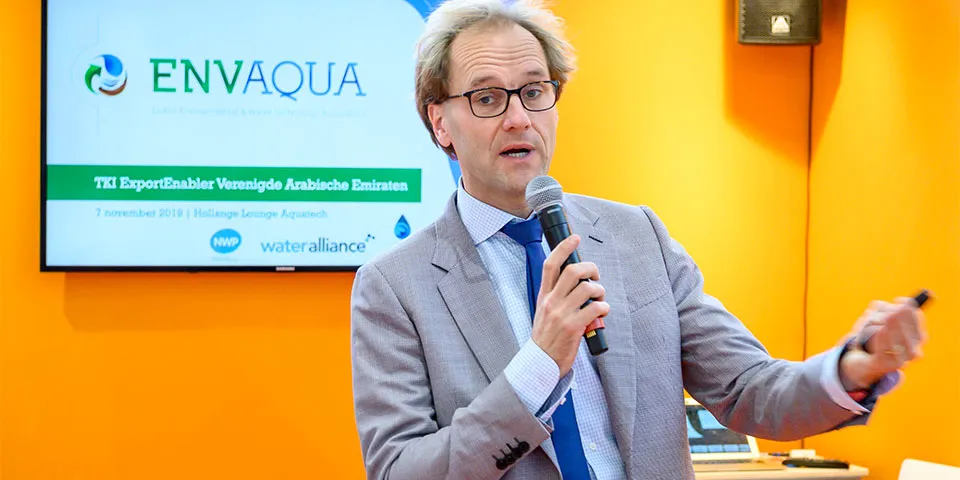
Every year, world leaders gather in Davos for the World Economic Forum (WEF) to discuss the opportunities and threats facing the global economy. The Global Risks Report 2020, based on the forum’s discussions, identifies climate change as the greatest threat. Water plays a crucial role, both in terms of drought and flooding. According to Ignaz Worm, director of Envaqua, the trade association for companies in water and environmental technology, it is a powerful report that offers plenty of opportunities for the civil engineering and infrastructure sector.
“The WEF Global Risks Report 2020 highlights a number of interesting issues for our sector,” Worm begins. “World leaders are deeply concerned about the impact of climate change, which is hitting harder than expected, and in particular about the inability to take action quickly. What is interesting about the latest report is that it compares its findings with those of previous reports from 2007 to 2020. Back then, the environment did not even feature among the top 5 potential risks to the global economy. In 2020, virtually every risk is linked to climate change and the way we manage our living environment. For the civil engineering and infrastructure sector, and more specifically for Envaqua’s members, this means they operate in a field that world leaders see as the greatest threat to the global economy.”
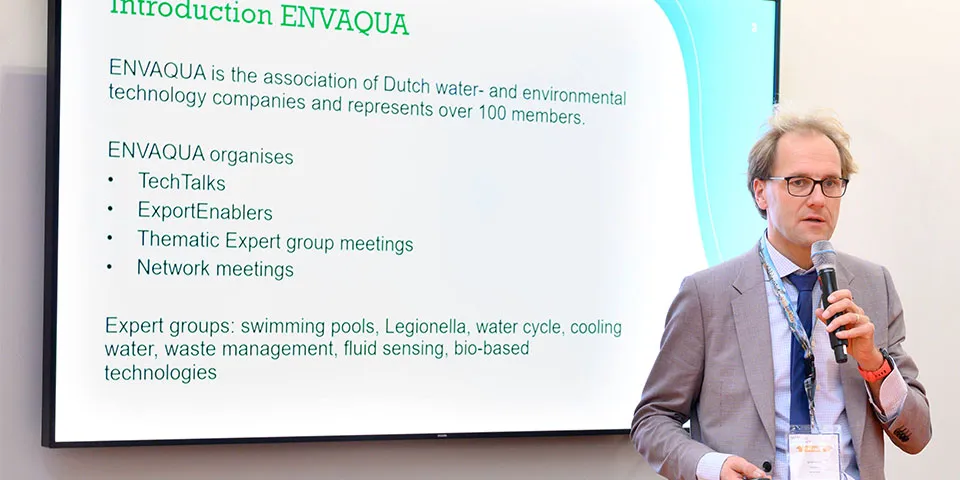
As a trade association, Enqavua is committed to bringing societal issues to the fore.
Automated water level management
“The risks of flooding on the one hand and severe drought on the other are increasingly being felt and recognised,” says Worm. “The report indirectly encourages stakeholders to invest in water and environmental technology to reduce future risks. We can no longer afford to ignore the need to drain excess rainwater and mitigate drought. It is therefore encouraging that the urgency of the problem is being recognised so explicitly.”
According to Worm, the solutions are often already available. “It’s a matter of willingness and implementation,” he says. One example: “Automated water level management on fields around cities could offer a valuable win-win. By monitoring at field level what water level is desirable, or the maximum permissible level, beneath the fields, it is possible at certain times to speed up the drainage of water from cities, without having to build expensive storage basins in the city. And vice versa, to prevent fields from drying out. This interaction allows water boards to play an even more active role in urban water management. Automated water level management is also a way to prevent the freshwater-saltwater interface from rising. In short, there are plenty of opportunities, and it is all existing technology.”
As a trade association, Enqavua is committed to bringing societal issues to the fore. Worm says: “We organise several TechTalks every year, inviting clients such as water boards, local authorities, industries and regulators to put their problems and challenges on the table. We then bring in a number of market players, including technology companies. Both sides are extremely willing to tackle problems, analyse them and work together on solutions. There are some great topics on the agenda again this year. In many ways, we are working to bring water and environmental technology actively to people’s attention. With the support of our world leaders, the future looks bright for our sector.”
Question about this story? Ask your question
Keep following this
Get an email when a new story is published. No account needed.
- SubjectBouwMat







