









Click in… click out… revolutionary new odour trap for gullies
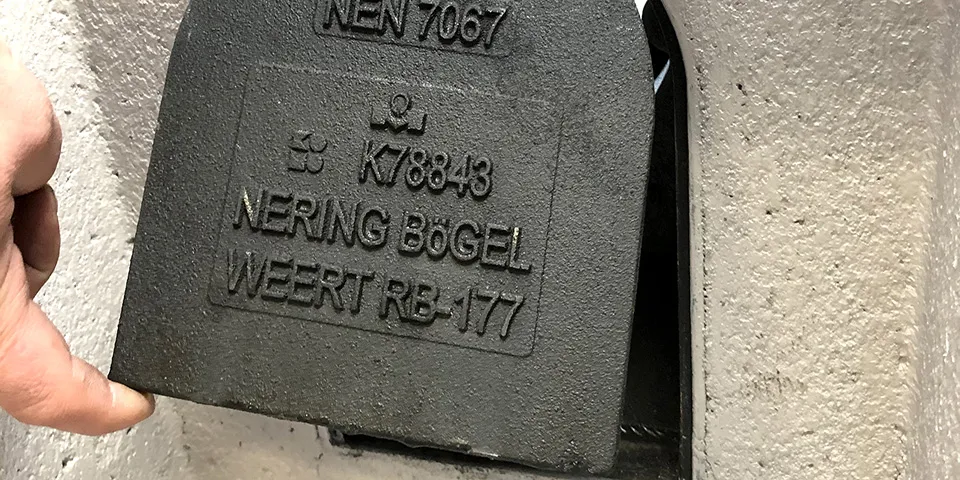
For more than 250 years, Nering Bögel has been developing innovative solutions for optimal infrastructure, with a particular focus on finding solutions to the problem of rainwater.
A familiar problem for local authorities is a broken or missing odour trap in a gully. This can prevent the gully from functioning properly, potentially leading to blockages in the sewer, water on the road, litter in surface water or an unpleasant smell of sewage.
“An odour trap is an essential part of a gully,” says Toin Bongers, Managing Director at Nering Bögel. “It hangs in the outlet assembly so it can be easily removed when the gully is inspected or cleaned. Once the work is complete, it must be put back in place. Unfortunately, odour traps can come loose and go missing. Nering Bögel has the solution!”
A new generation of click valve
Nering Bögel has developed a new hinged plastic odour trap: the click valve. “The blue click valve is designed specifically for Nering Bögel gullies. The red click valve fits other concrete and cast-iron gullies in the Netherlands,” says Bongers. “This means that the loose cast-iron odour trap in existing gullies can also be easily replaced with this innovative click valve.” The new click valve is secured in the outlet chamber, but can be removed just as easily. “This spring-loaded valve closes firmly against the seat in the outlet chamber and can be opened by hand. It is therefore ideal for maintenance and inspection, as the sewer can be flushed without removing the valve.
The biggest advantage: a valve in the gully will never be left open again!”
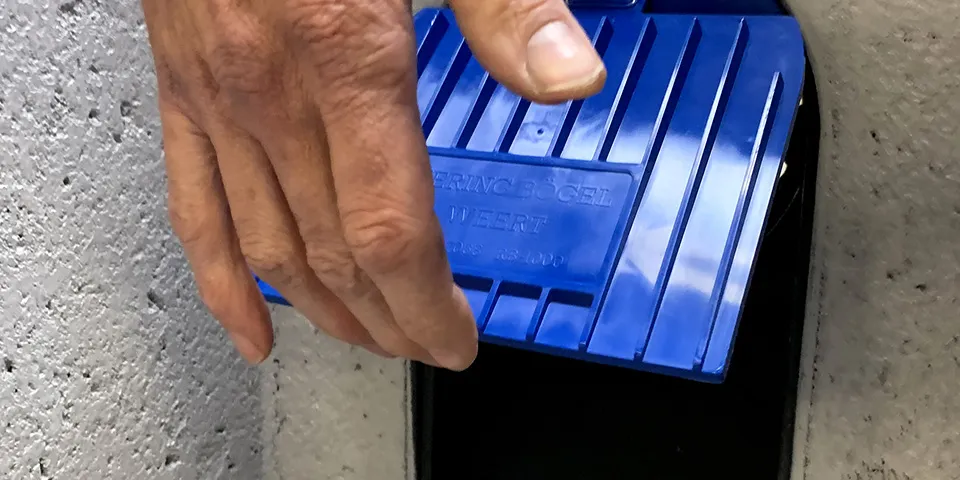
Excellent spring action for a good seal, with the sewer able to be flushed without removing the valve.
A combination of cast iron and plastic
Bongers explains that the outlet assembly (the connecting spigot to which the sewer pipe is attached) will remain cast iron. Only the flap will be made of plastic. Why cast iron? “Cast iron has proven to be a reliable, durable and strong material. The gully can then be installed easily using a kolkenboy.”
Synergy
“Together with Delft-based start-up BluChain, we are exploring the possibility of building sensors into the click valve,” continues Richard Janssen, owner of Nering Bögel. “You cannot see them, but they collect data that is passed on to the manager. This could include data on blockages, leaks, back-ups in the sewer and the like. In addition, we are working with this start-up to develop a multifunctional rainwater forecasting and warning system. This will give managers of structures such as viaducts and tunnels time to act and prevent, among other things, traffic gridlock.”
“I am sure BluChain’s high-tech forecasting and warning system can be combined with the data we will collect from road gullies in the future. This will enable us to monitor a large area or a district for flooding.” Janssen concludes: “Being able to predict how the water system will behave helps us respond to its effects.”
Question about this story? Ask your question
Keep following this
Get an email when a new story is published. No account needed.
- SubjectBouwMat







