









Click in… click out… revolutionary new odour trap for gullies
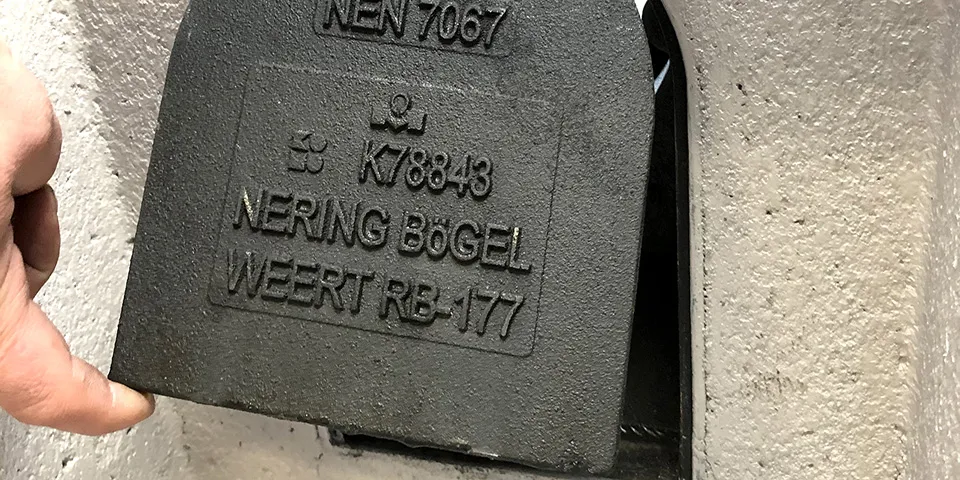
For over 250 years, Nering Bögel has been developing innovative solutions for optimal infrastructure, with a particular focus on finding solutions to the rainwater challenge.
A familiar problem for local authorities is a broken or missing odour trap in a gully. This can prevent the gully from functioning properly, potentially causing blockages in the sewer, water on the streets, litter in surface water or unpleasant sewer odours.
“An odour trap is an essential part of a gully,” says Toin Bongers, Managing Director at Nering Bögel. “It hangs in the outlet assembly so that it can be easily removed when the gully is inspected or cleaned. Once the work is complete, it needs to be put back in place. Unfortunately, odour traps can accidentally come loose and go missing. Nering Bögel has the solution!”
A new generation of click valves
Nering Bögel has developed a new hinged plastic odour trap: the click valve. “The blue click valve is specifically designed for Nering Bögel gullies. The red click valve fits other concrete/cast-iron gullies in the Netherlands,” says Bongers. “It can therefore also be used to easily replace the loose cast-iron odour trap in gullies that have already been installed.” The new click valve is secured in the outlet chamber, but is just as easy to remove. “This spring-loaded valve closes against the outlet chamber seat with sufficient force and can be opened by hand. That makes it ideal for maintenance and inspection, as the sewer can be flushed through without removing the valve.
The biggest advantage: no more open valves in gullies!”
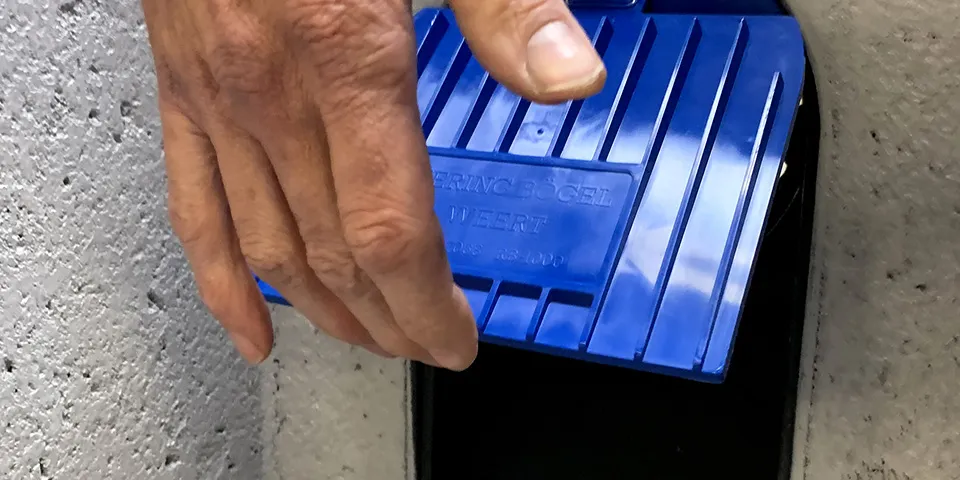
Excellent spring action for a good seal, and the sewer can be flushed through without removing the valve.
Cast iron and plastic combined
Bongers explains that the outlet assembly (the connecting spigot to which the sewer pipe is attached) remains made of cast iron. Only the valve is made of plastic. Why cast iron? “Cast iron has proved to be a reliable, durable and robust material. The gully can then be installed easily using a kolkenboy.”
Synergy
“Together with Delft-based start-up BluChain, we are exploring the possibility of building sensors into the click valve,” continues Richard Janssen, owner of Nering Bögel. “They are invisible, but collect data that is relayed to the operator. This could include data on blockages, leaks, surcharging in the sewer and so on. We are also working with this start-up to develop a multifunctional rainwater forecasting and warning system. This will give operators responsible for structures such as flyovers and tunnels time to act and help prevent traffic gridlock, among other things.”
“I am certain that BluChain’s high-tech forecasting and warning system can be combined with the future data from our road gullies. This would allow us to monitor a large area or part of a city for waterlogging.” Janssen concludes: “Being able to predict how the water system will behave helps us respond to its effects.”
Question about this story? Ask your question
Keep following this
Get an email when a new story is published. No account needed.
- SubjectBouwMat







