









Civil engineering in the service of society
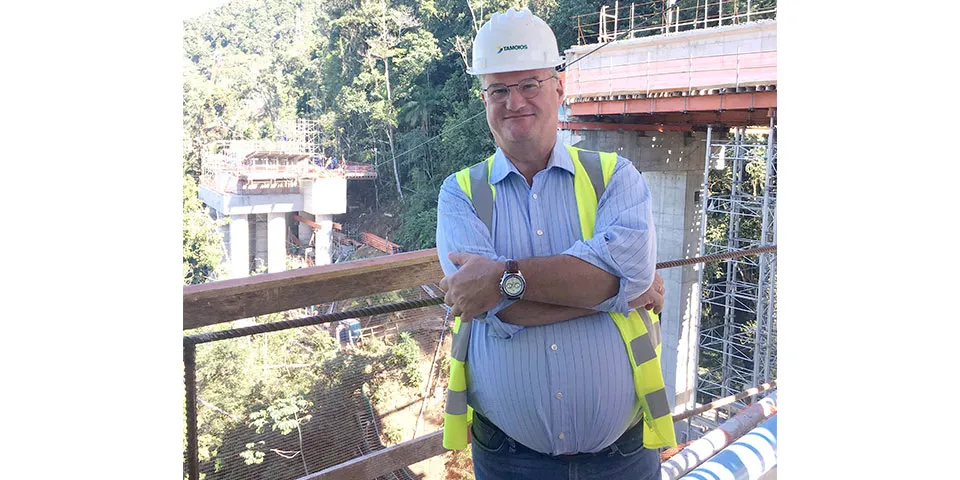
It hardly needs saying that society and the economy are currently facing major disruptions. Over the past six months, the current pandemic has shown just how vulnerable society is. At the same time, it has also demonstrated people’s resilience and adaptability, as I have seen how quickly we have switched to working from home and embraced video meetings and webinars.
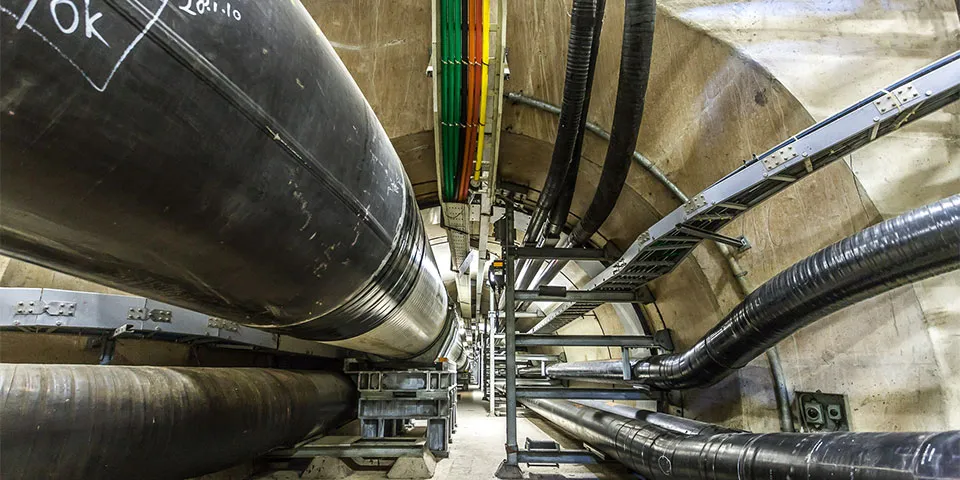
In the 1980s, I graduated in road and water engineering from what was then known as HTS Rotterdam. We secretly called it civil engineering even then, but at the time that term was reserved for TU Delft. We looked up to it with a certain degree of awe: there was no equality yet under EU agreements on higher education. My graduation project involved developing digital calculation models for drinking water distribution networks. That was quite new: writing the programme ourselves in ALGOL-60, the successor to Fortran, with each line on a separate punch card. A mainframe computer at TU Delft would then get to work and produce a result. We were on the brink of the digitalisation of our sector, which began with the calculator, replacing the slide rule, and continued through to today’s digital drawing and BIM. That development has itself become the new normal, and developments such as robotics, 3D printing and, above all, parametric design, with or without artificial intelligence, are a sign of what is to come.
But there is more to it than that. The major challenges of our time are somewhat different from those of the past. The Netherlands knows better than most the struggle against water, which has repeatedly tried to reclaim the land. The civil engineering and infrastructure sector grew out of that struggle. The civil engineer, counterpart to their military colleague, was tasked with protecting society from a natural
enemy. That has always been one of the things that attracted me to the profession: serving society.
Society is now facing a succession of disruptions: the pandemic, a recession, climate change and the loss of biodiversity. What makes this period different is that humans themselves are now responsible for many of these disruptions. Geologists now speak of the Anthropocene, a new geological epoch in which human activity interferes with natural processes. This calls on the civil engineering and infrastructure sector not only to provide answers, but also to act differently.
The rationale behind the linear economy, the growth model on which all our business models are based, is under pressure. The answer lies in a circular economy. But a circular economy requires a completely different way of thinking and working together. Only through collaboration can waste from one company’s production process become a raw material for another company. Collaboration leads to exchange.
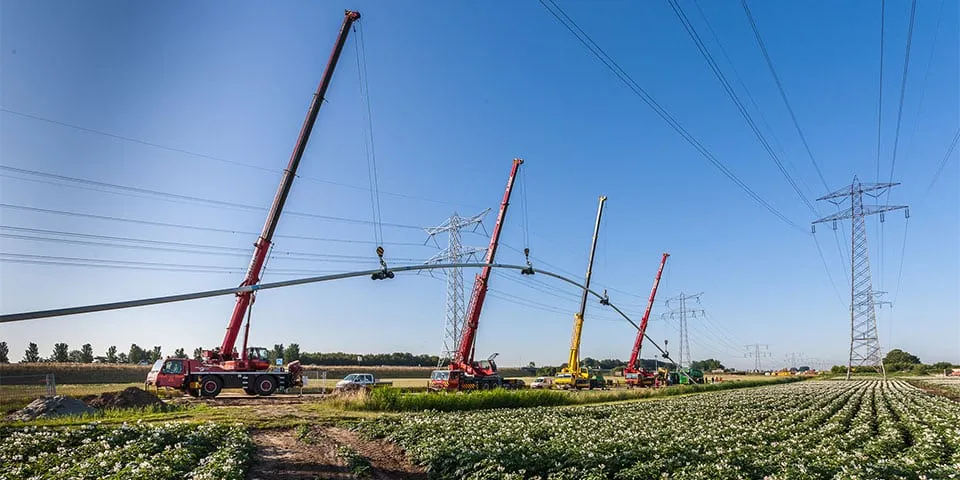
This collaboration, the exchange of products and the connectivity it requires are at the heart of the vision of BIG in Pipelines, the Flemish-Dutch association of which I have the privilege of being chair. The world of pipelines is changing. Demand for additional connectivity is growing, but that demand must also be considered in the context of new developments. How do you build a pipeline within a circular economy? Is this a private-sector role, or is there a role for government? Could something like ‘Pipeline as a Service’ emerge, just as we are now seeing the development of ‘Mobility as a Service’? How can we make pipelines, already one of the safest ways to transport hazardous substances, even safer? This last point is important if we are to reduce external safety zones and free up more space for the housing that is needed.
The future will be one of collaboration, of interaction between stakeholders and policy areas. It will be a future in which traditional roles shift: contractors become service providers, while architects and structural engineers come together as parametric designers. Transitions bring change and new opportunities. Let us embrace that future and, drawing on the essence of civil engineering, help society to endure.
Han Admiraal: Chair, BIG in Pipelines
bigleidingen.eu
Question about this story? Ask your question
Keep following this
Get an email when a new story is published. No account needed.
- SubjectBouwMat







