









Civil engineering in the service of society
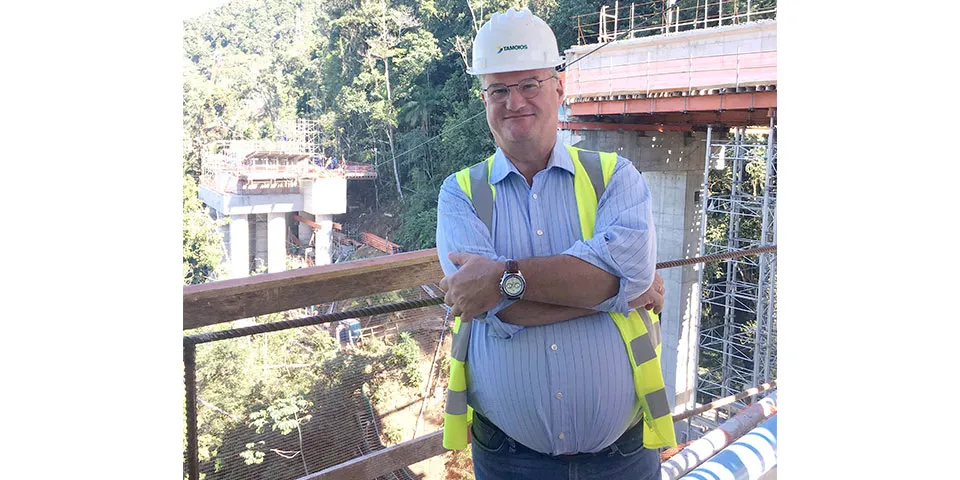
It hardly needs saying that society and economic life are currently experiencing major disruptions. Over the past six months, the current pandemic has shown just how vulnerable society is. At the same time, it has also demonstrated people’s resilience and adaptability, as I have seen how quickly we have shifted to working from home, embracing video meetings and webinars.
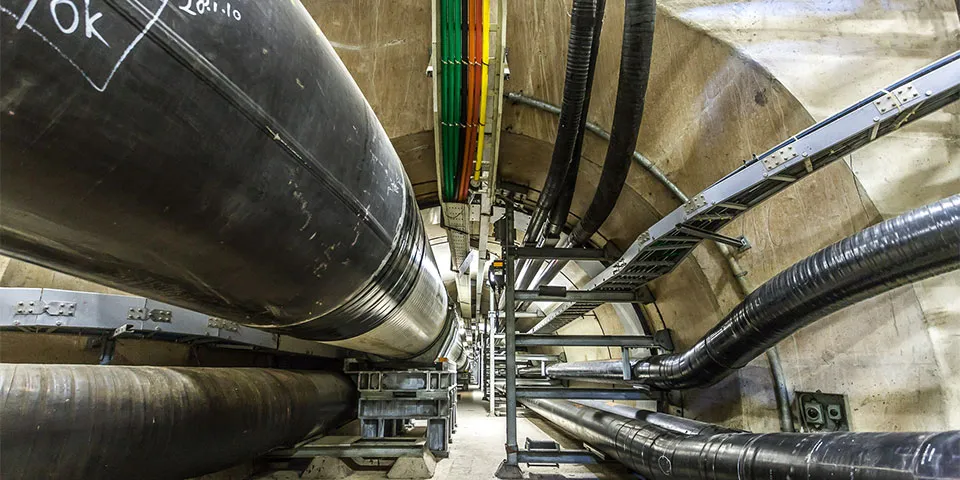
In the 1980s, I graduated in Civil Engineering from what was then known as HTS Rotterdam. We secretly called it civil engineering even then, but the term was reserved for TU Delft. We regarded it with a certain awe, as there was not yet any equivalence under EU agreements on higher education. My graduation project involved developing digital computational models for calculating drinking water distribution networks. That was quite new: writing the programme myself in ALGOL-60, the successor to Fortran, with each line on a separate punch card. A mainframe computer at TU Delft then got to work and produced a result. We were on the brink of the digitalisation of our sector, which began with the calculator replacing the slide rule and continued through digital drafting to today’s BIM. That, too, has become the new normal, and developments such as robotics, 3D printing and, above all, parametric design, with or without artificial intelligence, are a sign of what is to come.
But there is more at stake. The major challenges of our time differ somewhat from those of the past. The Netherlands knows better than most the struggle against water, which has repeatedly tried to reclaim the land. The civil engineering and infrastructure sector grew out of that struggle. The civil engineer, counterpart to their military colleague, was tasked with protecting society from a natural
enemy. That has always been one of the things that attracted me to the profession: serving society.
Society is now facing successive disruptions: the pandemic, recession, climate change and the loss of biodiversity. What makes this era different is that humans themselves are now the cause of many of these disruptions. Geologists now speak of the Anthropocene, a new geological epoch in which human activity interferes with natural processes. This means that the civil engineering and infrastructure sector must not only provide answers, but also change the way it operates.
The rationale of the linear economy, the growth model on which all our business models are based, is under pressure. The answer lies in a circular economy. But a circular economy requires a completely different way of thinking, one based on collaboration. Only through collaboration can waste from one company’s production process become raw material for another. Collaboration leads to exchange.
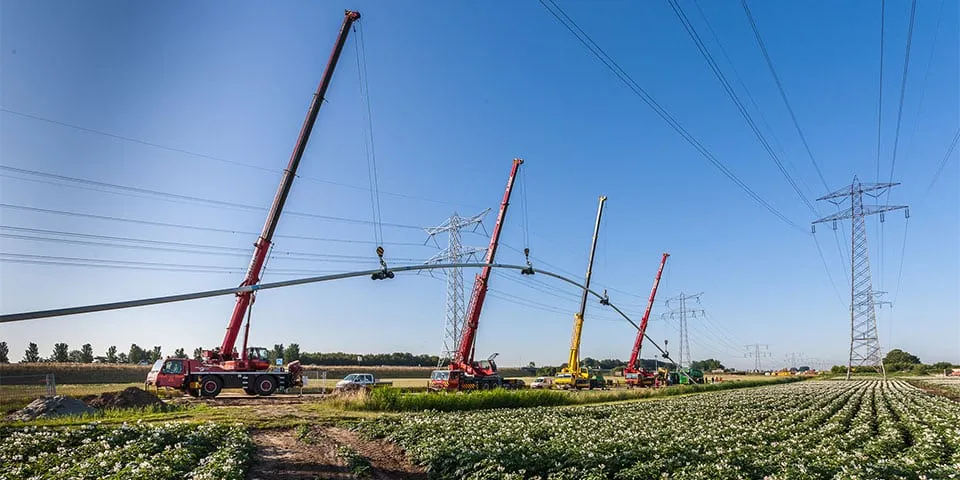
It is this collaboration, the exchange of products and the connectivity it requires that lie at the heart of the vision of BIG in Pipelines, the Dutch-Flemish association of which I have the honour to be chair. The pipeline world is changing. Demand for additional connectivity is growing, but it must also be considered in the context of new developments. How do you build a pipeline within a circular economy? Is that a private-sector role, or does the government have a part to play? Could something like ‘Pipeline as a Service’ emerge, just as we are now seeing the development of ‘Mobility as a Service’? How can pipelines, already one of the safest ways to transport hazardous substances, be made even safer? This is important in order to reduce external safety zones and free up more space for much-needed housing.
The future will be one of collaboration, of interaction between parties and policy areas. It will be a future in which traditional roles shift: contractors become service providers, while architects and structural engineers come together as parametric designers. Transitions bring change and new opportunities. Let us embrace that future and, drawing on the very essence of civil engineering, help society to endure.
Han Admiraal: Chair, BIG in Pipelines
bigleidingen.eu
Question about this story? Ask your question
Keep following this
Get an email when a new story is published. No account needed.
- SubjectBouwMat







