









‘Choosing sustainable timber protects forests’
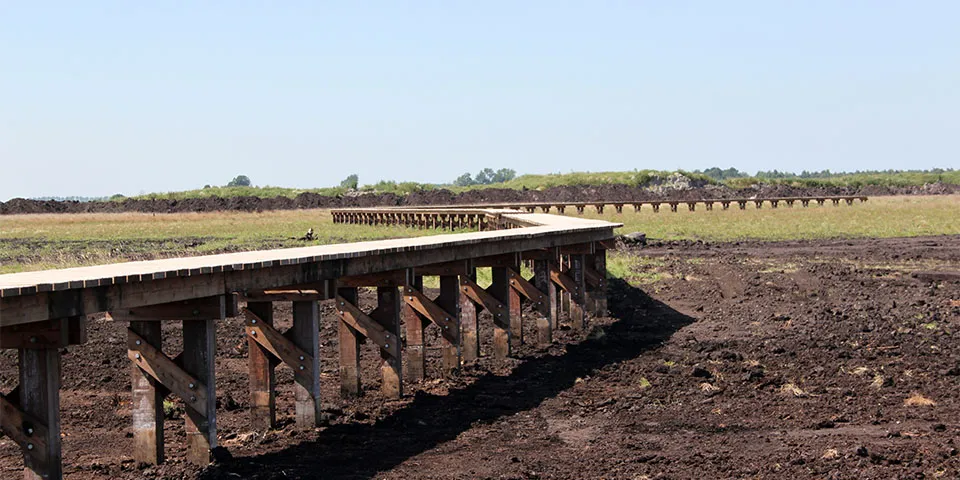
In Groningen, walkers cross a new wetland on a long boardwalk. Certified timber forms the basis of this contemporary recreational project. That goes without saying, according to the timber supplier: ‘By choosing verifiably sustainable timber, you protect the forest.’
Verifiably sustainable timber supports a boardwalk across a new wetland
This is the Dannemeer boardwalk in Schildwolde, Groningen. Dannemeer is a lake and peat wetland created between 2010 and 2014 in Groningen. As a nature reserve, it covers a total area of 525 hectares. In the interests of sustainability, agricultural land has been returned to nature. In the future, a solar farm will provide a buffer between the nature reserve and the agricultural hinterland. This is a concentrated area of sustainable development. A wooden boardwalk has been built here, offering walkers a unique experience as they cross the wetland on verifiably sustainable timber.
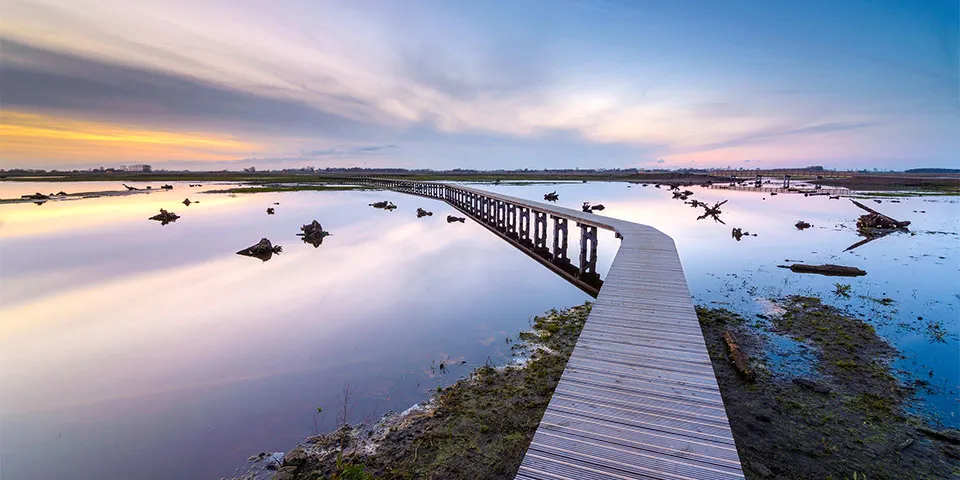
Dannemeer is a lake and peat wetland created between 2010 and 2014 in Groningen.
Klaas Jan Swager, the timber supplier for this project, explains: “The client is the government, and the contractor carried out the project. The government requires the timber to meet certain sustainability criteria.” This means that the timber must meet requirements concerning the sustainability of its origin. Using a certificate for sustainable sourcing makes this verifiable. Foreco goes a step further: “We want to help ensure the right timber is used in the right place. In this case, we therefore opted for a composite product made from softwood and hardwood.”
The boardwalk is made from composite piles: 40% certified tropical hardwood and 60% certified softwood. The softwood and hardwood are bonded with a finger joint using a durable adhesive. This ensures a strong structure and a long service life. The upper section, made of hardwood, is above the water, while softwood is used below the waterline. Is it more complicated to sell a composite product under the government’s current sustainable procurement requirements? Swager: “Working with the client, you look for a pragmatic solution that meets the sustainability criteria. We guarantee the timber’s origin.”
“The choice of verifiably sustainable timber should always be an obvious one, wherever you are,” Swager continues. “Timber has a very positive environmental profile. And using certified timber protects forests.” The idea that using timber protects forests may sound contradictory, but it does not. Sustainable forest management helps conserve forests. This is important from an ecological, environmental and economic perspective, because many people and animals around the world depend on forests and forest products. Under sustainable forest management, the amount of timber that can responsibly be harvested is assessed in advance. The forest is then left undisturbed for a set period, allowing its flora and fauna to remain intact and the remaining trees to continue growing.
An important aspect of sustainable forest management is looking beyond the timber itself. Forests provide vital ecosystem services, such as absorbing CO2 and producing oxygen. They also affect things like water management and air quality. Preventing erosion, for example, is another important function of forests.
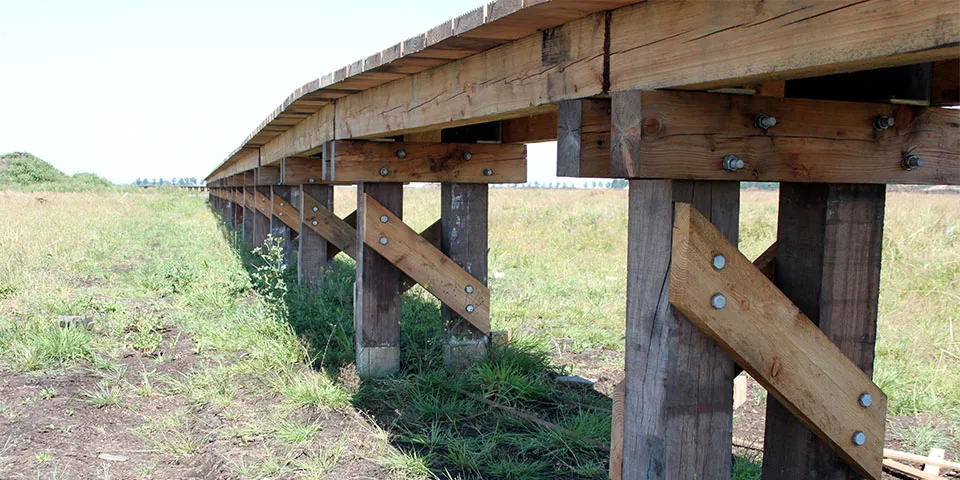
The boardwalk is made from composite piles.
The United Nations estimates that 1.6 billion people worldwide depend on forests for some of their food supply or for other products and services, such as medicines, raw materials, ecosystem services or part of their livelihood. Under sustainable forest management, local people are closely involved in managing the forest. They retain a say in what happens to it and are also provided with employment through timber production.
The greatest threat to forests is their conversion to other forms of land use, often agriculture to meet rising demand for products such as palm oil, rubber, cocoa, soya and meat. Giving forests economic value through timber production greatly reduces the risk of deforestation. This benefits local communities, wildlife and the environment.
Given the enormous construction challenge facing the Netherlands, with 75,000 new homes needed each year between 2020-2025, there is a significant opportunity to use more timber instead of other materials that contribute to climate change. This also aligns with the growing importance attached to forests in general as a way of helping to achieve climate targets. Demand for certified forest products is crucial to increasing the area of forest under sustainable management. Under the Convenant Bevorderen Duurzaam Bosbeheer, various parties, including government, trade unions, civil society and industry associations, are working together to promote sustainable forest management. They see stimulating demand for timber from sustainably managed forests as an important way to reduce the risk of deforestation. Would you also like to switch to verifiably sustainable timber for your project? Find out more at www.inkoopduurzaamhout.nl.
Question about this story? Ask your question
Keep following this
Get an email when a new story is published. No account needed.
- SubjectBouwMat







