









Assessing and analysing risks in the civil engineering sector
Infrastructure works can affect surrounding buildings. By assessing potential risks in advance, putting mitigation measures in place and monitoring the impact on the surroundings during construction, a great deal of damage can be prevented. “Zero consequential damage: that must be the starting point for all infrastructure works,” says Fred Pannekoek of Fides Expertise, rightly.
Assessing risks
Fides Expertise specialises in assessing and analysing risks in the infrastructure sector, both for clients and insurers (before a project goes to market), as well as for contractors. “We assess the risks posed to the surroundings and look at the best way to monitor them during construction,” explains Pannekoek. “This ranges from monitoring whether an anticipated drop in the water level matches the actual drop, and monitoring the deflection of a sheet-pile wall around a large excavation, to monitoring the effects of infrastructure works on sensitive buildings or underground cables and pipes.”
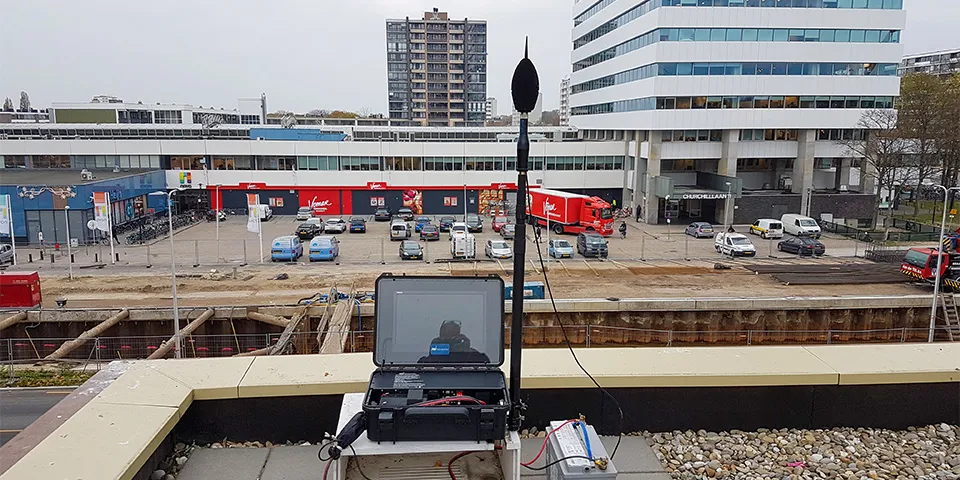
Fides Expertise’s equipment for measuring vibration, noise, groundwater levels and deformation is fitted with automatic alerts when thresholds are exceeded.
A pragmatic approach
In all cases, it is important to schedule enough measurement points during the works, so that timely action can be taken in the event of any settlement or excessive vibration. “Every project is unique. We assess the risks based on the planned works. Although specifications are often available, the working methods are often not described. We assess the potential risks for each situation, prescribe mitigation measures and select the right monitoring method. It is important to take a pragmatic approach to that last step, and this is an area where the industry still sometimes falls short. It is always a matter of weighing up the potential risks, the appropriate monitoring equipment and the associated costs. Taking a measurement every half-hour simply makes no sense in some cases,” Pannekoek stresses.
Anticipating issues in good time
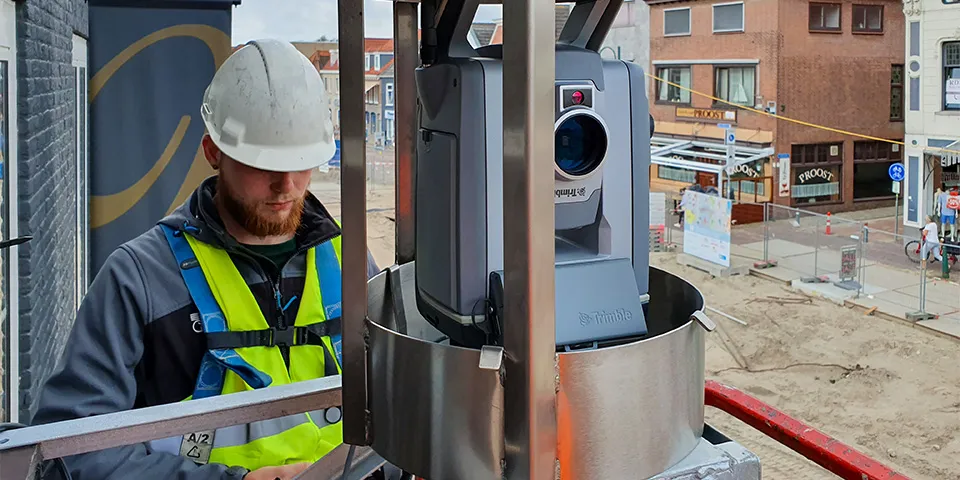
Fides Expertise’s equipment for measuring vibration, noise, groundwater levels and deformation is fitted with automatic alerts when thresholds are exceeded. “Our robotic total stations for measuring deformation can even be set to trigger several alarm levels, allowing action to be taken in good time after an initial warning. Thresholds are set out in the monitoring plan that we draw up together with the client. It also describes the steps to be taken when a threshold is reached. On large, complex projects, monitoring meetings are even held every 2 weeks to discuss the measurement results and define further actions. The aim throughout is to preserve the structural safety and appearance of the surrounding buildings.”
Question about this story? Ask your question
Keep following this
Get an email when a new story is published. No account needed.
- SubjectBouwMat







