









Apeldoornseweg: from waste plan to materials plan
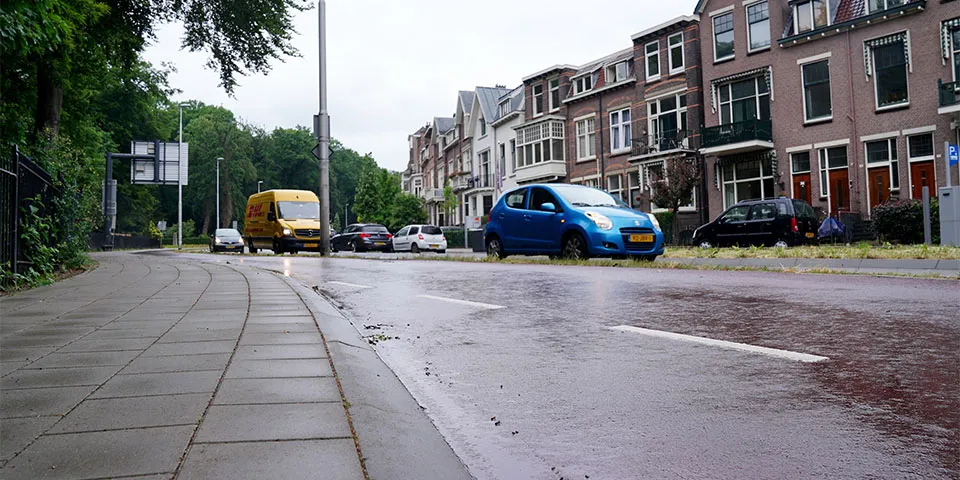
How could the municipality of Arnhem do as much as possible to promote sustainability within existing contracts? That was the question when it came to the Apeldoornseweg project. “Rather than opting for innovative materials whose value and quality had yet to be proven, we looked at what was possible within the existing road construction contracts,” says project manager Sil Polman. “It turned out to be more than we initially thought.” Among other things, the concrete paving slabs and kerbs, concrete sewer pipes and asphalt were reused.
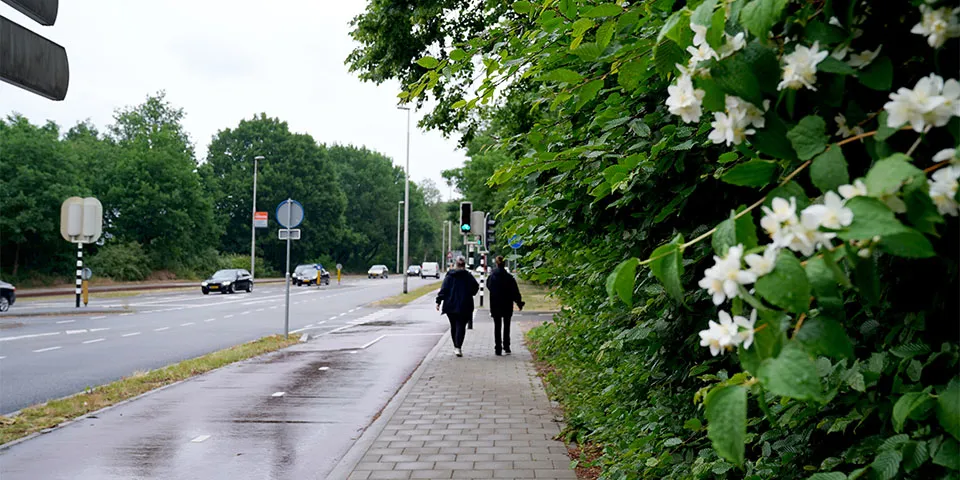
The Apeldoornseweg is an important access route into the city and connects to the A12. Redesigning it was no easy task. “The sewer was in poor condition, as was the asphalt. The bus stops were outdated and the traffic lights needed replacing. We also wanted to put an end to flooding. The Apeldoornseweg has a change in elevation, so water runs downhill from the adjoining park. We also took into account the desire for more green space in the city. And we listened to local residents, who wanted more crossing points and traffic-calming measures.”
With all these challenges, the project was already a demanding one. But the team wanted to go a step further on sustainability too. Not by serving as a test bed for innovative materials, but by using products that met the existing requirements. “We set a number of sustainability requirements that contractors had to meet. For example, there was a minimum requirement for the use of secondary aggregate in the new concrete products. Material can be crushed into rubble and used as road foundation. But old products can also be crushed into aggregate for new products, or removed from one location and reused elsewhere in their original form.”
Arnhem focused on the latter two forms of reuse. “Not all the sewer pipes and paving slabs could be reused. They were crushed into two grades of aggregate. The coarser grade was used in new paving slabs and kerbs; the finer grade was used in the bedding mortar for the concrete walls behind the kerbs, which was used on the project.”
The new concrete kerbs and paving slabs contained 25 per cent secondary aggregate. “As the project progressed, we set a similar requirement for the sewer pipes. In this case, the figure was 15 per cent.” By asking contractors to draw up a materials plan, the municipality kept the dialogue open with the parties involved. “Because we kept an open mind, we identified opportunities along the way to make the project even more sustainable.”
Sustainability was important in this project, as was proven quality. “The assessment guideline ‘Environmental Profiles for Concrete Infrastructure Products’ gives you confidence that the proportion of secondary materials meets the requirement and that the finished product is of good quality.” More information about the assessment guideline is available at Betonhuis.nl/bestrating/brl.
Question about this story? Ask your question
Keep following this
Get an email when a new story is published. No account needed.
- ThemeMaterials and techniques for infrastructure
- SubjectBouwMat







