









An ideal tool carrier
Text and images Bobcat
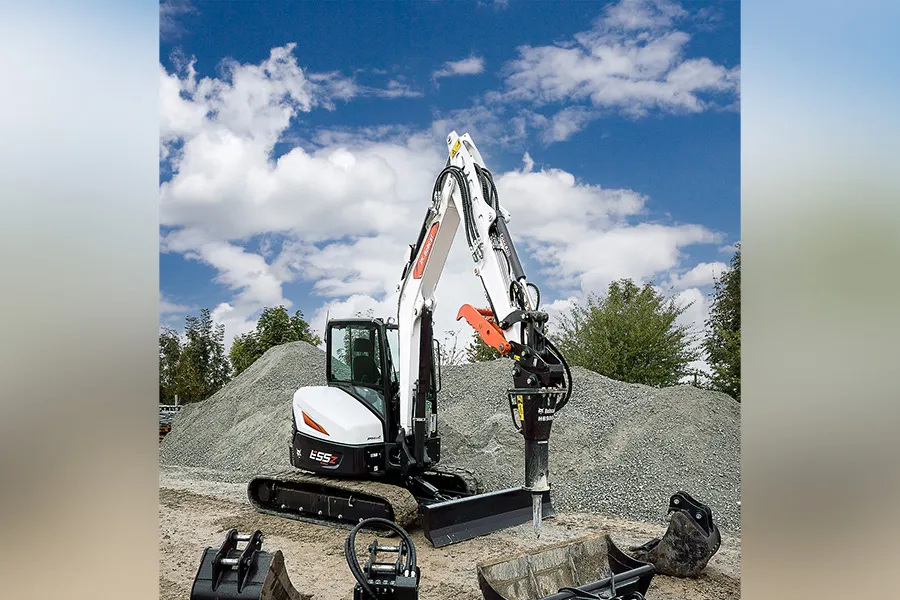
With more than 120 attachments, one machine can in principle handle every task
Bobcat sees it as its mission to enable customers to carry out all their work quickly and efficiently. That is why Bobcat offers not only an extensive range of attachments, but also a series of compact machines that were designed as tool carriers from the outset. The machine power, coupling systems, hydraulics and Attachment Control Device (ACD) have all been developed to make it quick to change attachments and carry out a wide range of tasks with a single machine. For all-round contractors in particular, using attachments is an attractive option from an investment perspective.
An interview with Katinka Kincses, Attachments programme manager at Bobcat.
“We offer one of the most extensive ranges of attachments, enabling you to handle virtually any task in construction, landscaping, agriculture, demolition, recycling and material handling. That is why all our compact machines have been developed as tool carriers,” explains Katinka. “However, it is important to choose the right machine. A wheel loader, for example, is powerful and manoeuvrable, but if you are working on sensitive terrain where you want to minimise ground disturbance, a compact track loader is a better choice. Power is also a factor. If you want to use a stump grinder, an asphalt saw or a snow blower, you need a heavy machine. If you need to travel at high speed, a skid-steer loader is not suitable and a wheel loader is a better option. If lift height and reach are important, an excavator or telehandler is a more obvious choice. They also have the advantage of giving the operator a higher seating position and a better view of the worksite.”
Katinka believes that a specialist machine should only be purchased if you spend whole days carrying out the same specialised work. “A ride-on mower is a great investment for maintaining a golf course, but in most other cases a multifunctional tool carrier is a wiser investment, because you can take on more tasks and projects, work throughout the year and therefore use the machine more intensively. We often see new customers buy a machine with three or four attachments, then add another three or four over time, enabling them to carry out all their work with one machine.”
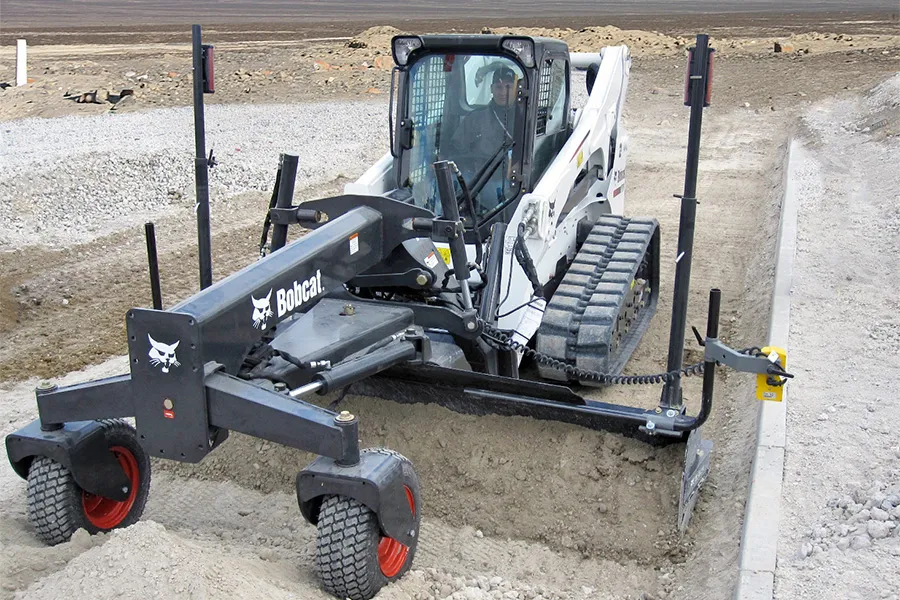
More than 120 attachments
Once companies have chosen a machine, they can select from more than 120 attachments, most of which can be used with any Bobcat machine. For convenience, Bobcat has grouped its attachments by activity: demolition, construction, roadworks, landscaping, forestry, agriculture and material handling. The range is particularly broad for landscaping and road construction. Many attachments have a wide range of uses: buckets, grapples, clamps, pallet forks, rotary brooms, dozer blades, graders, rakes, flail mowers, trenchers, augers and breakers. There are also specialist attachments, such as a vibratory roller, a concrete mixer, a concrete bucket, an asphalt planer, a high-pressure washer, a work platform, a wood chipper and even a tree spade.
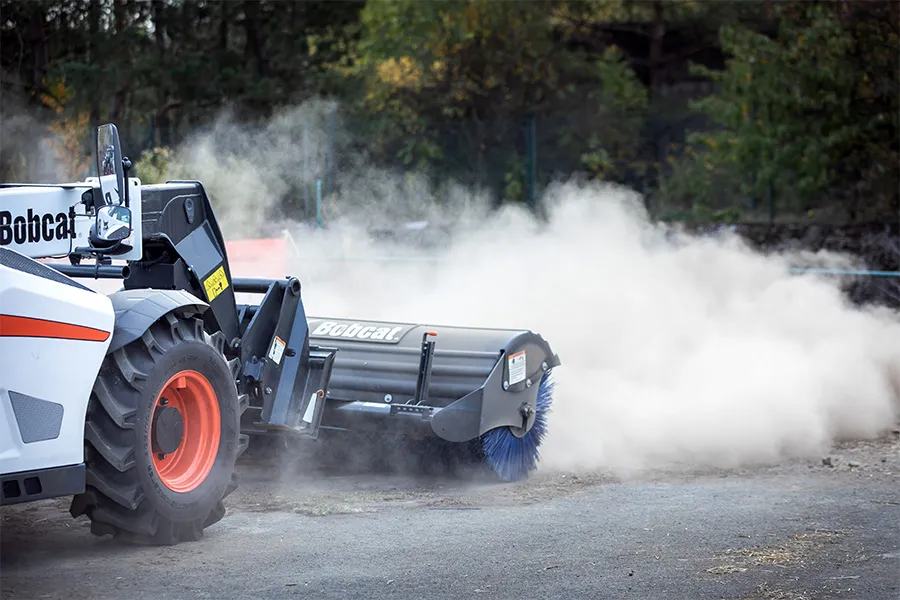
Bobtach system
Bobcat has integrated a wide range of features into its machines and attachments to connect and operate attachments. The Bobtach attachment coupling system has become an industry standard, and since 2000 the Power Bobtach system has also been available, allowing the operator to connect and disconnect non-hydraulic attachments without leaving the cab. Another useful feature is the speed management system, which allows travel speed to be adjusted independently of the attachment drive, enabling higher productivity.
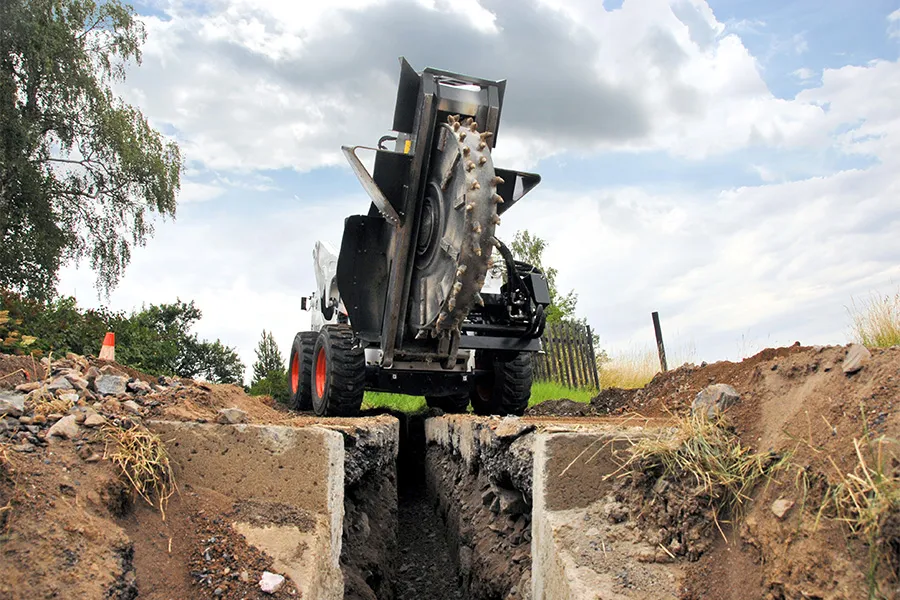
Attachment Control Device
The Attachment Control Device (ACD) is built into the attachment. It is a CAN bus system that manages communication between the machine and the attachment. Thanks to ACD, the machine recognises the attachment and automatically adjusts settings, including those for joystick controls and hydraulics. The operator can adjust the settings on the machine’s display and view the attachment’s operating hours, performance and status. If an operator uses a remote control with a machine, all the controls for operating the attachment are automatically available on it too.
Bobcat with Bobcat
Katinka recommends that customers use Bobcat attachments with Bobcat machines. “Of course, that is part of our business model, but our machines and attachments are optimally matched and tested together. That way, you can be sure that the attachment software is up to date, the hydraulics are powerful enough, all the functions work optimally and they can be operated using the joysticks and buttons in the cab. If technical problems arise, Bobcat will resolve them, so you are not caught between two suppliers pointing the finger at each other over the warranty.”
Product development
As product manager for Attachments, Katinka is responsible for product development, marketing, additional services and training. “I see my department as the voice of the customer. We map out their requirements and carry out field research to develop new attachments and features. For example, we are seeing worksites become smaller and demand for compact machines and attachments grow. Ease of use is also becoming increasingly important. Many companies are struggling with staff shortages, so alternatives to manual labour are needed. Young and inexperienced employees must also be able to operate machines and attachments without extensive training, so that productivity can be maintained. Automation can help with this too. Take the modern grader, for example. It incorporates so much technology that the machine can carry out its work almost autonomously.” She is not yet ready to say much about Bobcat’s latest developments. “But we are working on some interesting things that we will reveal next year.”
Question about this story? Ask your question
Keep following this
Get an email when a new story is published. No account needed.
- SubjectBouwMat







