









A head start
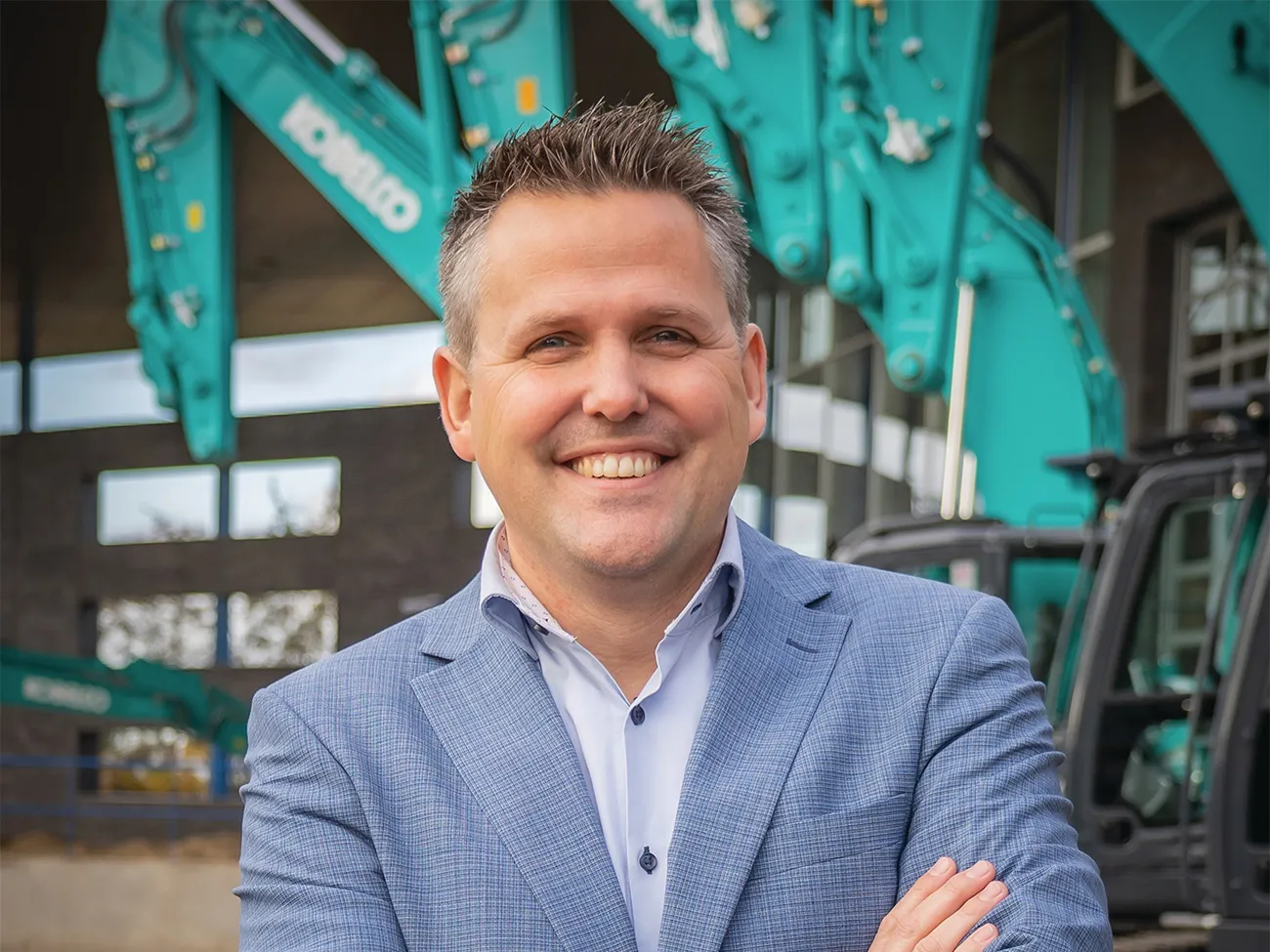
Barely recovered from the lockdowns imposed during the coronavirus pandemic, the world has been plunged into a new crisis by the war in Ukraine. For now, the consequences for our industry remain to be seen. However, we are still clearly feeling the after-effects of the previous crisis in the form of longer lead times. At Kemp Groep, we have always held a large stock of machinery, but in the 16 years I have worked here, I have never seen anything like what is happening now. Fortunately, we anticipated the situation in good time by ordering enough machines from the factories, but even so, we have not been able to prevent customers from sometimes having to wait longer for their new machine. Stock has always been a key policy focus at our company, giving Kemp Groep an edge over many competitors. You can see this in our warehouse too, where we hold a substantial stock of core parts to guarantee prompt parts supply.
Despite the turbulent times, Kemp Groep is investing heavily in expanding its services. In January, the company merged with Hans van Driel. The two long-established family businesses have joined forces under the Royal Reesink banner to form a single company. By operating as one organisation, we can further professionalise our services and respond even more effectively to our customers’ needs. With the recent addition of two Huur&Stuur branches in Veghel and Steenbergen, the company now has seven branches in the Netherlands. This means service response times are getting shorter. Work is currently under way at the De Meern branch to expand its facilities. An additional 1,200 m² workshop and a new, partly automated warehouse will help future-proof Kemp Groep’s technical facilities.
THEORY VERSUS PRACTICE
Looking at the current market, we cannot ignore the trend towards electrification. This is an important development in our industry, and one we fully support. Unfortunately, ideas in theory often fall well short of what is practically achievable. Retrofitting machinery with electric power helps persuade manufacturers to invest in this development (proof of concept), but as a concept it is not scalable and therefore not future-proof. We must guard against a handful of converted machines becoming the norm in tendering, without considering how practical they are to use. We often see specifications calling for a ‘Zero Emission’ machine, while making no provision for charging it. This is currently the biggest challenge for many contractors. Of course, we need to look ahead to the zero-emission construction site in 2030, but we should not forget that significant gains can already be made in the short term by encouraging the use of Stage V engines or synthetic diesel such as HVO100.
In our view, this is not an either-or choice: we need to pursue both. In practice, we see that machine fuel consumption sometimes receives too little attention when contracts are awarded. As well as reducing emissions, newer machines consume much less fuel. More consideration should therefore be given to using hybrid machines. Lower fuel consumption inevitably means lower emissions. To provide greater insight into emissions, Kemp Groep supplies all new machines with an emissions certificate. This document states exactly how much the new model emits at most, and how much less this is than an older model in a lower emissions class.
A business enquiry for Kemp Groep? Get in touch
Companies in this story
Keep following this
Get an email when a new story is published. No account needed.
- SubjectBouwMat
- CompanyKemp Groep







