









A project’s and company’s value is partly determined by their level of sustainability
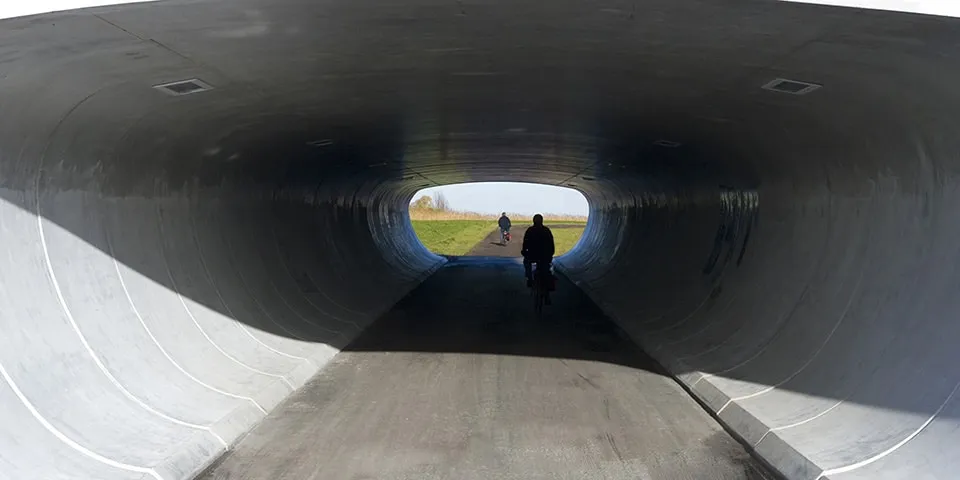
Today’s issues, which bring significant challenges and call for innovative, effective solutions, include digitalisation, sustainability, the energy transition and climate adaptation. Consultancy and engineering firm Lievense places these four pressing themes at the heart of its services. Today, a project’s and company’s value is partly determined by their level of sustainability. Lievense aims to contribute to sustainable solutions for infrastructure, construction and environmental challenges, and has set itself sustainability targets.
Lievense has been, and continues to be, involved in several projects at different levels where circularity plays an important role. In Friesland and Groningen, work has been carried out on projects including the following, with the aim of reusing construction materials.
Fallingabuorren pumping station in Ferwoude
Wetterskip Fryslân is responsible for water management in the province of Friesland and the Westerkwartier in Groningen. Commissioned by Wetterskip Fryslân, Lievense carried out a study into the use of existing concrete in a new concrete structure. One outcome of the study was the development of a flow chart to determine the permitted percentage of recycled concrete aggregate for each structure. The flow chart sets out the requirements for the recycled concrete aggregate and the implications. It distinguishes between reusing concrete structures that are to be demolished as material for the new concrete mix and incorporating recycled concrete aggregate into the mix. This knowledge was applied to the Fallingabuorren pumping station project, in which an existing pumping station was demolished and its concrete reused in the new structure.
The impact of using recycled concrete aggregate instead of ‘conventional’ aggregate depends largely on the quantity used. The maximum quantity of recycled concrete aggregate is determined by the specific performance requirements for the concrete, such as its strength, environmental and consistency classes, as well as its intended use. To meet the circularity targets, Lievense prepared the preliminary design, detailed design and associated RAW specification. The pumping station was completed in 2018 by Oosterhuis BV from Nijeveen.
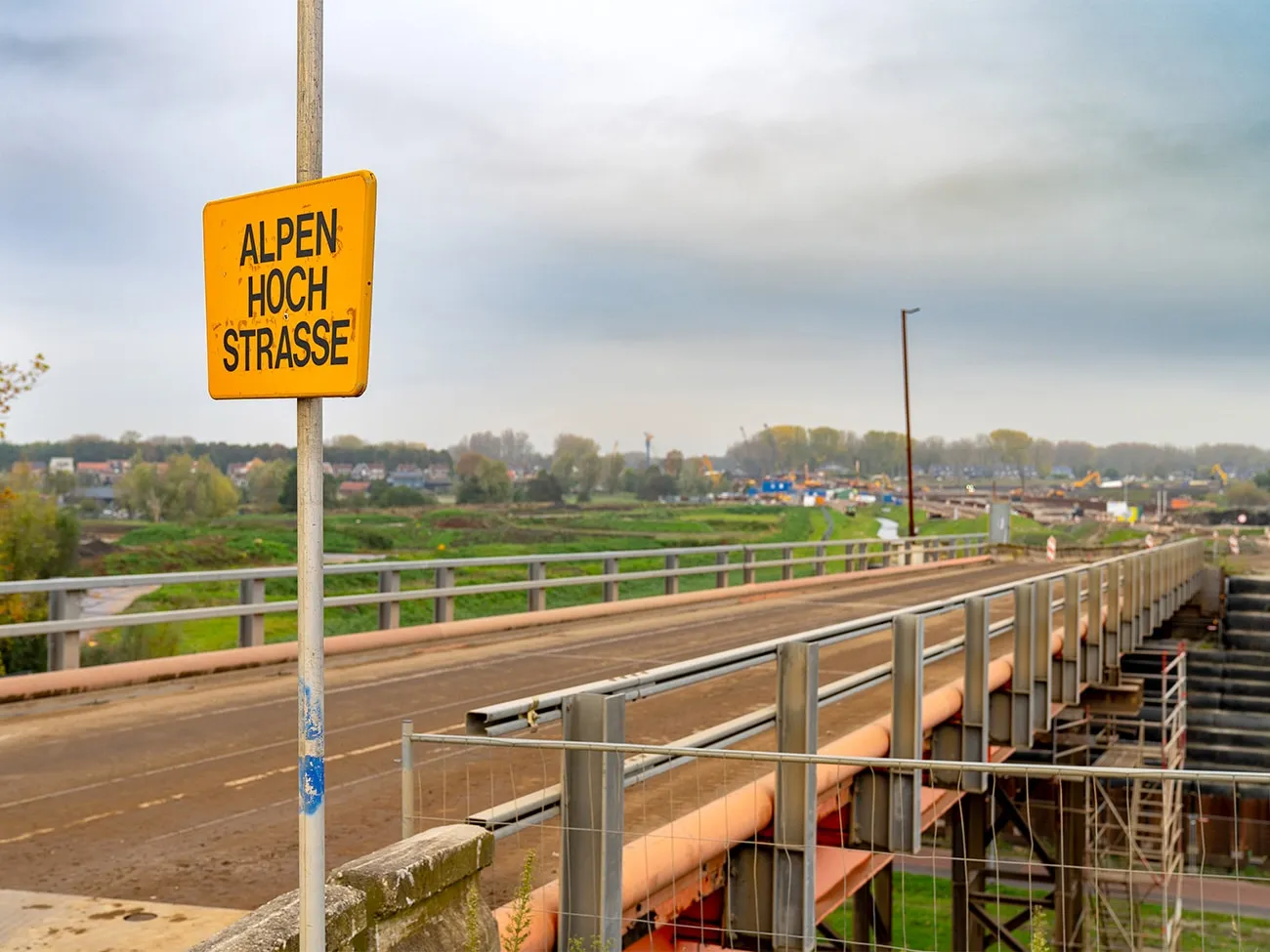
Fallingabuorren pumping station, Ferwoude.
Aldwaldmersyl Bridge in Oudwoude
For the Municipality of Noordoost Friesland, Lievense carried out a study into using a second-hand bridge, in collaboration with OHPEN Ingenieurs, Farsk Architecten and NHL Stenden University of Applied Sciences.
Aldwaldmersyl is an old lock on the Wâlddyk, a secondary flood defence to the north of Kollum in Noordoost Friesland. The existing bridge is nearing the end of its service life and does not have sufficient load-bearing capacity for modern traffic. A circular solution was preferred, namely to use a second-hand bridge. The movable section of an old bridge from the hamlet of Ritsumasyl was considered potentially suitable for replacing the bridge on the Wâlddyk in Oudwoude.
The idea of reusing an old bridge came from an innovative partnership between government, education and business. The parties involved in the project were consultancy and engineering firm Lievense, DDFK Gemeenten, NHL Stenden, FARSK, Koninklijke Oosterhof Holman and OHPEN Ingenieurs. All those involved recognised the need to reuse scarce resources and break with traditional forms of collaboration.
The feasibility study, which examined how the bridge in Oudwoude could be renewed, concluded positively. An implementation plan was then drawn up, describing in detail all the steps involved in installing the bridge. It later emerged that the second-hand bridge deck contained hexavalent chromium, which ultimately meant that it could not be reused. Most of the existing bridge will be retained. Lievense is providing support with the structural design.
This project has shown that it is possible to put sustainable initiatives into practice within a relatively short time. The project focused on the objective rather than potential obstacles, simply because the obstacles were not yet known. With the ‘Second-hand Aldwaldmersyl Bridge’ project, the project team showed that it is at the forefront of reusing large construction materials.
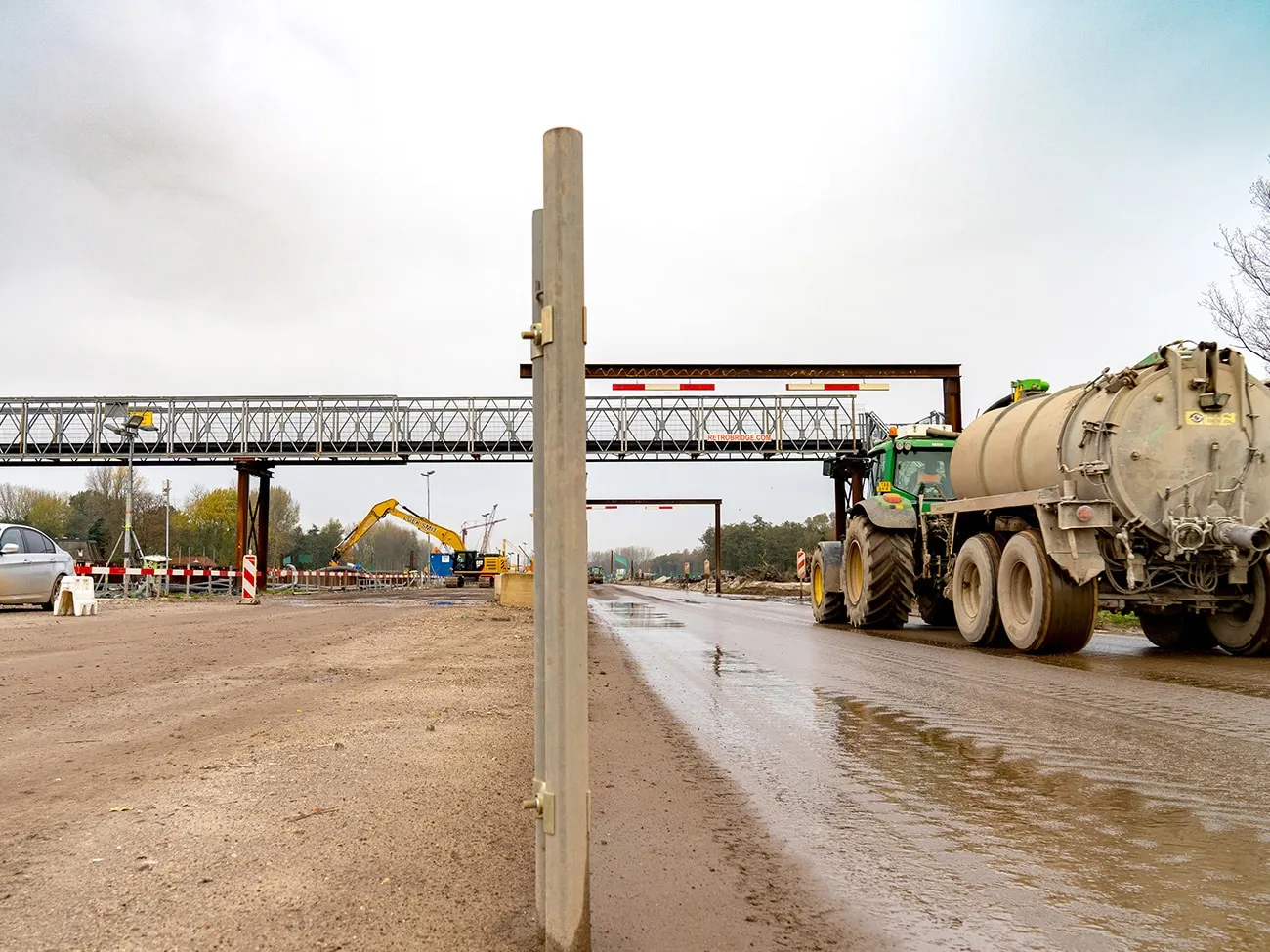
Existing Aldwaldmersyl Bridge. (Image: Vliegend.nl BV)
Amalia tunnel at Julianaplein in Groningen
In 2008, Julianaplein in Groningen was reconstructed. As part of the works, the Amalia tunnel was built specifically for cyclists and pedestrians. Under the D&C contract, Lievense designed the Amalia tunnel using precast elements that were connected by post-tensioning.
The construction of the southern ring road in Groningen means that the Amalia tunnel must be removed. With the benefit of today’s knowledge, the design is well suited to reuse. As the tunnel is relatively new, it will be dismantled and reused at another location within the Municipality of Groningen.
In the new situation, it will no longer be possible to connect the tunnel elements in the original way and guarantee watertightness. The decision was therefore made to build above the groundwater level, on a concrete floor supported by piles. Lievense is currently carrying out the feasibility study into reusing the tunnel.
Question about this story? Ask your question
Keep following this
Get an email when a new story is published. No account needed.
- ThemeLower emissions and more reuse
- SubjectNews







