Sustainable textile solutions for the civil engineering sector
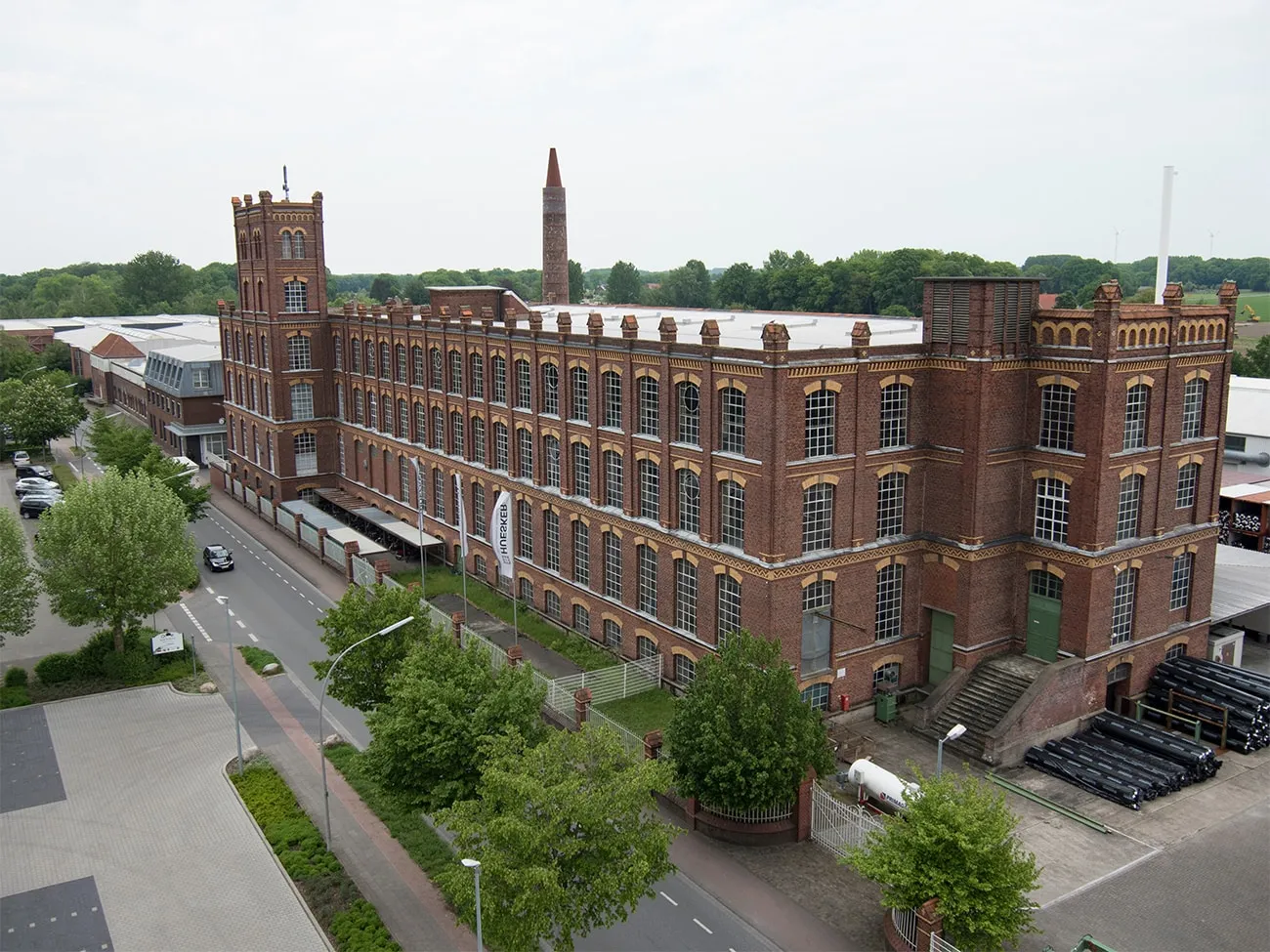
Founded as a cotton-processing textile company, HUESKER has developed over the past 160 years into a leading provider of high-quality, renewable textile solutions for technical applications. Its standing is widely recognised: the company’s geotextiles are used around the world, including in a wide range of civil engineering structures.
More than a century and a half ago, the industrial momentum of the 19th century and the successful cultivation of flax and hemp turned the Münsterland into the centre of the European textile industry. “It was in this very region, against the backdrop of rapidly growing industry, that HUESKER was founded in Gescher at the end of 1861,” says Joris van den Berg, director of subsidiary HUESKER BV. “The company then grew rapidly. Six years after it started, it was already producing on 200 looms.”
New applications
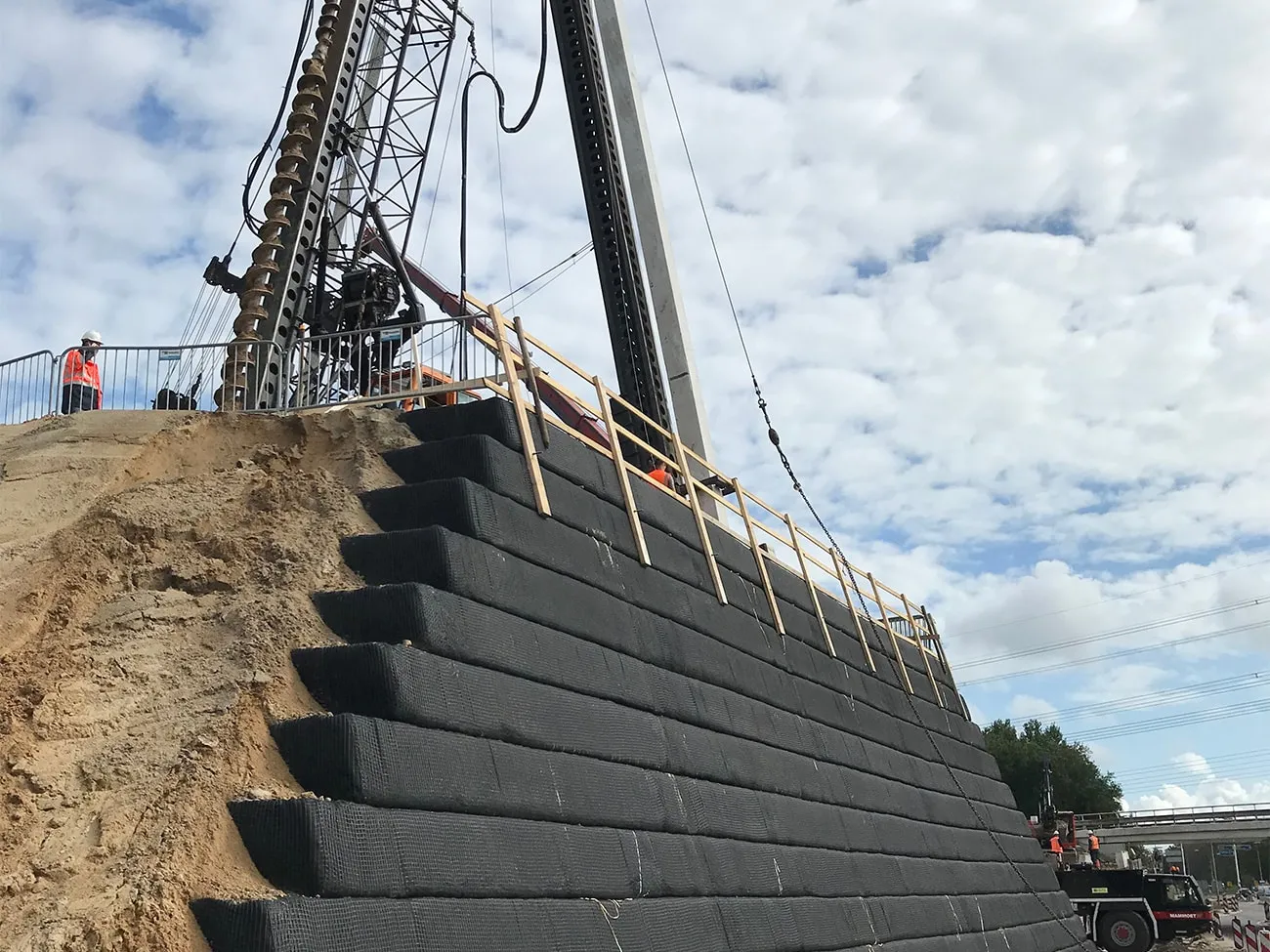
Over the years, alongside the mass market, a substantial and promising niche market emerged. At HUESKER, they recognised early on that the development of synthetic fabrics could open up new and often surprising fields of application. Production of filter fabrics and sandbags for hydraulic engineering began in 1958, with great success. In the years that followed, the company further expanded its product portfolio with solutions for geotechnical and foundation engineering, civil engineering and environmental engineering applications. These were primarily high-performance products for separation, filtration, asphalt reinforcement and drainage. “Alongside geogrids and geocomposites, we now offer complete system solutions through our Fortrac Systems range,” says Van den Berg, bringing the story up to the present day. “The retaining structures in this product line are cost-effective and sustainable, making them an excellent alternative to conventional materials.”
Continuous development
Recently, HUESKER has taken its development of lightweight solutions for the construction sector a step further. The result is continuous fibre-reinforced thermoplastic composites, known as neolaminates. “The panels are both lightweight and rigid,” says Van den Berg. “That makes them a sustainable alternative to conventional materials such as steel.”
Another development is composites with an active core. These water-permeable mats are used mainly in situations involving contaminated soil or sludge. “They filter very specific toxic substances, such as PFAS, heavy metals and oils, from the water,” explains Van den Berg. “This means the mats can be used effectively as a seal where the water regime needs to be maintained in a particular location.”
Question about this story? Ask your question
Keep following this
Get an email when a new story is published. No account needed.
- SubjectYearbook