









Structural design forms the foundation of new freshwater inlet
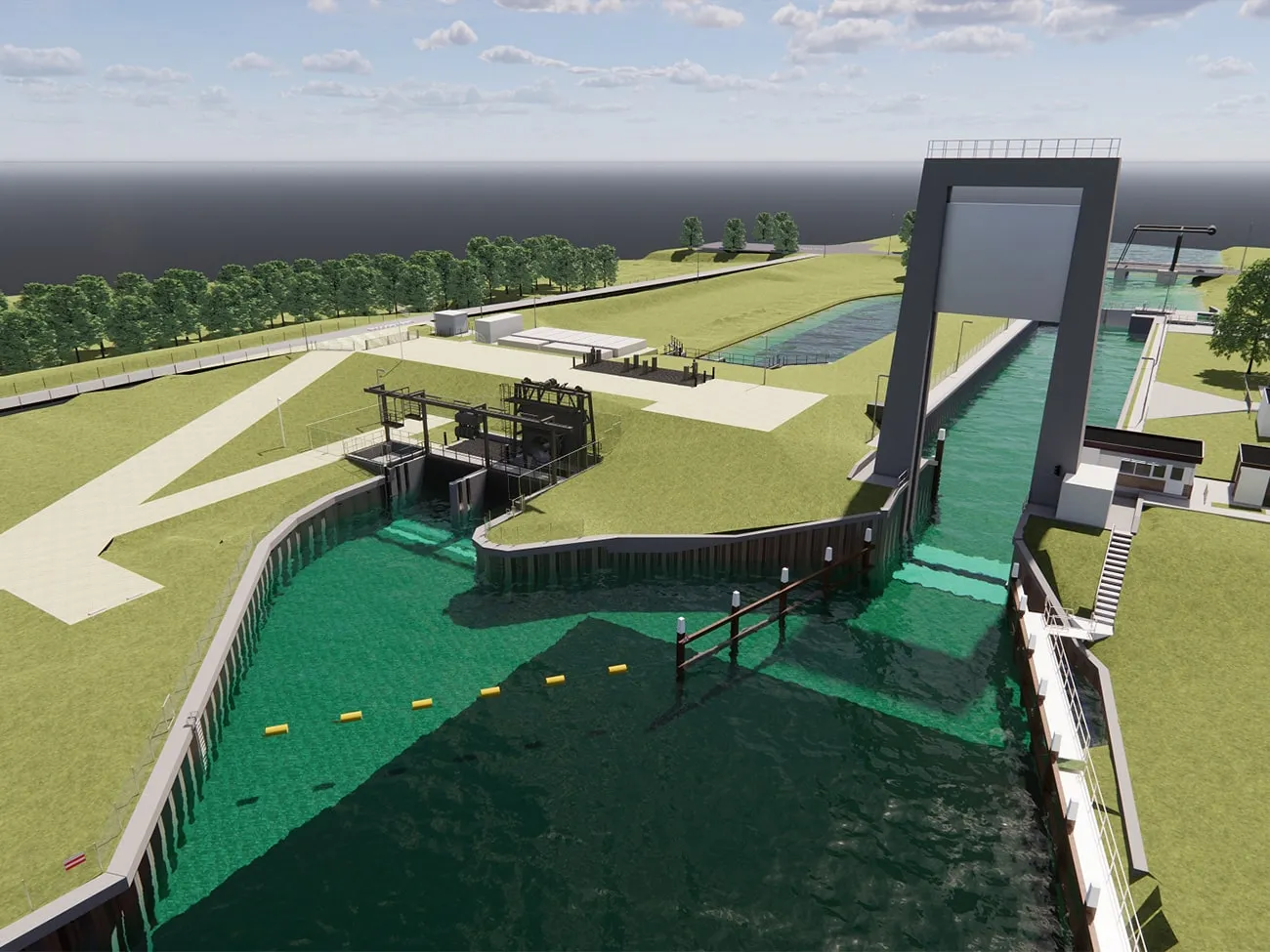
For more than 25 years, Verhoeven en Leenders has focused on connecting, improving and safeguarding structural safety, with the aim of making construction and infrastructure safer and keeping them that way. With a team of around thirty specialists, the engineering firm based in Volkel always guarantees an integrated approach and sound advice. One example is the construction of a freshwater inlet near Roode Vaart lock in Moerdijk. The firm is carrying out the project together with Van Boekel Bouw & Infra, commissioned by Waterschap Brabantse Delta.
The Netherlands is increasingly experiencing longer periods of drought. This makes it essential to retain and distribute available freshwater as effectively as possible. The same applies to the western part of North Brabant. As additional water from the Meuse can currently be diverted into ditches and rivers only at Oosterhout, Waterschap Brabantse Delta decided to build a second ‘tap’ at Roode Vaart lock in Moerdijk. “Specifically, this is a new freshwater inlet that, from early 2022, will transport more than 3,500 litres of water per second from the Hollandsch Diep towards the hinterland,” says Corné van Weert, partner/project manager at Verhoeven en Leenders. “This will prevent both drought and salinisation.”
Collaboration
Verhoeven en Leenders’ contribution to the project demonstrates the firm’s extensive expertise. As lead structural engineer, the firm carried out all the structural engineering. To identify the interfaces between the freshwater inlet and the lock at an early stage, the design was developed entirely in a 3D model. “We also carried out a 3D scan of the existing site. The scan was then overlaid on the 3D model,” continues Van Weert, who praises the collaboration with Van Boekel. “From the tender stage onwards, we worked together to translate the client’s requirements into a design that was feasible, buildable and within budget.”
Impact
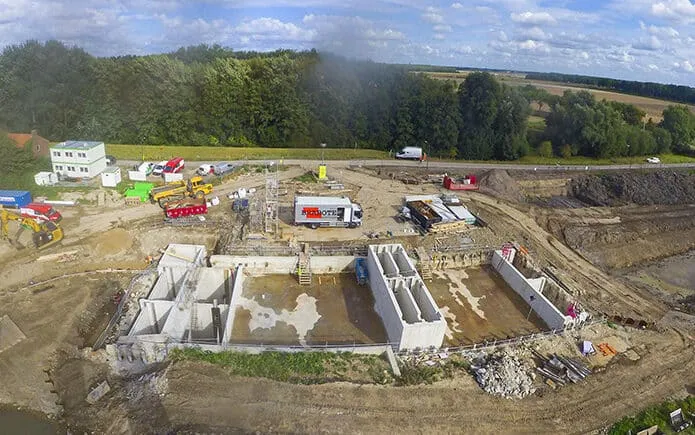
The project can rightly be called exceptional. The work must take account of the adjacent lock, and the freshwater inlet is also located in a dike designated as a primary flood defence. “Because of the risk of high water levels, work on the dike is not permitted between 1 October and 1 April,” explains Van Weert. “This affected both the structural design and the construction method. But in the end, we successfully completed the physical work between April and September 2021. Only the finishing work remains.”
Question about this story? Ask your question
Keep following this
Get an email when a new story is published. No account needed.
- SubjectYearbook







