Merwedebrug suspension cables given innovative wrap
Text Roel van Gils Image DYWIDAG
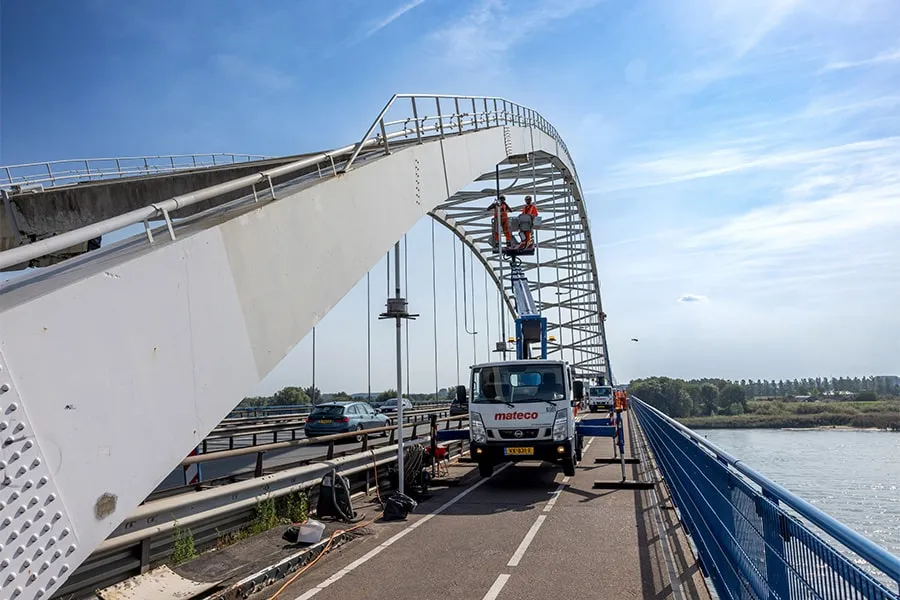
A routine inspection of the Merwedebrug on the A27 found signs of rust on several suspension cables connecting the deck to the arch bridge. This was due to wear in the protective coating. The cables were still structurally sound, but it was important to apply a new protective system as soon as possible. Rijkswaterstaat opted for an innovative DYWIDAG wrapping system, which kept disruption to road traffic to a minimum.
“Rust on components that support a bridge deck is clearly undesirable,” says Robert Jansen of DYWIDAG. “The coating on the suspension cables was in such poor condition that it had to be renewed to prevent further corrosion. The initial plan was to blast the cables and apply a new multi-coat paint system, but that would have had a huge impact on traffic flow. Lanes would have had to be closed for an extended period while scaffolding was erected around the bridge.” Rijkswaterstaat was therefore looking for an out-of-the-box solution. The engineering firm Schreuder, which was involved in the project, approached DYWIDAG about its cableskin technology.
ETA-certified system
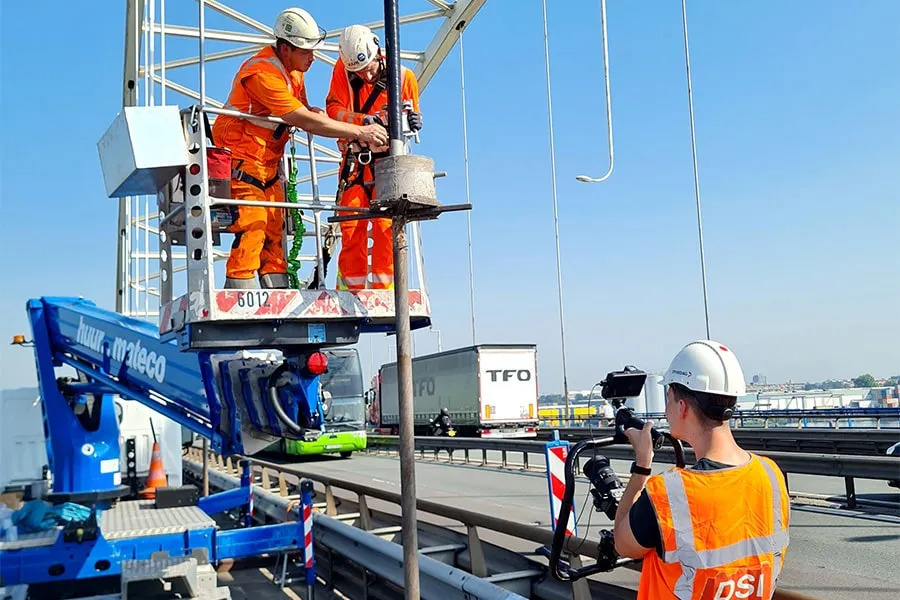
DYWIDAG’s cableskin system has been used successfully abroad for many years to protect steel structures, and is ETA-certified. “It’s a relatively unfamiliar technique in the Netherlands,” says Robert. “We explained the system to Rijkswaterstaat, and they were immediately enthusiastic, particularly because it causes minimal disruption. To demonstrate how it works in practice, we successfully applied it to a test section during the preparatory phase. We were commissioned soon afterwards.” How does the technology work? Robert explains: “First, we scrape the loose flakes of paint off the hanger, then apply the wrapping in two layers. The first layer is the base layer, made from tape with butyl rubber on both sides. We then add a top layer: tape with butyl rubber on the inside and a PE layer on the outside, which can be made in any colour, repels water and resists UV. When butyl rubber is applied with the right tension and pressure, it vulcanises and bonds itself to the hanger. It will never come loose.”
64 suspension cables
Cableskin can be applied in several ways: manually, semi-automatically or fully robotically. “At the Merwedebrug, we chose the semi-automatic method because the hangers are relatively short, ranging from 10 to a maximum of 35 metres,” Robert explains. “We worked from a mobile elevating work platform on the cycle path and used an auxiliary tool to wrap the cables, ensuring the correct angle, tension and pressure. We worked only during the day, and only one lane had to be closed. That was purely for the safety of our staff, as we did not use the road lane ourselves. In total, it took us ten weekends to wrap the 64 suspension cables, 32 on each side. At the same time, Knook Staalkonstrukties repaired and improved the connections between the suspension cables and the deck, leaving the Merwedebrug ready to serve for many years to come. Unlike a coating, cableskin provides a guaranteed minimum of 50 years’ protection against the elements.”
Question about this story? Ask your question
Who worked on Merwedebrug
- engineering consultancySchreuderMentioned in Merwedebrug suspension cables given innovative wrapping
Keep following this
Get an email when a new story is published. No account needed.
- ProjectMerwedebrug
- SubjectYearbook