Integrating OT with IT in critical infrastructure
Text Roel van GilsImage ICT Group
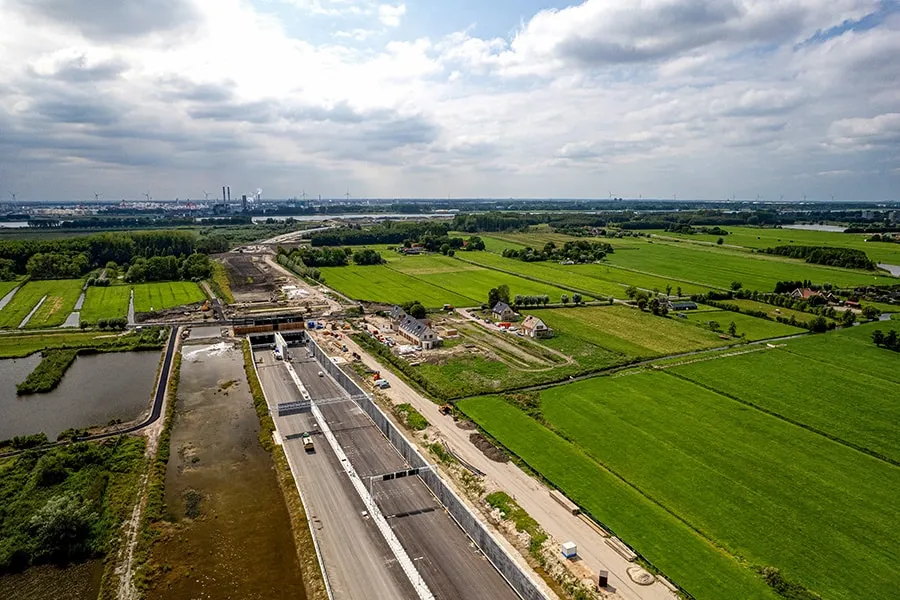
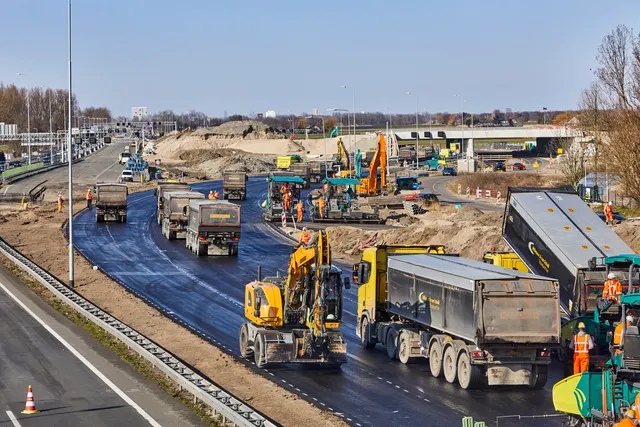
ICT Group specialises in automating operational technology (OT), in other words, operating, controlling and monitoring critical infrastructure. It then uses information technology (IT) to further optimise this infrastructure in a (cyber)secure way. OT and IT are becoming increasingly integrated in critical infrastructure, and ICT Group is uniquely positioned to address this.
ICT Group has its roots in OT and, according to Herman Kraaij, Business Development Manager Infra, sets itself apart through “its in-depth knowledge of the physical technologies we automate. We are also a major IT services provider. As these two worlds become increasingly integrated, we are uniquely placed to tackle the future challenges that call for integrated solutions.” There is no shortage of challenges, as Eric van der Laan, Business Development Manager Water and Energy at ICT Group, also knows. He cites staff shortages caused by an ageing workforce, climate targets, cost pressures and the fact that we live in a densely populated country with an overloaded infrastructure.
Systems Engineering+
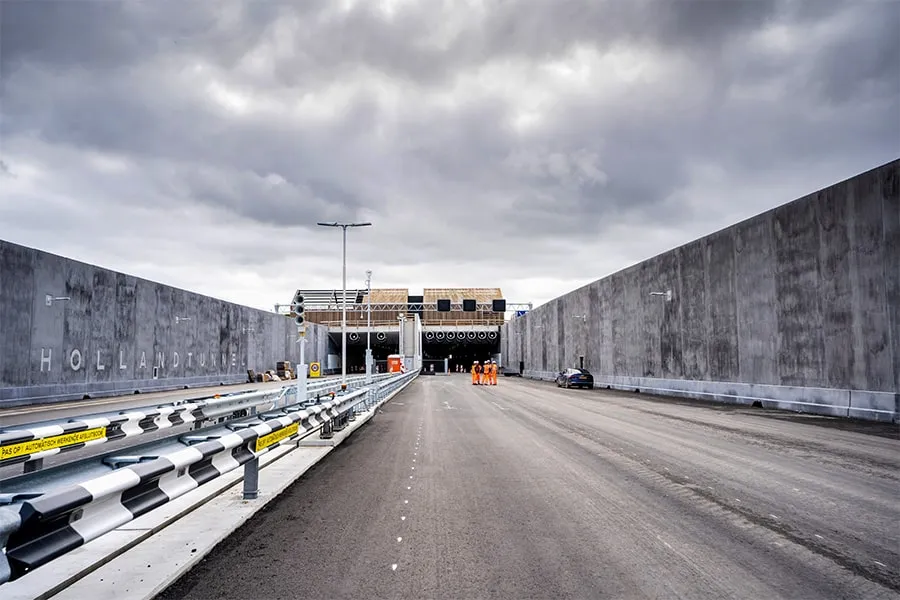
Working on critical infrastructure in a densely populated country like the Netherlands has a major impact. “It is therefore essential to deliver a critical infrastructure project right first time and with as little disruption as possible,” says Herman. “That is the challenge we face every time, and it is why we developed Systems Engineering+.” Eric explains: “Think of it as traditional Systems Engineering, enhanced with specific expertise and tools to take the process to the next level. One such tool is the Physical Twin, which enables us to deliver ‘First Time Right’ by testing all non-happy flows, including failure behaviour, before moving on to implementation. Another example is TransWarp, a validation and verification tool for developing software solutions efficiently and to a consistent standard. We also integrate this into the Systems Engineering process, both in the design and testing stages, enabling us to run regression tests automatically whenever changes are made. This ensures the quality of the Systems Engineering process, in other words, that the asset will perform its intended function when delivered.”
Multidisciplinary
Herman gives another example of in-house tooling: the Advanced Project Generator (APG) for software development. “This tool allows us to generate software automatically, complete with documentation that meets the applicable standards. By standardising and generating as much as possible according to fixed structures, we make the system easier to maintain, less prone to errors and easier for third parties to manage. Developing and using these tools enables us to deliver projects in a demonstrable, reliable and secure way.”
Eric says: “As a service provider with many relevant disciplines within the group, we also cover all the requirements that matter for the lifecycle management of assets. We take a close look at safety aspects, and our security specialists check that security is adequately addressed throughout the development process. ‘First Time Right’ and ensuring continuity are central to our approach.”
Focusing on infrastructure digitalisation
According to Herman, Systems Engineering+ not only provides certainty and a ‘First Time Right’ approach, but also helps address staff shortages. “We can meet that challenge with less effort and take on projects without difficulty.” ICT Group also has a strong focus on further digitalising critical infrastructure. “We approach this from the perspective of process automation. After all, our roots are in the physical domain (OT),” says Eric. “We are adopting the latest generation of process automation, including preventive and risk-based maintenance. Using asset data collected through our IoT platform InfraNext, we analyse the condition of different assets and determine maintenance and, where necessary, replacement strategies. We address these kinds of lifecycle management challenges together with our sister company Innocy, which specialises in asset management consultancy for critical infrastructure.”
Digitalisation can also help achieve sustainability targets. “Tools provide insight into the energy consumption of assets, enabling it to be optimised. This can be done at asset level, across an organisation or at regional level, for example. This helps reduce CO2 emissions while also saving on energy costs.”
Question about this story? Ask your question
Keep following this
Get an email when a new story is published. No account needed.
- SubjectYearbook