









From stabilising homes to mega infrastructure projects
DYWIDAG works on a wide range of projects, from ground stabilisation to lifespan management. Robert Jansen, business unit manager at DYWIDAG, looks back on the past year and talks about what lies ahead in 2023. “This was another successful year for us, in which we took major steps forward as a company.”
Jansen particularly enjoys the diversity of the projects. “I think it’s important for companies to know that they can also come to us for smaller projects.” Over the past year, DYWIDAG has worked on stabilising homes. “Mainly in the south of the country, where mining has caused problems, and in Drenthe, where the subsoil is peaty. Falling groundwater levels are degrading the subsoil, causing homes to slowly sink.”
“We have been stabilising homes. For example, we installed a complete prestressed slab foundation in crawl spaces. Instead of the house resting only on strip foundations, it now rests on one large prestressed concrete slab. This has considerably reduced the pressure on the subsoil and prevents settlement.”
Blankenburgverbinding
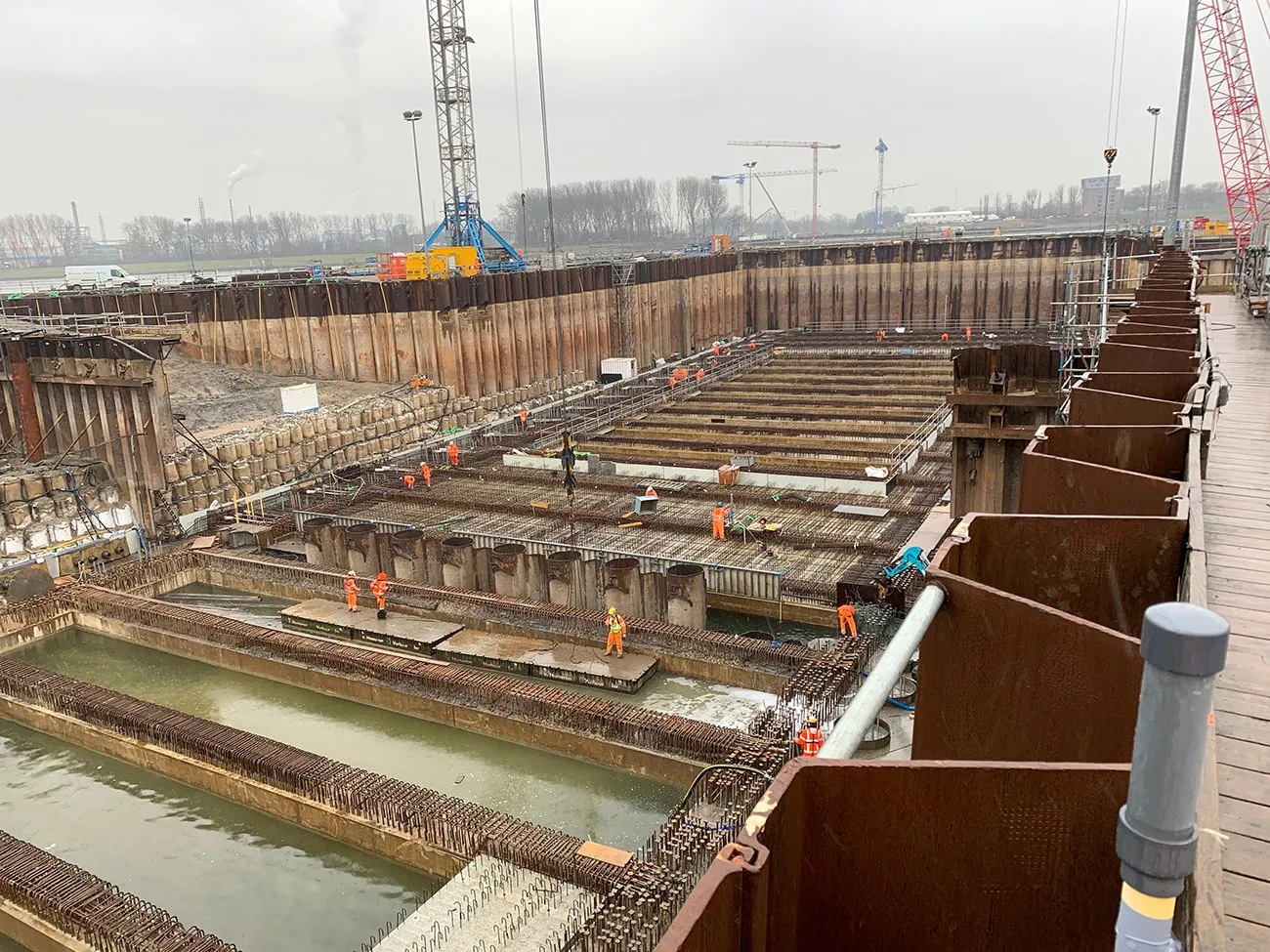
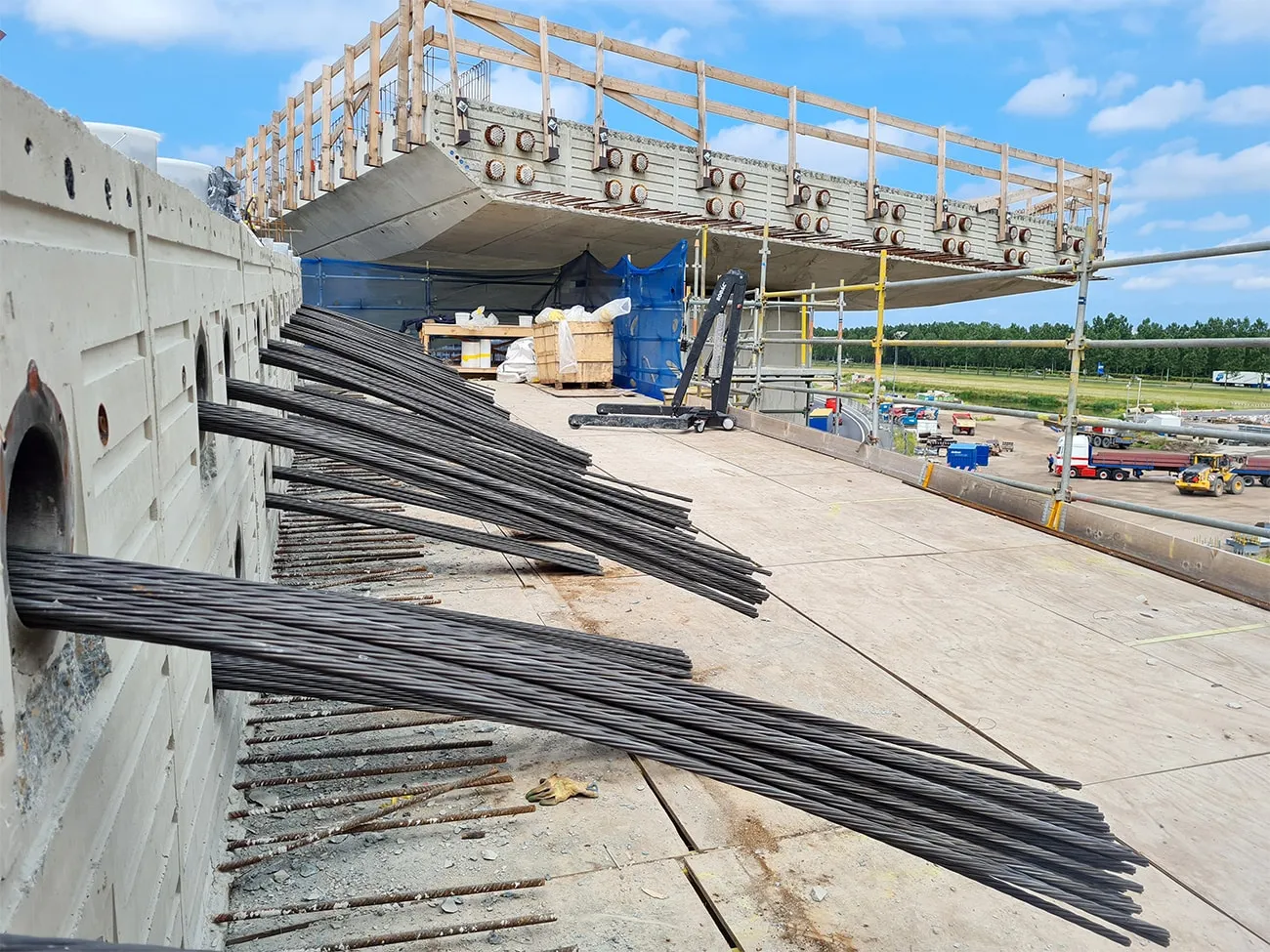
The Blankenburgverbinding was one of DYWIDAG’s major projects over the past year. “The Blankenburgverbinding was a very unusual and large infrastructure project, where we prestressed all the structures built there. Several flyovers, for example, were built in stages. This takes years: each time, you build another section, eventually joining them together.”
“To give you an idea, we built one section in 2020. The motorways underneath were then rerouted, allowing us to move on to the next section. It’s a major project that we’re continuously working on. The centrepiece is the immersed tunnel.”
Market developments
Printed structures are also playing an increasingly important role in DYWIDAG’s projects, Jansen says. “Five years ago, we developed our first 3D-printed cycle bridge. Looking back at the past year, we’ve now completed another three printed structures. What began as a pilot project has become a sustainable solution. Printed structures help to reduce CO2 emissions in particular. They eliminate the need for formwork and make much more efficient use of raw materials.”
Royerssluis in Antwerp
There are also some exciting, innovative plans on the agenda for the coming year. “For example, we have been asked to renovate the Royerssluis lock complex in Antwerp. What makes it special? The complex includes a listed building that must be preserved.”
“We’re now in the design phase, looking at how to approach the project. The idea is to tie the diaphragm walls together at the top so they form a single structure. We’ll do this through the building. This project combines unusual ground engineering structures with genuine input into the design. It’s great to be involved from the very start.”
Question about this story? Ask your question
Keep following this
Get an email when a new story is published. No account needed.
- SubjectYearbook







