Confidence when working with metal
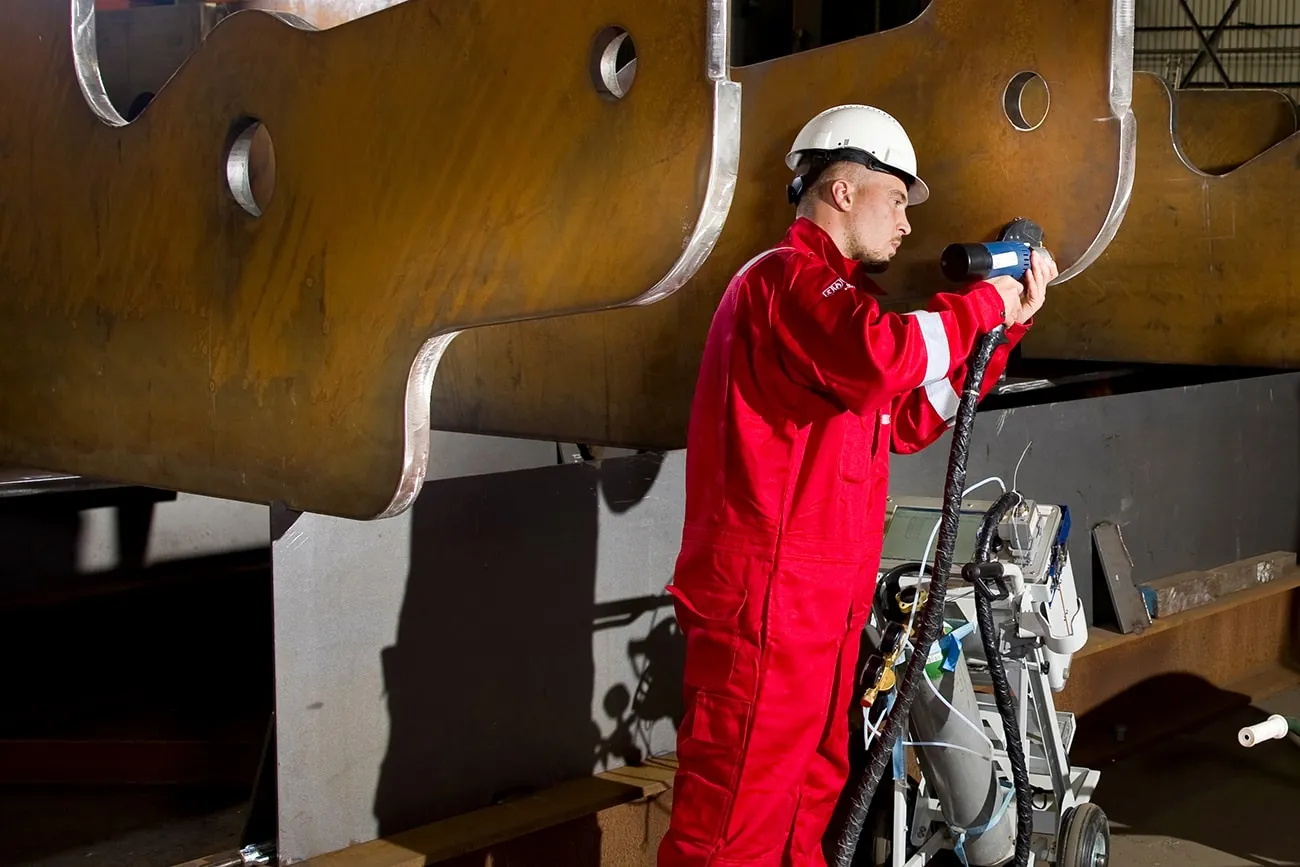
Metal is fantastic to work with. But there is often a great deal at stake if a weld is not quite right. You want to avoid huge repair bills or a project handover being put at risk. That is why NDO Nederland offers various types of non-destructive testing, specifically for SMEs.
Wolter van der Zee, director of NDO Nederland, explains that regular non-destructive testing can save money, time and effort. “Damage or defects can often be repaired quickly and cheaply if they are detected at an early stage, but the later you find them, the greater the consequences can be. That is why we make non-destructive testing accessible to every SME that wants peace of mind.”
Fast, accurate insight
To quickly establish the chemical composition of your material, which is necessary when joining metal parts by welding, you can have an OES measurement or XRF analysis carried out.
OES stands for Optical Emission Spectrometry. An OES measurement provides fast, accurate insight into the composition of the metal and its carbon equivalent. “This information helps you avoid using the wrong welding procedure and achieve a higher-quality weld,” says Van der Zee. “Our report can also demonstrate that you used corrosion-resistant material or the correct welding wire.”
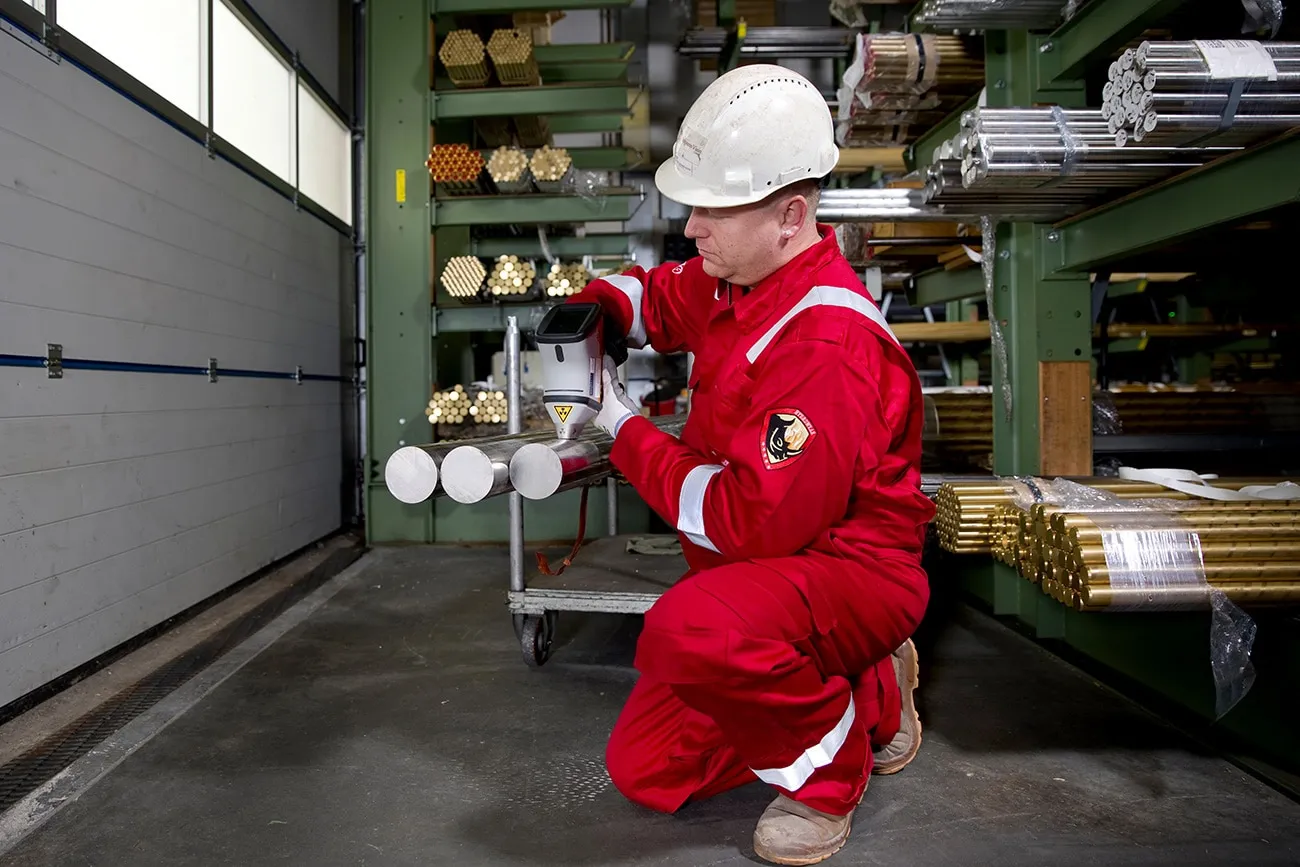
XRF stands for X-ray fluorescence. XRF analysis can be used to measure a wide range of alloys, including nickel, chromium, cobalt, copper, titanium and lead. Lighter elements such as magnesium, aluminium, silicon, phosphorus and sulphur can also be measured. “Our XRF analysis can even measure heavy metals such as chromium, lead, cadmium and arsenic in light matrices such as rubber, plastic, wood and composites. It can also detect contamination in soil. Plastics and geotextiles are increasingly used in civil engineering, and we can check whether they contain heavy metals. XRF is also ideal for applications for soil quality declarations,” says Van der Zee.
Less hassle, more confidence
“In civil engineering, we see that useful information about materials is not always readily available. For example, when walers need to be welded to a sheet pile wall, or when an old bridge needs repairing. If material certificates are unavailable and you do not know the chemical composition, you cannot produce a sound weld. That creates an ad hoc problem, and that is where we can help.” NDO Nederland’s experts can often mobilise on the same day, carry out the required testing on site and issue an advisory report. “We bring the laboratory to the construction site! Less hassle, more confidence. This is very important as requirements in construction become ever stricter,” says Van der Zee, adding: “It also minimises downtime for the customer.”
Question about this story? Ask your question
Keep following this
Get an email when a new story is published. No account needed.
- SubjectYearbook