Composite ground protection mats: a sustainable choice in every respect
Text Roel van GilsImage Ferex
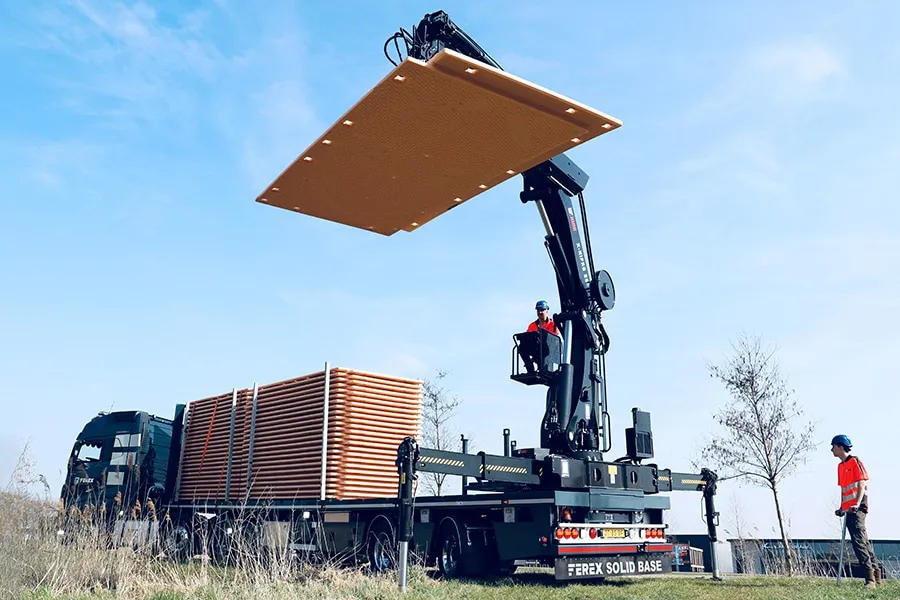
We already knew that choosing composite ground protection mats as an alternative to steel road plates is an exceptionally sustainable option. No ground preparation is needed, and flora and fauna are preserved. But did you also know that Ferex installs its composite mats sustainably and cleans them in an environmentally responsible way?
In a relatively short time, Ferex’s composite ground protection mats have become a familiar name in the market. “Over the past few years, we have focused on significantly expanding our range,” says Sanne Buitenhuis, marketer at Ferex. The expansion was made possible in part by the new premises. The new building is equipped with every convenience, enabling Ferex to operate even more sustainably than before.
Sustainable mat-washing system
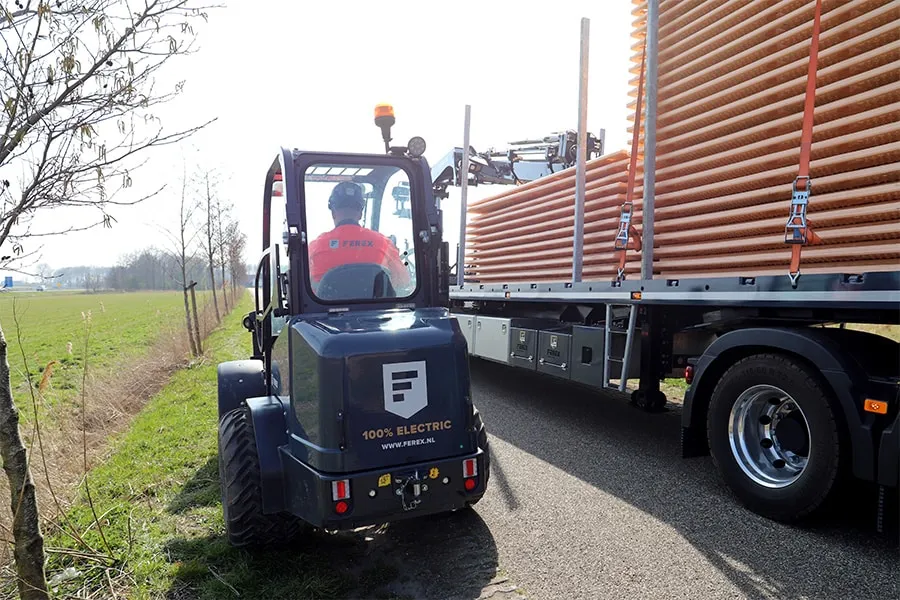
The new premises include a dedicated washing tunnel. “Working with a machine builder, we developed a sustainable system for washing ground protection mats,” says Jordi Rodijk, Ferex’s logistics contact. “The cleaning process is extremely important for composite mats. We used to clean them by hand, but the new system automates the process completely. It requires much less labour and is also far more sustainable. Dirty water is collected, cleaned and reused. All warehouse logistics are handled using zero-emission equipment, such as an electric knickmops loader. Our truck is also fitted with an electric crane, allowing us to load and unload the composite mats electrically on site.”
A stable and safe foundation
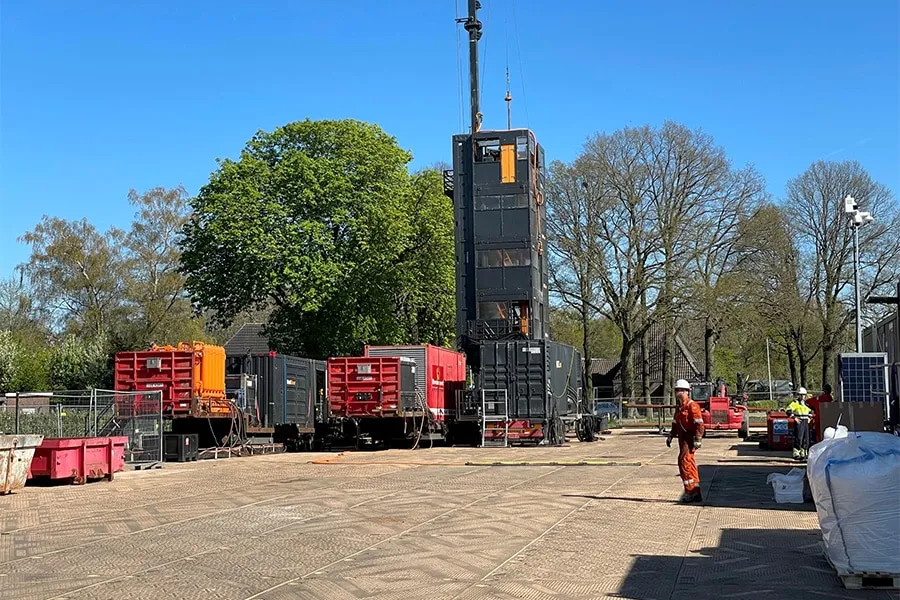
In addition to the benefits mentioned above, Ferex’s mats can be connected to one another. This increases their load-bearing capacity, despite their modest weight. Composite mats are therefore being used on an ever wider range of projects. “This autumn, we started laying a large platform in the Amsterdam region to serve as the ‘foundation’ for a drilling rig as part of the SCAN programme for geothermal drilling. The rig will search for heat sources deep underground and requires a solid, stable base. We are using 1,100 of our Heavy Duty mats, connected to one another,” Jordi explains. “As the Amsterdam project is part of the national SCAN programme, our mats will travel all over the Netherlands in the years ahead. It’s great to be able to contribute in our own way.”
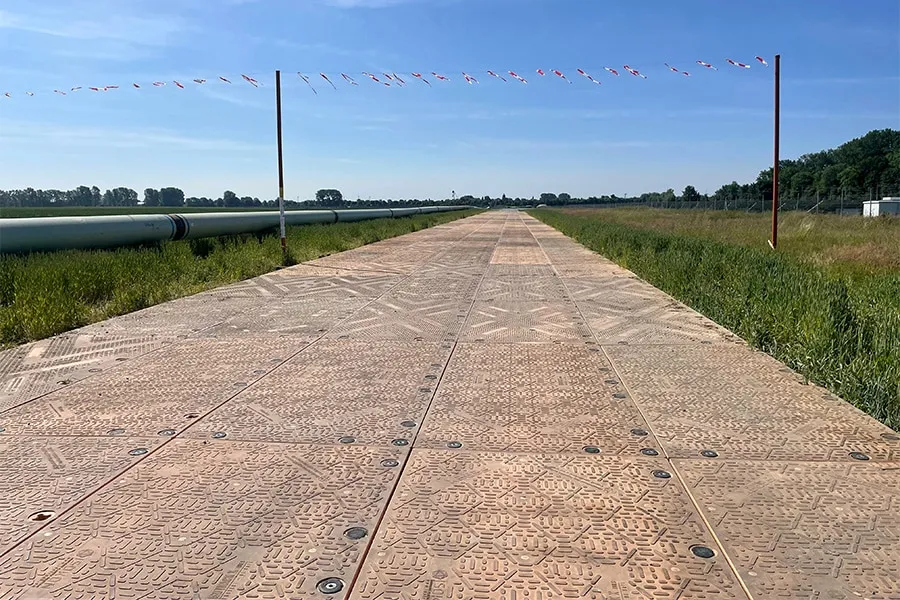
Ferex mats have an exceptionally wide range of applications. “In Germany, a new pipeline route is being built from the LNG terminal in Brunsbüttel to several other cities. Around 2,500 mats are also providing a stable surface here for heavy equipment,” says Sanne. “Nobian has also been a regular customer since day one. The company has been extracting salt in Twente for more than a hundred years. We also supply infrastructure contractors of all sizes with temporary footpaths and cycle paths. In the infrastructure sector, our products deliver significant reductions in CO2 and nitrogen emissions. That has not gone unnoticed.”
Question about this story? Ask your question
Keep following this
Get an email when a new story is published. No account needed.
- SubjectYearbook