









Combining industrial automation and motion control
Text Sarah de Preter en Chris Elbers Beeld VSE Industrial Automation
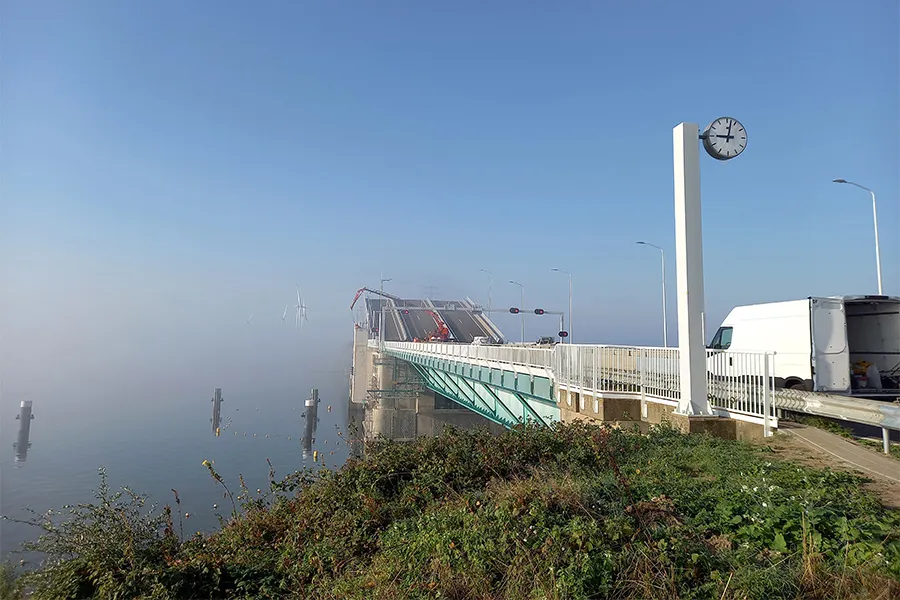
The company’s golden anniversary, celebrated last September, was not only a fitting opportunity for VSE Industrial Automation to look back on its history. It also gave the specialist in industrial automation and motion control every opportunity to look ahead to the next 50 years. Particularly when it comes to providing smart, high-quality solutions for the infrastructure sector, an area in which VSE has developed from its industrial roots over recent years into a leading player. “We are ready for the future,” says Radboud van Dusseldorp, commercial manager at the company based in Schoonhoven. “We have all the ingredients to keep infrastructure moving.”
Infrastructure is an increasingly important foundation of our society. Specialist expertise in high-end engineering, industrial automation, functional safety and drive technology is essential to ensure that bridges, among other assets, remain available and reliable at a high level. And that is exactly where VSE Industrial Automation excels. “We are heavily involved in major infrastructure projects,” says Van Dusseldorp. “These are projects where we can use digitalisation and smart simulation to minimise risks. We have everything we need for this, both in terms of technology and people.”
Expertise
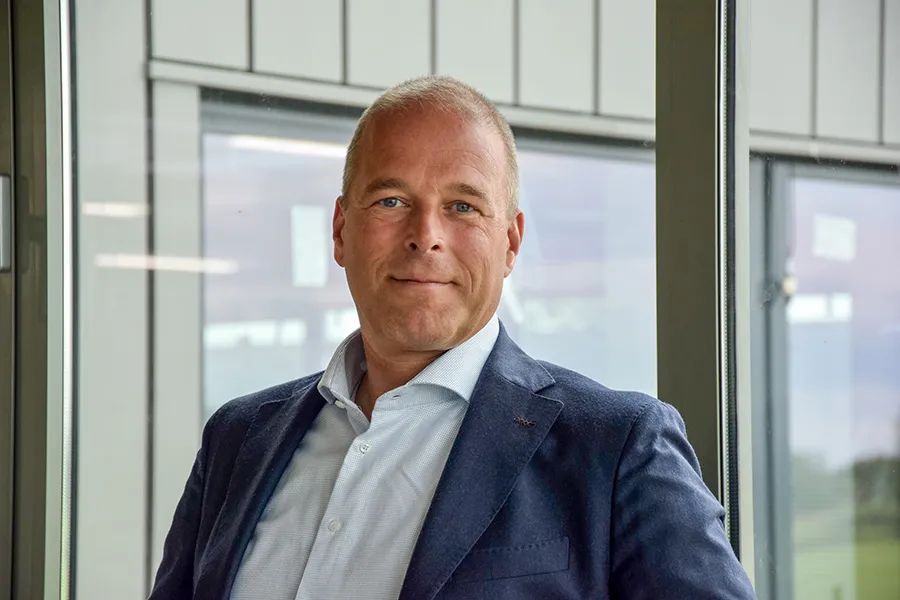
The Netherlands has more than 1,500 movable bridges and almost 2,000 locks. Many of these structures are due to be renovated in the coming years. Clients in the infrastructure sector do not always have the drive technology expertise required for this readily available. VSE does. The company is therefore often brought in for projects of this kind. For example, it supplied the new control system for the Haringvlietbrug on behalf of the Mobilis and Croonwolter&dros consortium. Asked why high-end infrastructure projects of this kind are such a good fit for VSE, Van Dusseldorp is clear. “Our hardware and software engineers can put their expertise to full use on projects like these. Not everyone takes on assignments on such a large and complex scale. We do, precisely because they allow us to use the latest technology. Digital Twins and Virtual Commissioning, for example, are now standard practice for us and are required by clients such as Rijkswaterstaat.
Commissioning windows for new electrical installations are scheduled well in advance and are often tight. We cannot afford delays. Working with Digital Twins and Virtual Commissioning helps us achieve this.”
Thoroughly tested
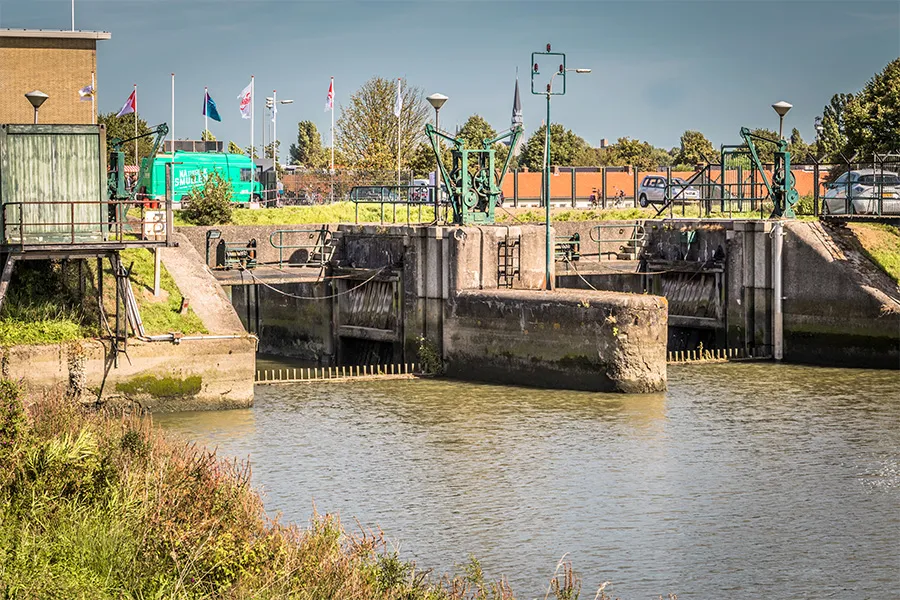
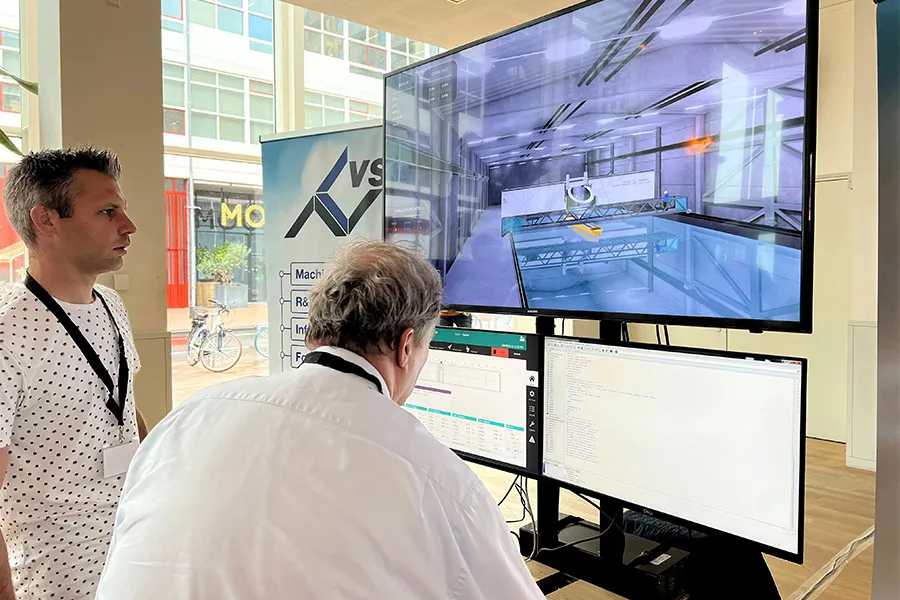
Van Dusseldorp stresses the importance of virtual testing and simulation. “The aim is to minimise risks. During the Site Acceptance Test (SAT) on site, you do not want to find any outstanding issues that could jeopardise the handover date. That is why, for projects including the renovation of the Spijkenisserbrug, we and our partners thoroughly tested all the systems in advance using simulation software and 3D models. Testing in the factory beforehand is faster, safer and more efficient than testing in the field. For the Spijkenisserbrug, we used Siemens’ NX MCD design software and the SIMIT simulation platform to simulate the drive system and carry out virtual commissioning. We even connected the control cabinets to a scale model of the bridge.”
Safe and available
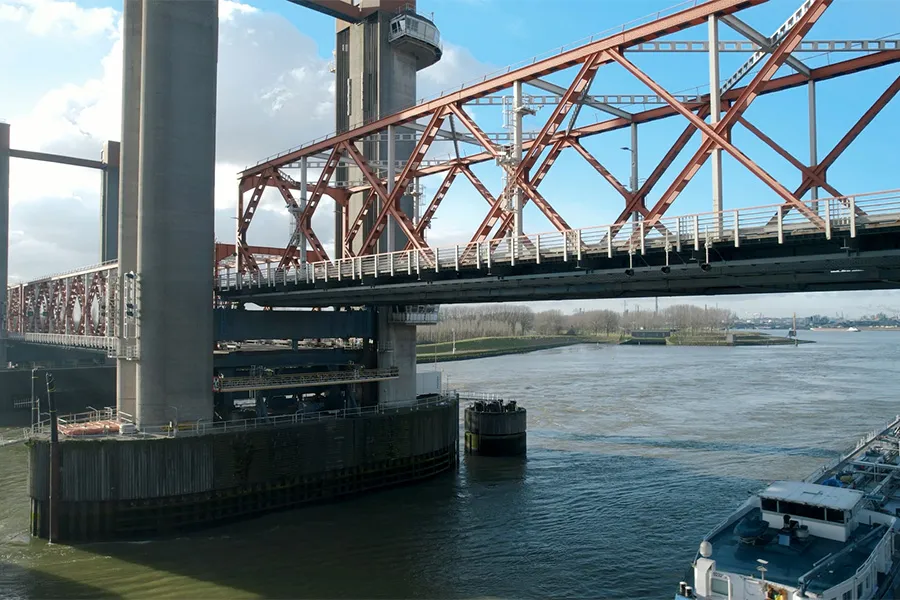
To ensure infrastructure projects are safe and responsible, VSE works exclusively with a range of technologies from reputable suppliers. Several employees also hold the TÜV Functional Safety certificate, a crucial aspect of machine building and systems integration. “We make sure our engineers have the right knowledge to safeguard safety,” Van Dusseldorp continues. “We help ensure infrastructure assets remain available, among other things by equipping bridges with the 3B-Bouwblok. Yunex Traffic developed this automation standard on behalf of Rijkswaterstaat to control, operate and monitor all the bridge’s dynamic functions. These include the signals and barrier arms. Seven bridges in the South Holland region are being equipped with this standard in stages. This makes bridge management less complex and more efficient for Rijkswaterstaat. It helps ensure high availability and, in turn, smooth traffic flows. In 2020, Wantijbrug became the first bridge in the Netherlands to receive 3B-standard control, with us implementing the drives for its movable section on behalf of Vialis. This year, we also equipped Spijkenisserbrug with the standard.”
Energy-efficient
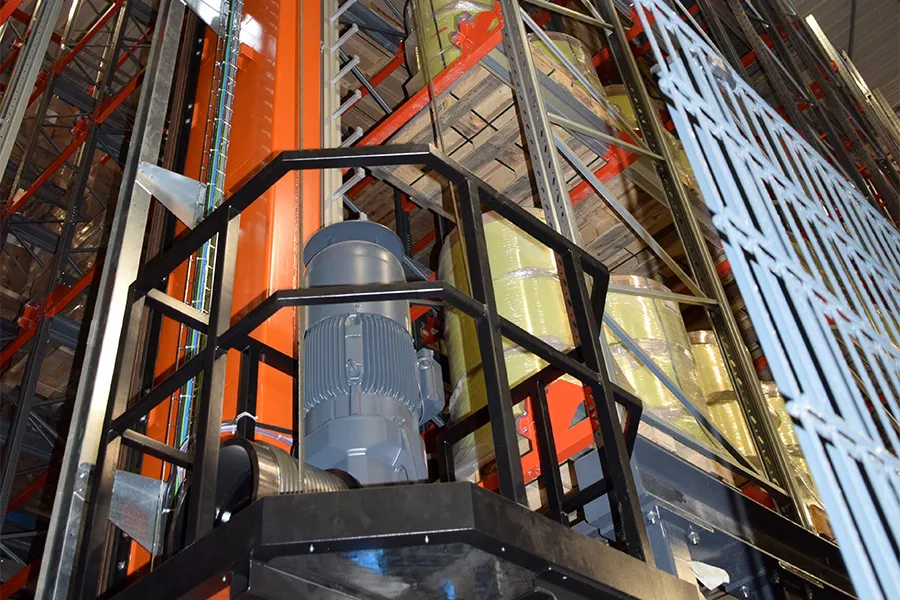
Energy efficiency is another aspect that receives plenty of attention from VSE during project delivery. In fact, Van Dusseldorp says it is a hot topic for all parties involved in infrastructure projects. “We made Ramspolbrug energy-neutral as far back as 2012,” he says. “For Spijkenisserbrug, we used Siemens UltraCaps, which can store energy for short periods and release it again. Energy generated as the bridge closes is reused to raise it. We are using UltraCaps increasingly often and have even been able to halve the connected load of warehouse lifts. This smooths out peaks in electricity consumption. Our clients can therefore get by with less power, allowing them, for example, to add another installation without upgrading their grid connection. Due to grid congestion, many companies can no longer obtain a higher-capacity grid connection. Peak shaving using UltraCaps can be a solution. This has made Spijkenisserbrug more robust and improved its availability.”
Collaboration is key
Collaboration is also essential in VSE’s field of work to achieve the desired end result. Wantijbrug, Merwede bridge and Ramspolbrug, as well as the standardisation of pumping stations for Hoogheemraadschap van Rijnland, are good examples of infrastructure projects in which VSE was involved and where cooperation proved key to success. “You do not deliver major projects like these alone, but together with partners,” says Van Dusseldorp. “As engineers, we find it highly motivating to work together on solutions to complex challenges. That also leads to the best solution for the client. Following the successful renovation of Spijkenisserbrug, the Yunex Traffic-Heijmans consortium has been given the go-ahead to renovate Brug over de Noord. The team is now working well together, which is making us increasingly efficient. We will carry all the lessons learned from Spijkenisserbrug into this next outstanding infrastructure project.”
Question about this story? Ask your question
Companies in this story

Keep following this
Get an email when a new story is published. No account needed.
- SubjectYearbook
- CompanyMobilis
- CompanyCroonwolter&dros
- CompanyYunex Traffic B.V.







