Vertical drainage in a historic setting
Text Heidi Peters Image CeTeau
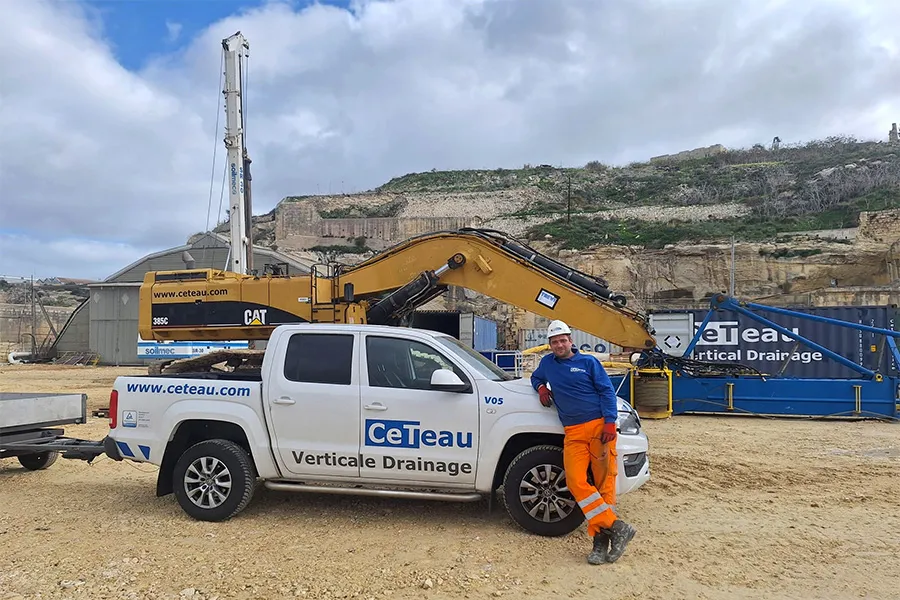
CeTeau specialises in foundation solutions, improving the ground through high-quality ground improvement techniques. Vertical drainage is one of the techniques in high demand. In Valetta, Malta’s capital and port city, the quay is to be extended and a quay wall built. Italian main contractor Trevi asked CeTeau to consolidate the seabed in this historic setting ahead of construction. “We’re used to a lot, but this was still a complex project in several respects.”
“There aren’t many companies worldwide with this kind of specialist expertise in vertical drainage,” says Gatze van der Meer, General Manager at CeTeau. That may not seem necessary, given that CeTeau has offices around the world. The Dutch company began operations in Thailand under Dutch management and now has offices in Malaysia, Mexico, Great Britain, Cambodia, Germany and, since this year, the United States.
Small but complex
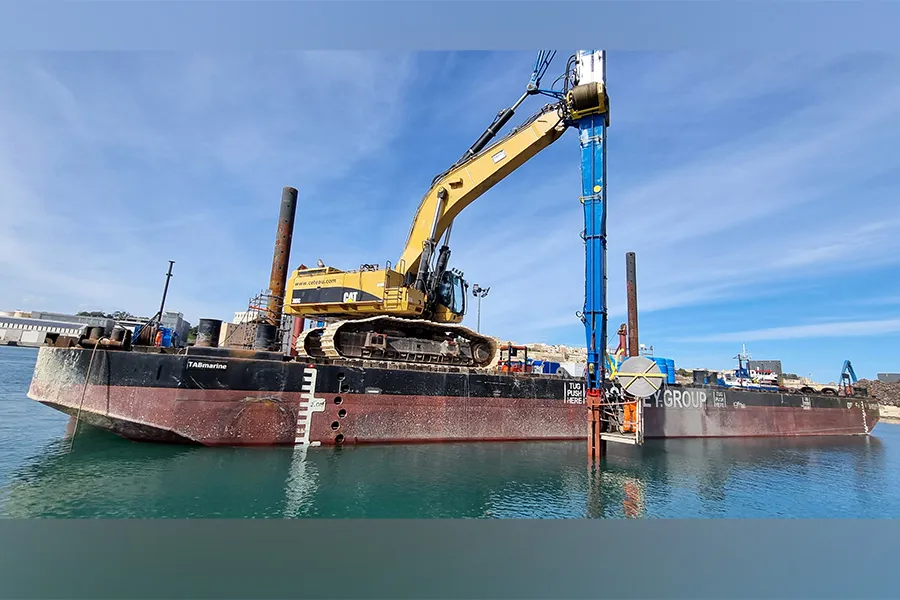
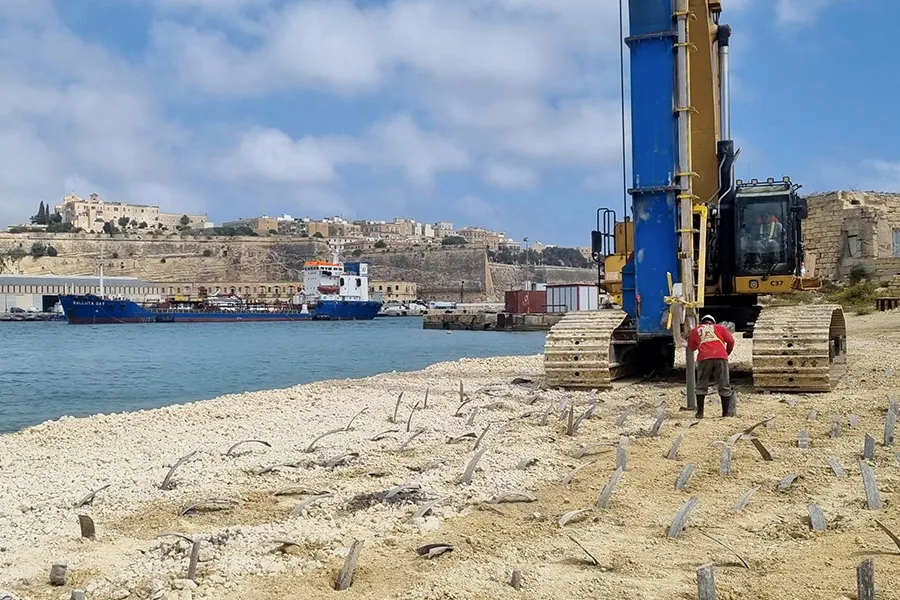
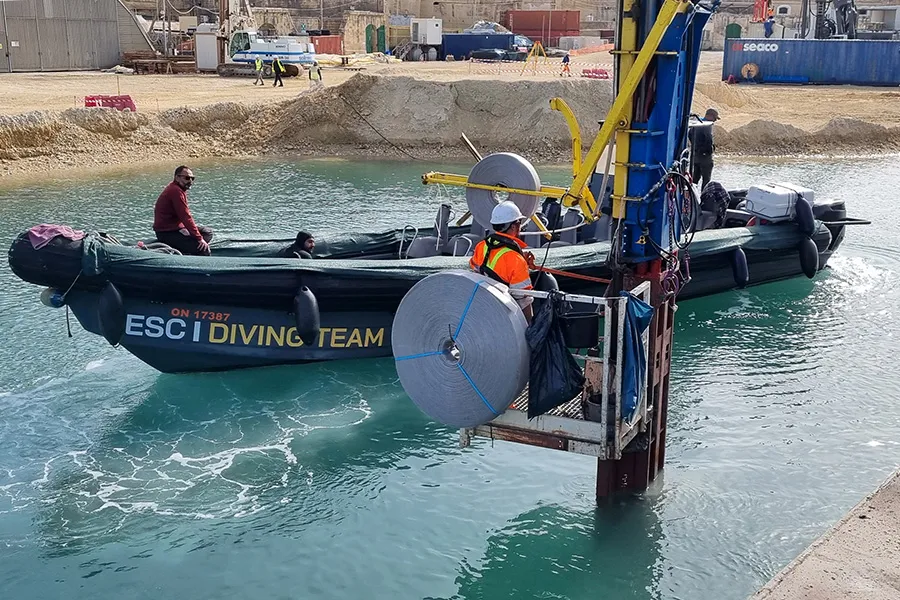
“Valetta is a busy seaport with limited space,” says Gatze. “That is why land is being reclaimed to create more quay space and a quay wall. We used vertical drains underwater to stabilise the soft layers beneath the seabed. This meant putting our excavator, fitted with a drainage mast, on a pontoon. We then installed our drains in the ground, which lies 8 metres below the water surface, to a depth of 28 metres below the seabed. A total of 118,000 linear metres of drains were installed in the ground. Each drain was placed on a 1 m2 grid.”
Surprises beneath the seabed
Those who think that is a lot would be mistaken. “This is a relatively small project for us,” Gatze explains. “At Google in Groningen, we are installing 480,000 metres of drains, 5 metres apart, so 87,000 drains. In Venice, we go to an average depth of 16 metres and install 94,000 drains, totalling around 1.5 million linear metres. The project in Malta is complex, partly because the work is carried out from a pontoon and installation takes place underwater. The historic setting also presented some challenges, as old structures, quay walls from old castles, turned out to be beneath the seabed. These were marked in our GPS control system as far as possible.”
Logistics also proved to be a project in itself: the excavator was shipped in sections from Malaysia to Malta, then reassembled there. The mast came from the Netherlands in parts. After the work, the crane will be dismantled again at an Italian port and transported in sections by lorry to a new job in Germany.
Biobased drains
Because the drains, currently made of plastic with a fabric wrap, remain in the ground, CeTeau is developing biobased, biodegradable drains that break down into the ground. “We are currently running pilot projects using this principle,” says Gatze. CeTeau builds and develops every machine itself, down to the smallest detail. “And it’s all done in the Netherlands. For installation, we use a GPS system that communicates with a software programme we have also developed ourselves. It all comes together in Malta. We are specialists in this field and are happy to show what we can do. You can also see us at InfraTech 2025. Do come and visit us at stand 1.219.”
Have a business enquiry for CeTeau B.V.? Get in touch
Companies in this story

Keep following this
Get an email when a new story is published. No account needed.
- SubjectInfraTech
- CompanyCeTeau B.V.
- CompanyInfraTech