Tackling the ‘plastic soup’ with air bubbles
Text Evelien Baks Beeld The Great Bubble Barrier®, Zeevonk Media en Van den Herik-Sliedrecht
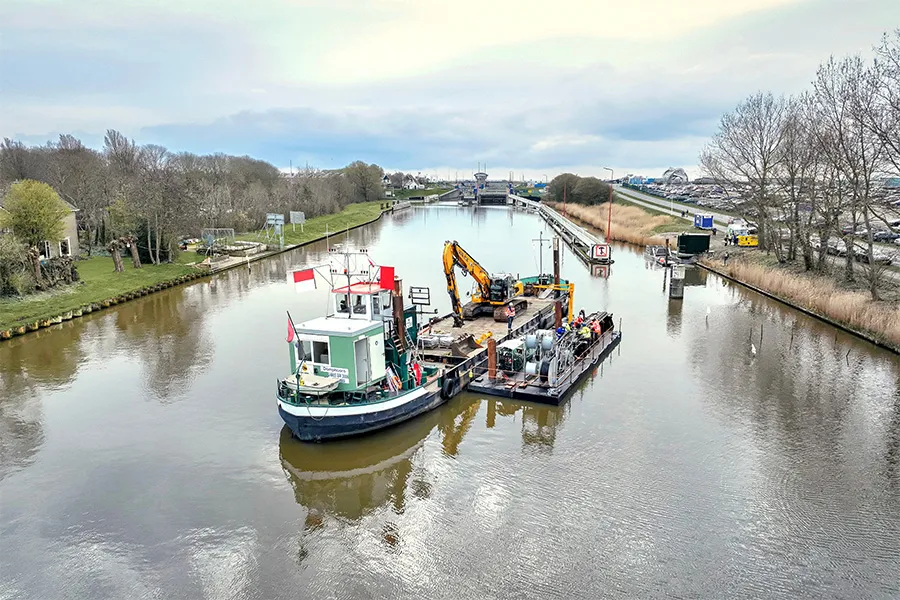
Working together to combat river pollution
The problem in oceans and seas is well known, but rivers have their own ‘plastic soup’ too. Dutch company The Great Bubble Barrier has the solution: an innovative pipe system that creates a screen of bubbles. The company is working with family business Van den Herik of Sliedrecht to put it into practice.
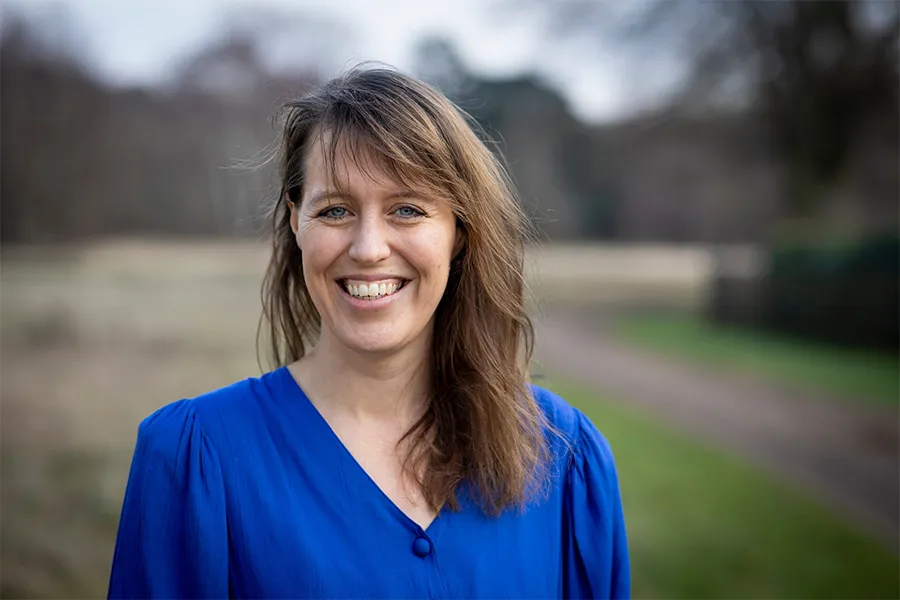
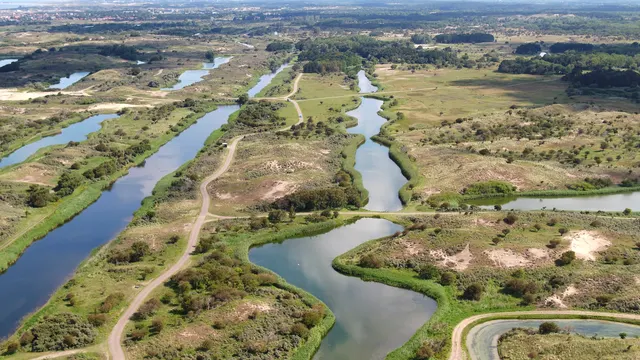
Francis Zoet is one of the founders of The Great Bubble Barrier. The idea came about when she and her co-founders saw a mountain of plastic waste floating in the sea while sailing. What if all that plastic could be intercepted in rivers before it reached the sea? With their idea for the Bubble Barrier, they won a competition organised by Rijkswaterstaat in 2016. They were given the opportunity to develop the Bubble Barrier further and test it in practice at a pilot site on the IJssel. Their ‘learning team’ was supported by Van den Herik, a specialist in hydraulic engineering and maintenance, Rijkswaterstaat and research institute Deltares.
A simple principle, maximum impact
The principle behind the Bubble Barrier is crystal clear. Plastic floating down rivers towards the sea is brought to the riverbank before it reaches the sea, where it can be collected and processed for circular reuse. How? By laying a series of perforated pipes on the riverbed. When compressed air is fed into them, bubbles escape from the pipes and form a screen. The plastic rises to the surface, and the river current carries it to a designated point on the riverbank, where the Bubble Barrier’s collection system is located.
A smart approach
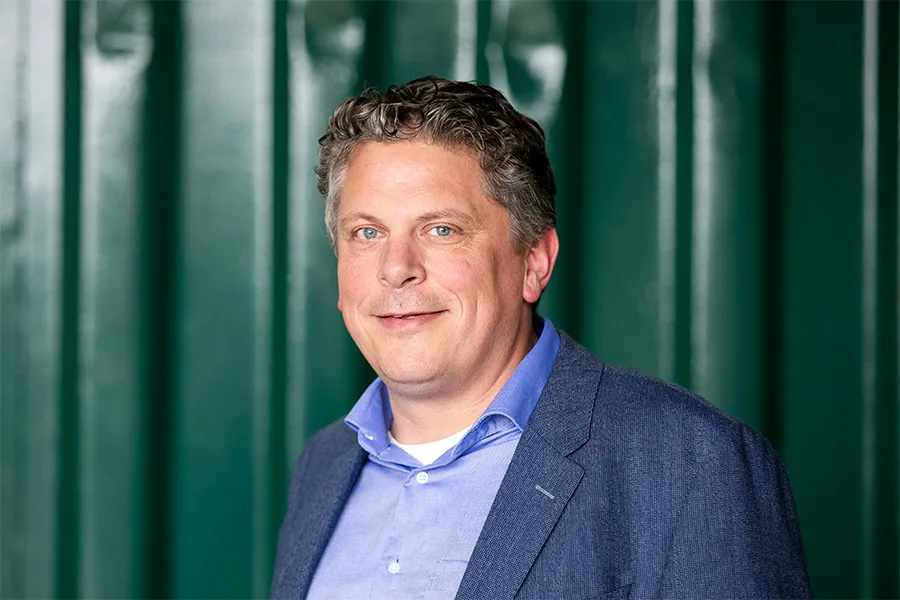
The Great Bubble Barrier works closely with Van den Herik on the design and implementation. Founded in 1946, the family business has extensive expertise in building structures in, on and around water, as well as maintaining waterways. Jeroen Vermeer, regional manager at Van den Herik, says: “One question we continually consider with our partners is: how can we keep waterways clean as effectively as possible? The Great Bubble Barrier’s idea is innovative and fits in very well with that. We see the problem in our day-to-day work. When maintaining waterways, we dredge up not just sediment but also a lot of rubbish, including plastic.”
15,000 pieces of plastic in a month
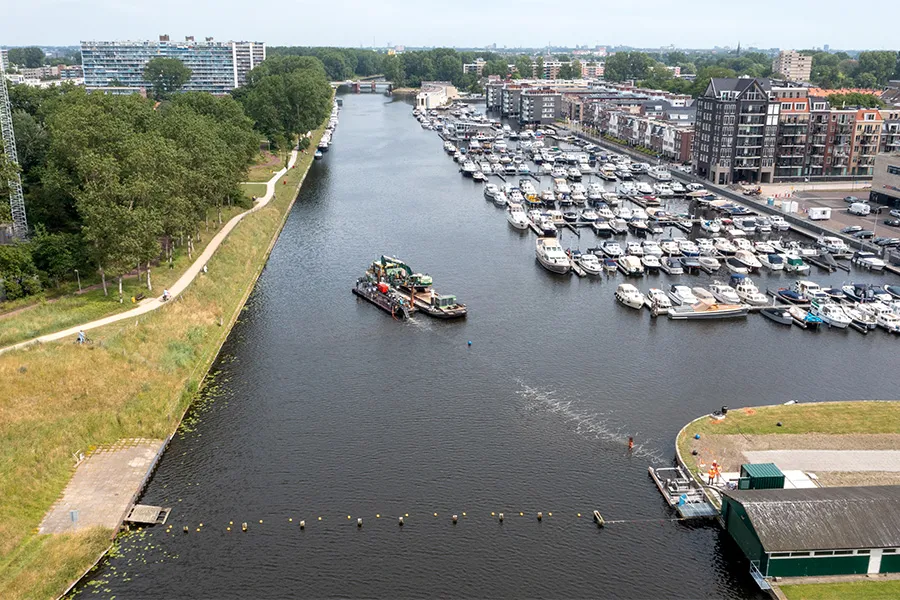
Bubble Barriers are now in place at several locations: three in the Netherlands and one in Portugal, where The Great Bubble Barrier is taking part in a European research project on pollution. The first Bubble Barrier has been in a canal in Amsterdam, the Westerdok, since 2019. According to Francis, the figures for the plastic collected by the bubble screen are impressive: “Every month, it collects 80 kilos of dry plastic, or more than 15,000 pieces. The results naturally depend on the level of pollution and the size of the waterway. A river 250 metres wide, which is the maximum width we can handle at present, will yield more than a small canal.” A Bubble Barrier has been operating in Harlingen since 2024 to prevent pollution of the protected Wadden Sea, while the one in Katwijk has been in operation since 2022.
Precision on the riverbed
Van den Herik and The Great Bubble Barrier developed an ingenious system for positioning the ‘tubes’ (pipes) on the riverbed. Jeroen says: “We’re familiar with bubble screens used during dredging works to prevent turbidity from affecting the surrounding area. Their placement does not have to be particularly precise. The Bubble Barrier is different. That is why Van den Herik developed an installation system that allows much greater accuracy at every location. You have to take account of factors including currents, tides and the surrounding area.”
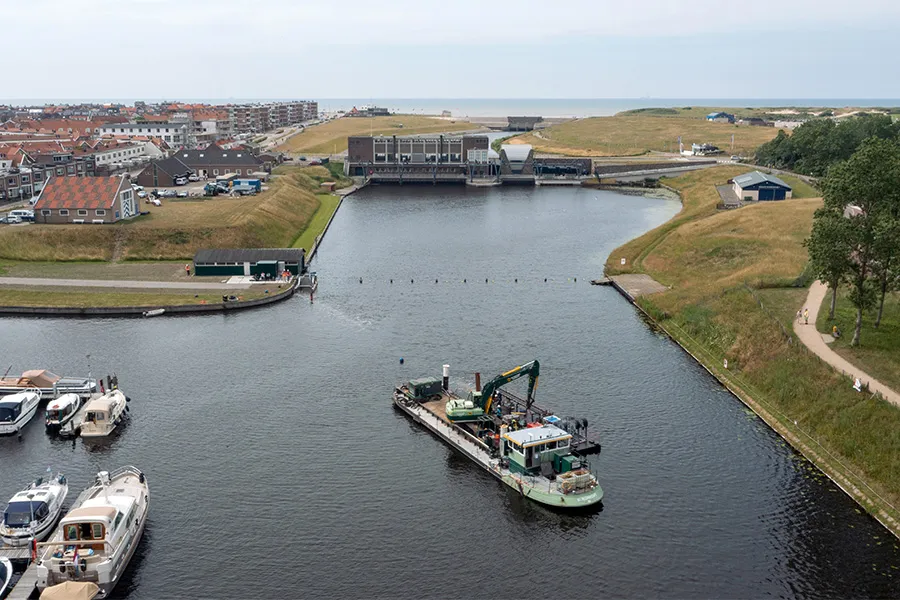
The pipe system is assembled to measure in the workshop and wound onto reels. “We developed a special pontoon that can be transported both by water and over land. It has an assembly table on which the anchoring plates are attached to the pipe system. The anchoring plates are made of concrete or steel, depending on the location. On site, the pipes are positioned precisely on the riverbed using GPS and a guide chute. Once the compressed air is turned on, the Bubble Barrier can get to work.”
Fish-friendly
On the choice of compressed air, Francis says: “We considered various options, but compressed air proved to be the best choice when installing a screen across the full width of a river or canal. The dredging and oil industries use it too. And if it can stop oil and sediment, it should be able to stop plastic as well. It was also important that it should not interfere with shipping or fish. That has proved to be the case. A major study into the effects on glass eels, which are very fragile fish, has just been carried out in Harlingen. The findings show they are not affected at all.”
Ambitious
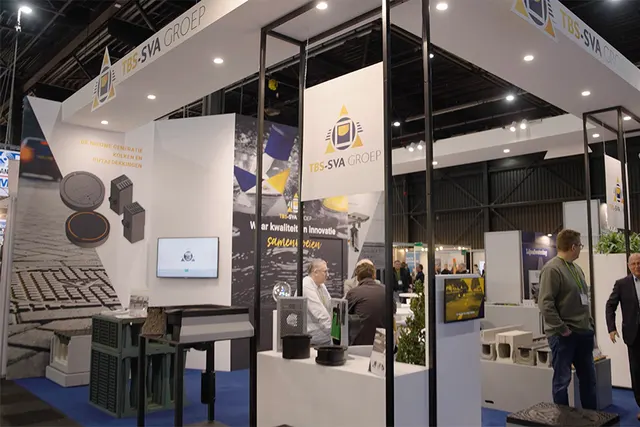
The Great Bubble Barrier aims to install 25 bubble screens a year in future. Francis says: “Amsterdam will probably get a second one soon, we are in talks with other Dutch cities, and several feasibility studies are under way. There is also a lot of interest from abroad. Together with Van den Herik and other partners, we will continue to look at how we can make implementation easier and keep fine-tuning the system. The results show how important our efforts are.” To strengthen and build on our collaboration, we will be exhibiting together at Infratech in January, at stand 2.308. This joint effort will help us reach as many potential new customers as possible.
Question about this story? Ask your question
Companies in this story

Keep following this
Get an email when a new story is published. No account needed.
- SubjectInfraTech
- CompanyInfraTech