Sustainable modular cycle paths
Text Roel van Gils Image Easypath
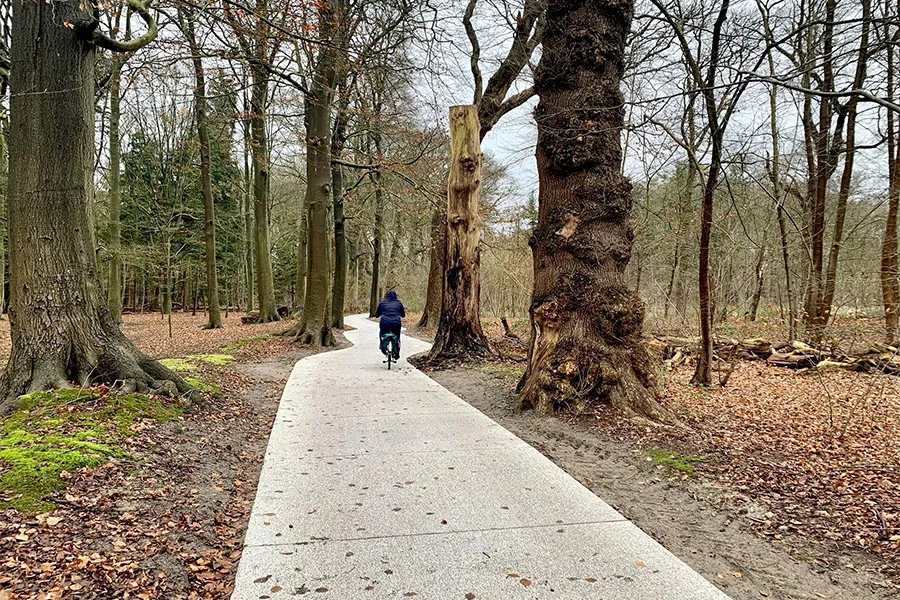
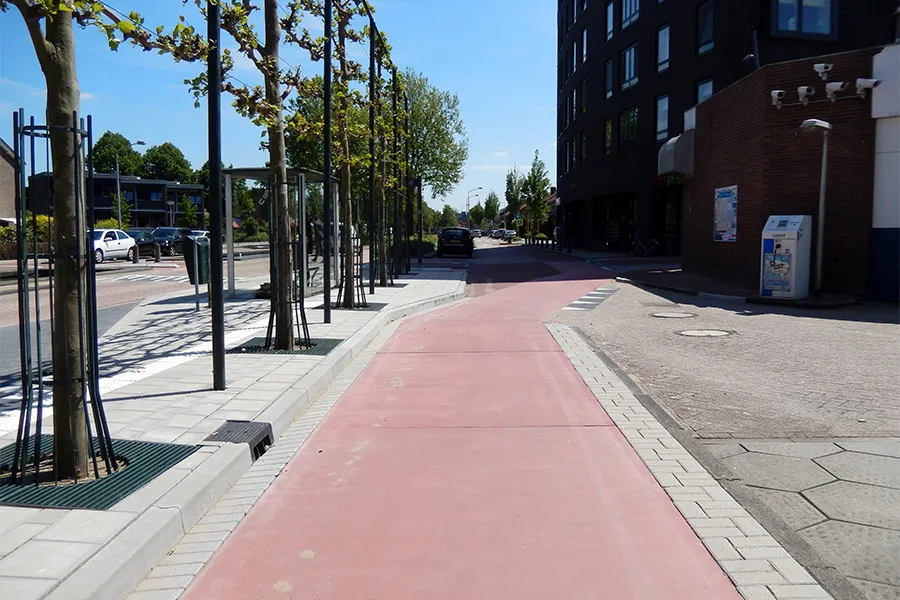
Since 2005, Easypath has been paving the way with high-quality, prefabricated concrete elements for cycle paths, footpaths and agricultural roads that are durable, flexible and quick to install. Thanks to the interlocking prefabricated elements and their patented connection system, loose paving slabs, damage caused by tree roots, subsidence and intensive maintenance are now a thing of the past. Another major advantage of this solution is that the individual elements can also be easily dismantled to allow maintenance of underlying cables and pipes, for example.
Our modular cycle paths were developed in 2005, and we now have numerous projects across the Netherlands and Belgium, and more recently in Germany, says Jim Brouwer of Easypath. Municipalities and provinces are particularly drawn to the fact that Easypath® requires no maintenance and has a very long service life. “Traditional asphalt or paved surfaces are highly susceptible to damage caused by tree roots, resulting in frequent and costly maintenance. Easypath® is guaranteed to avoid this problem, because the sub-base can be laid in a different, less expensive way and does not need to be heavily compacted, unlike the sub-base for traditional surfaces. This gives tree roots enough room to grow through it without pushing up the surface. This principle has been demonstrated by Bomenwacht Nederland.”
No loss of capital
Another advantage of Easypath®, according to Jim, is its long service life. “We use high-quality concrete. The concrete elements have a service life of 80 to 100 years, as supported by a certified category 1 LCA included in the National Environmental Database.” Jim acknowledges that a cycle path rarely remains in the same place for that long. “The elements can be easily dismantled and reused at other locations. It is also possible to widen an existing cycle path, for example, without losing capital. You simply connect an element to the side. We produce the elements in working lengths of 2 metres and in any required width from 1 to 4.5 metres. Bends are made using standard bespoke elements, but when renovating a cycle path, we can also match the radius of the existing bend.”
Easypath® is available in two versions: a 14-centimetre-thick version that can withstand all maintenance vehicles with an axle load of up to 10 tonnes (VK30), and a 20-centimetre-thick version with a maximum axle load of 15 tonnes, traffic class 45, for heavy traffic. “Easypath® is also ideal for agricultural roads. We work with the client in every way we can, handle all the engineering and prepare the laying plans,” Jim explains. “The elements can also be finished with a reflective top layer, for example, making it possible to create a highly visible path with much less lighting.”
Question about this story? Ask your question
Keep following this
Get an email when a new story is published. No account needed.
- ThemeMaterials and techniques for infrastructure
- SubjectInfraTech