How can we deliver all our infrastructure work more intelligently?
Text Armand Landman Images Rotterdam Ahoy
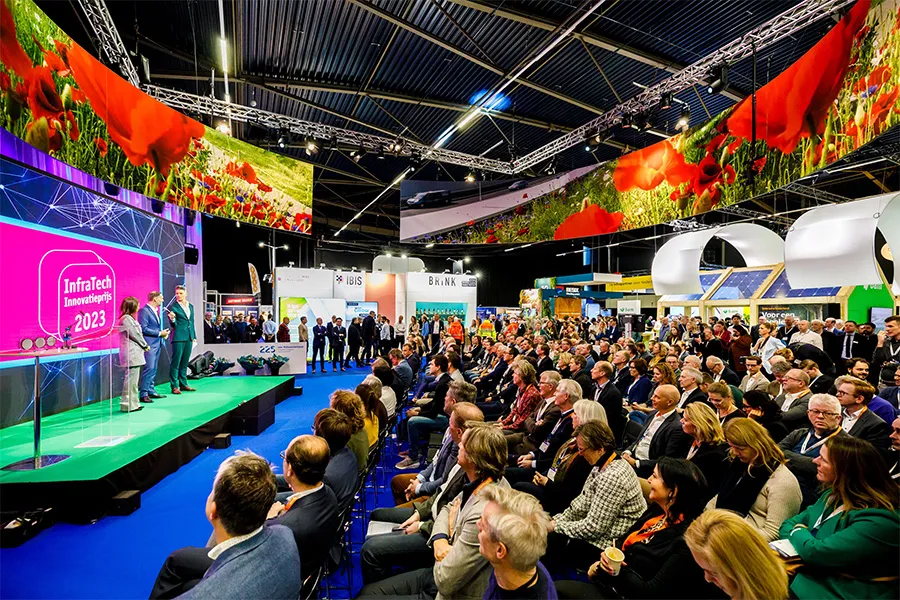
InfraTech puts the spotlight on the renovation and replacement of structures
It is one of the biggest challenges facing the Dutch infrastructure sector over the coming decades. That is why ‘Replacement and Renovation’ will feature prominently on the exhibition floor at InfraTech 2025. A series of knowledge sessions, workshops and talks will explore how all these structures can be addressed in time. The situation is threatening to become critical.
Infrastructure in the Netherlands is ageing rapidly. The province of North Holland alone faces a huge challenge: replacing and renovating 14,500 bridges and viaducts. Without a smart approach, this project would cost the province €15 to €20 billion, making it virtually unfeasible given its limited budget and staff shortages. An innovative approach is therefore essential to keep infrastructure affordable and fit for the future.
“Above all, we need to work smarter and more efficiently,” says Patrick Bakhuizen of engineering consultancy Fugro. “We have known for some time that sensors and monitoring can deliver huge savings, because the data may show that completely replacing infrastructure is not always necessary.”
InfraTech 2025
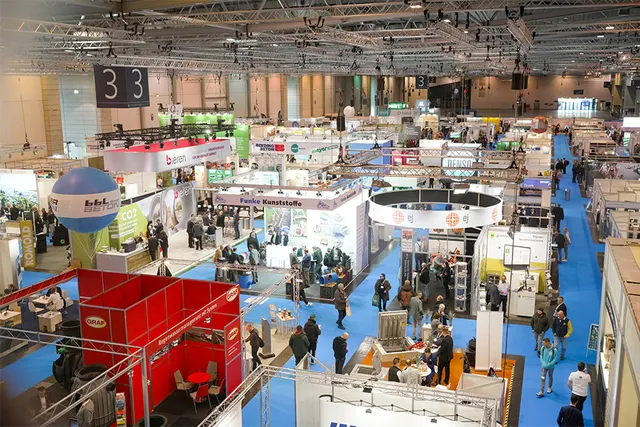
With more than 450 exhibitors and over 200 knowledge sessions, InfraTech 2025 offers plenty of opportunities to network and find inspiration. Register now for free admission at www.infratech.nl.
With a wide-ranging programme focused on current issues in the sector, InfraTech 2025 provides a platform for professionals, companies and public authorities to come together and discuss the future of infrastructure. This year, ‘Replacement and Renovation’ is one of six key themes at InfraTech. The other five are: Underground Infrastructure, Mobility and Logistics, Digitalisation, Climate and Sustainability, and Human Capital. See the full programme of knowledge sessions on the website.
A good example of this new approach can be found in Amsterdam, where the municipality uses sensors to continuously monitor the condition of bridges. Data analysis shows that complete replacement is often unnecessary. Initially, dozens of bridges were earmarked for replacement, but careful monitoring found that fewer than ten needed immediate attention. These insights enable public authorities to defer or even avoid costly replacement projects. Such examples demonstrate the power of data-driven infrastructure management.
Innovative technology is also being used in Rotterdam. Sensors continuously monitor the metro tunnel, minimising the need for costly inspections and disruption to rail services. These systems ensure that emerging problems are detected early and can be resolved preventively. This avoids inconvenience for passengers and generates significant long-term cost savings.
Award ceremony at InfraTech 2025
The finalists will present their projects on 13 December 2024, and the winners
will be announced on 15 January 2025 at InfraTech in Rotterdam Ahoy.
Minister Barry Madlener of Infrastructure and Water Management will present the awards in the Rijkswaterstaat pavilion.
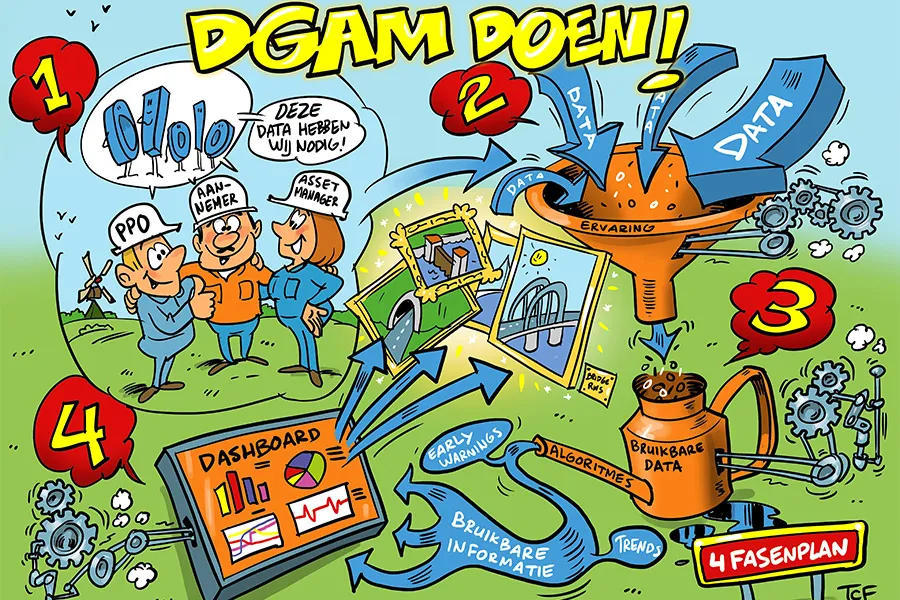
Data-driven asset management
“Data-driven management and monitoring enable public authorities to make sustainable and financially responsible choices while ensuring infrastructure safety,” Patrick explains. “In this context, we are working with several partners on the Future-proof Living Environment programme of the Top Consortium for Knowledge and Innovation (TKI). This programme supports innovative projects and methods that help public authorities and other stakeholders make the transition to data-driven asset management. Clients can join the programme and make use of funding from the National Growth Fund.”
Rijkswaterstaat is also embracing data-driven asset management. It is no coincidence that the government agency submitted this approach for the InfraTech Innovation Award. Data-driven asset management gives Rijkswaterstaat a better understanding of the condition and service life of its assets, enables it to manage them differently and makes maintenance more predictable and therefore more affordable. Data-driven working is becoming part of asset management. Rijkswaterstaat’s Data-Driven Asset Management Programme is ensuring that this way of working is successfully introduced. Experience has been gained through a number of pilots involving hydraulic structures, movable bridges and tunnels, with management and maintenance tested at national and regional level using real-time data, artificial intelligence and dashboards. The key question was: ‘Does it work?’. The next phase will focus on standardisation. During this phase, Rijkswaterstaat will put in place the organisational, procedural and technical conditions needed to apply data-driven asset management across the organisation for hydraulic structures, movable bridges and tunnels. The key question in this phase is: ‘How do we use it at Rijkswaterstaat?’
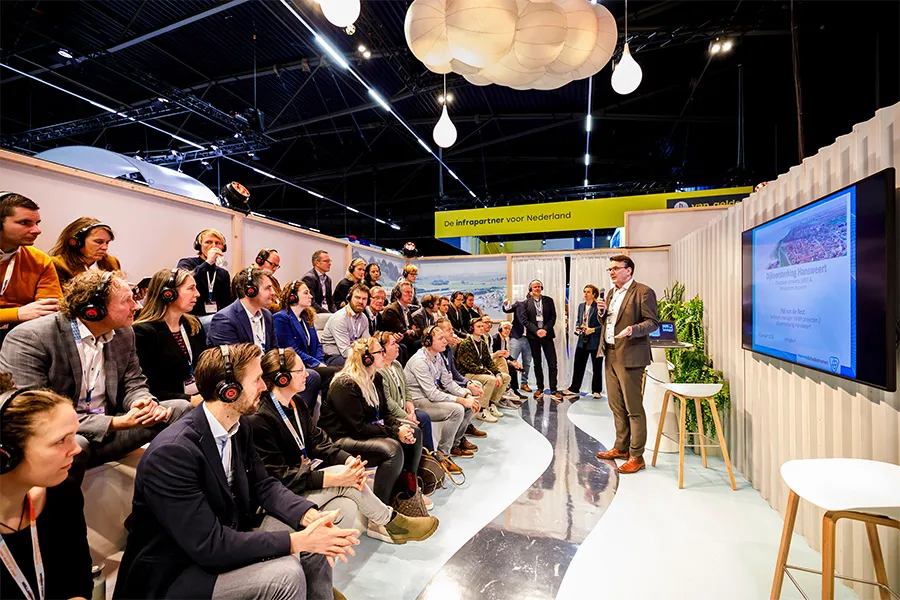
Working together to renovate more intelligently
Another important initiative in this area is ‘Working Together Smarter on Renovation and Replacement’ (SSRV), a partnership between the province of North Holland, Rijkswaterstaat, ProRail, Vervoerregio Amsterdam and several municipalities. The partnership aims to manage and renovate existing infrastructure more efficiently through data, standardisation and collaboration.
The approach includes collecting data on existing bridges and viaducts, grouping similar structures into ‘families’ and developing standard monitoring methods and standardised construction components. This way of working enables replacement and renovation programmes to be delivered more efficiently, at lower cost, with fewer staff and less impact on the surrounding area.
SSRV aims not only to manage infrastructure more efficiently, but also to strengthen collaboration between different parties. Provincial executive Jeroen Olthof recently stressed the importance of this: “We need to organise the task differently. If we fail, North Holland will have a major problem staying connected and accessible in the future.” The collaboration is intended to help infrastructure managers get to know one another better, exchange knowledge and take joint responsibility for the safety and accessibility of the region. SSRV is also working on an ‘area-based approach’, which considers structures as a whole and tenders the work in groups. This enables more structured and efficient planning, with the aim of minimising the impact on accessibility across the province. This innovative approach should result in more sustainable and financially responsible infrastructure management.
The SSRV partnership’s working group now includes staff from the municipalities of Alkmaar, Amstelveen/Aalsmeer, Amsterdam, Den Helder, Haarlem, Purmerend and Zaanstad, Rijkswaterstaat, ProRail, Vervoerregio Amsterdam and the province of North Holland. The municipalities of Edam-Volendam, Hilversum, Medemblik, Schagen, Waterland and Wijdemeren are also actively contributing to specific elements of the initiative.
A fresh perspective
The challenges facing not only the province of North Holland, but the entire infrastructure sector, call for a fresh perspective and a joint effort from all parties involved. The success of initiatives such as data-driven asset management and SSRV could be key to ensuring the safety, sustainability and accessibility of Dutch infrastructure without costs spiralling out of control. Sensors and data analysis play a crucial role in ensuring that maintenance and renovation take place exactly where needed, and no more. All these initiatives and innovations will be explored in detail at InfraTech 2025.
InfraTech Innovation Award nominees
The nine nominees for the prestigious 2025 InfraTech Innovation Award have been announced. From almost fifty entries, the jury has selected the most innovative projects across three categories: Product Innovations, Process Innovations and Sustainable Collaboration. The nominees stand out for their innovative approaches to sustainability, efficiency and collaboration in the infrastructure sector. Competition was particularly strong in the product and process innovation categories, making the choices challenging.
Nominees by category
Product Innovations
- Boskalis Nederland B.V. Buoycrete stabilisation: A sustainable concrete solution that strengthens quays and extends their service life by 30 years.
- Neolithic B.V. On-demand 3D-printed chambers: Custom 3D-printed chambers that provide a fast, sustainable and efficient response to staff shortages and the need to conserve raw materials.
- Beens Groep: Floating Hydrogen Charging Station: An emission-free, modular energy solution for electric machinery on water and land.
Process Innovations
- BAM Infra Nederland: Smart Grid Charging: An open-source solution that charges vehicle fleets using their own green electricity, even when the grid is congested.
- Dura Vermeer & Heijmans: The Nature Ladder: Promotes biodiversity and climate resilience in construction projects through behaviour change and leadership.
- Lhoist: Lime in clay: A sustainable method of strengthening dykes by treating clay with lime, improving safety and reducing CO2 emissions.
Sustainable Collaboration
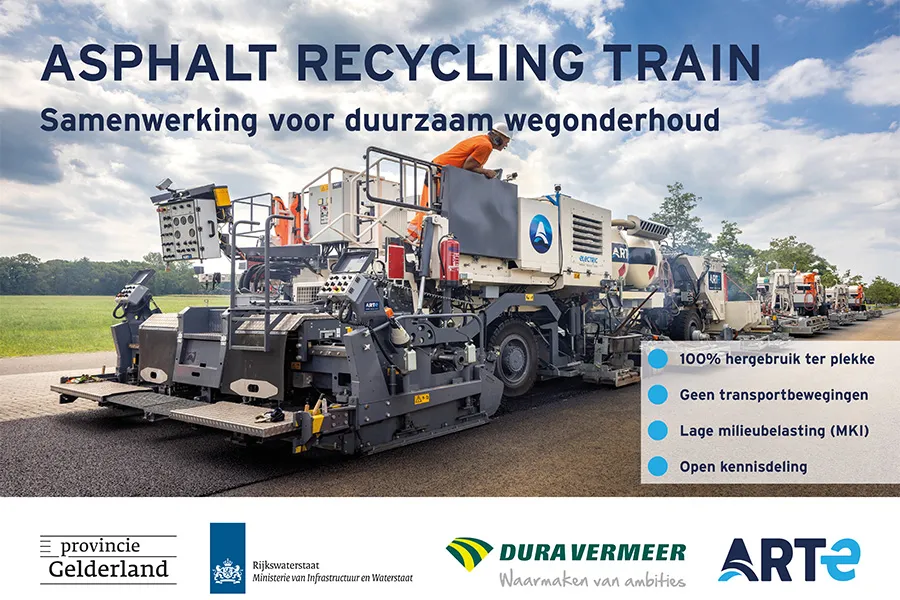
- Provincie Gelderland: Asphalt Recycling Train: A solution for circular road maintenance that reuses old asphalt layers on site, in line with 2030 climate and circularity goals.
- DuSpot and BAM Infra Nederland: Circular construction materials matching tool: The first independent marketplace for circular construction materials, aiming to cut costs and CO2 emissions and improve the efficiency of material flows.
- Buyer Group Grondstromen: Working smarter together with valuable soil: Public and private parties work together to reuse soil circularly and cost-effectively through data-driven collaboration.
Jury members
The jury comprises chair Arno Visser (Koninklijke Bouwend Nederland),
Joop Polfliet (Gemeente Rotterdam), Diana Beuting (Rijkswaterstaat), Marcel Hertogh
(TU Delft and Erasmus University Rotterdam), ir. D’tasha Demmerer (Witteveen+Bos),
and Doekle Terpstra (Techniek Nederland).
Question about this story? Ask your question
Companies in this story
Keep following this
Get an email when a new story is published. No account needed.
- SubjectInfraTech
- CompanyInfraTech
- CompanyFugro
- CompanyBoskalis Nederland