Always innovating, always finding a solution
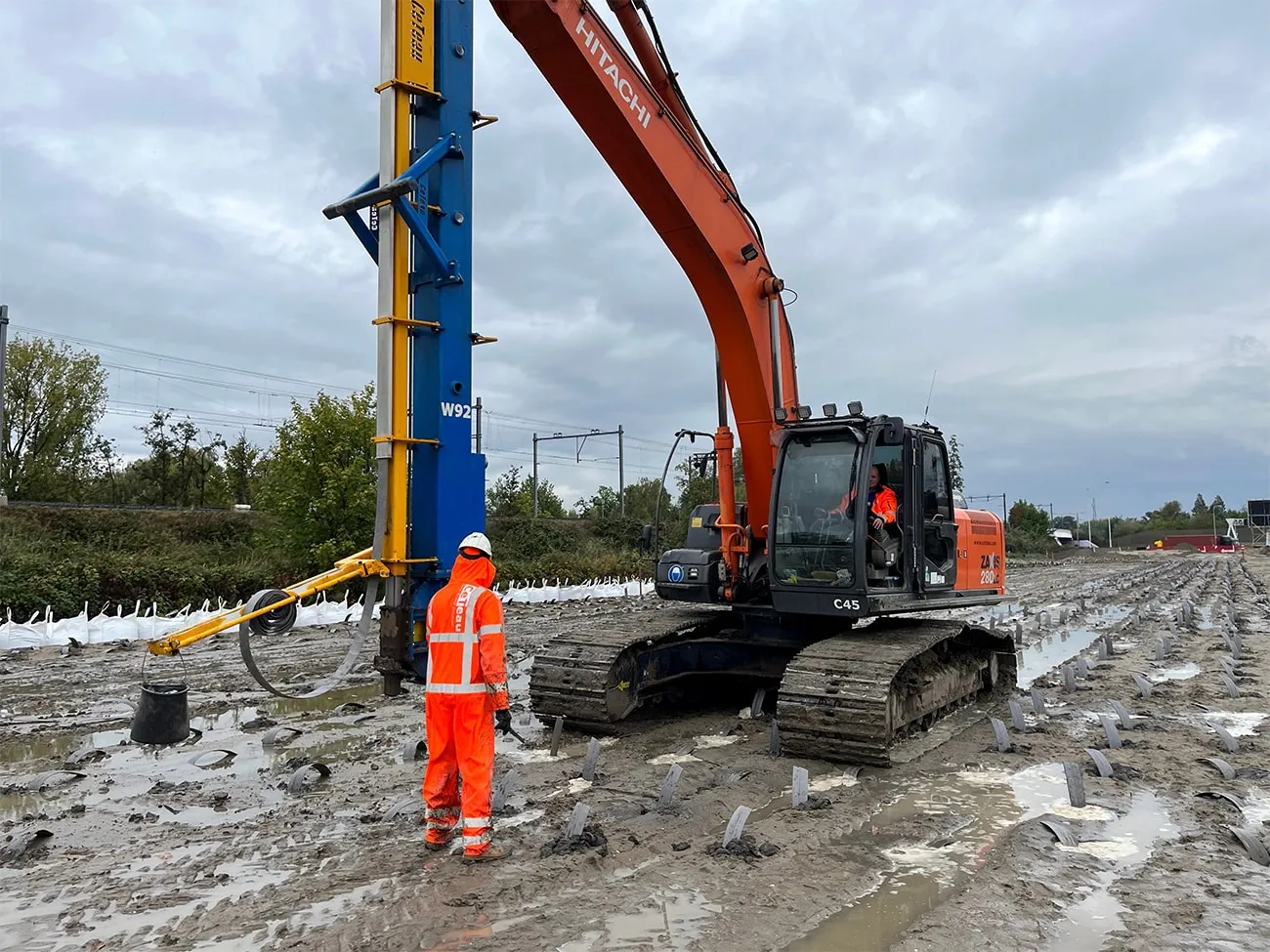
CeTeau BV is proud to present itself as an innovative, collaborative partner. Always active and driven to find the right solution. As most companies in the Netherlands know the business primarily for producing and installing vertical drains, it will use InfraTech to showcase several innovations in this consolidation technique. CeTeau is also known worldwide for its ground improvement techniques, which will also feature at the exhibition.
Innovative consolidation: sustainable with DuraDrain
DuraDrain is CeTeau’s new biodegradable drain. “For many years, we have been asked the same question: what happens to the drains we install?” says Gatze van der Meer, General Manager of CeTeau BV. “Unfortunately, the answer is nothing. These drains remain in the ground, even though they are only needed for a limited time. Once the final settlement has been reached, the drains no longer serve a purpose. That is why we have developed a biodegradable drain called DuraDrain. It takes longer to break down than the longest required settlement period. DuraDrain is fully broken down after approximately 12 years.”
Faster, smarter settlement with vacuum drainage
CeTeau now carries out a great deal of soil consolidation work in Asia using a vacuum drainage system. “The negative pressure needed to accelerate settlement is generated by vacuum,” explains Van der Meer. “The major advantage is that virtually no surcharge is needed. This greatly reduces the transport of soil. Vacuum drainage is also an effective solution where there is a risk of unwanted ground movement due to the heavy surcharge. But its greatest advantage is that vacuum can accelerate the settlement process even further when combined with a surcharge. This means a site is ready for construction sooner and remains unused for less time.”
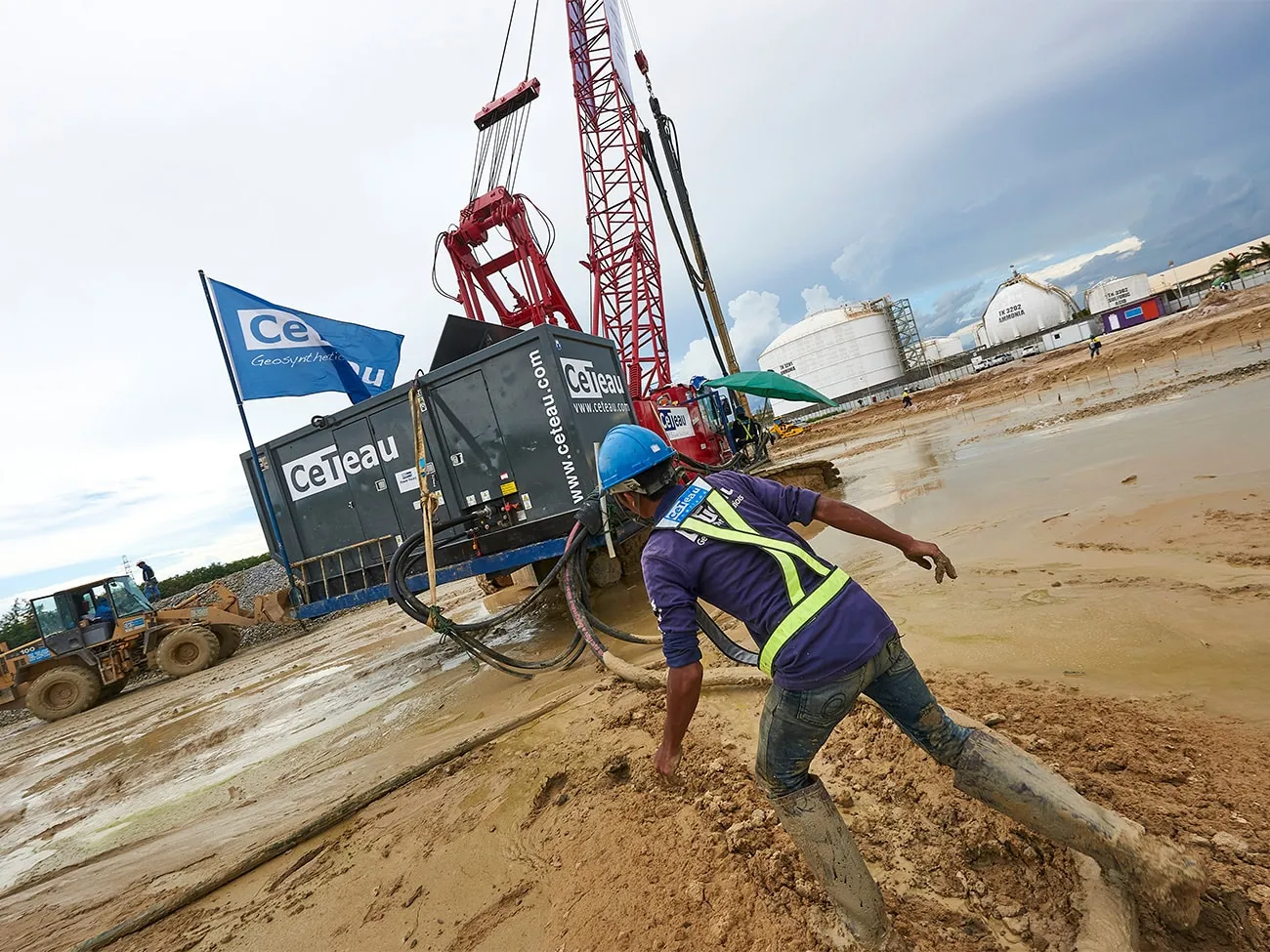
Ground improvement techniques
CeTeau is also a company to consider for ground improvement techniques. “We have various methods for improving suitable soil types and achieving maximum bearing capacity,” says Van der Meer. Here is a brief overview.
High Impact Surface Roller (0.5 to 3.0 metres deep)
The surface roller uses High Energy Compaction (HEIC) to compact dry sand and loam soils to a depth of approximately 3.0 metres through impact, Van der Meer continues. “The roller has 3 or 5 sides and strikes the ground forcefully using a shock absorber. This improves and densifies the structure of the sand grains. The roller is mounted behind a tractor and travels over the area to be treated at approximately 10 km/h. After inspection, the process can be repeated if sufficient settlement has not yet been achieved.”
RIC Rapid Impact Compaction (3.0 to 8.0 metres deep)
CeTeau has built up extensive knowledge and experience in using RIC compaction hammers. “A heavy piling hammer is used to compact the soil, typically sand, in a fixed pattern,” explains Van der Meer. “The hammers are attached to an excavator and, with a weight of up to 15 tonnes, strike a compaction foot from a predetermined height at set intervals over a period of several minutes, creating dynamic compaction. The resulting settlement enables a sandy area to withstand a much greater load without many further measures.”
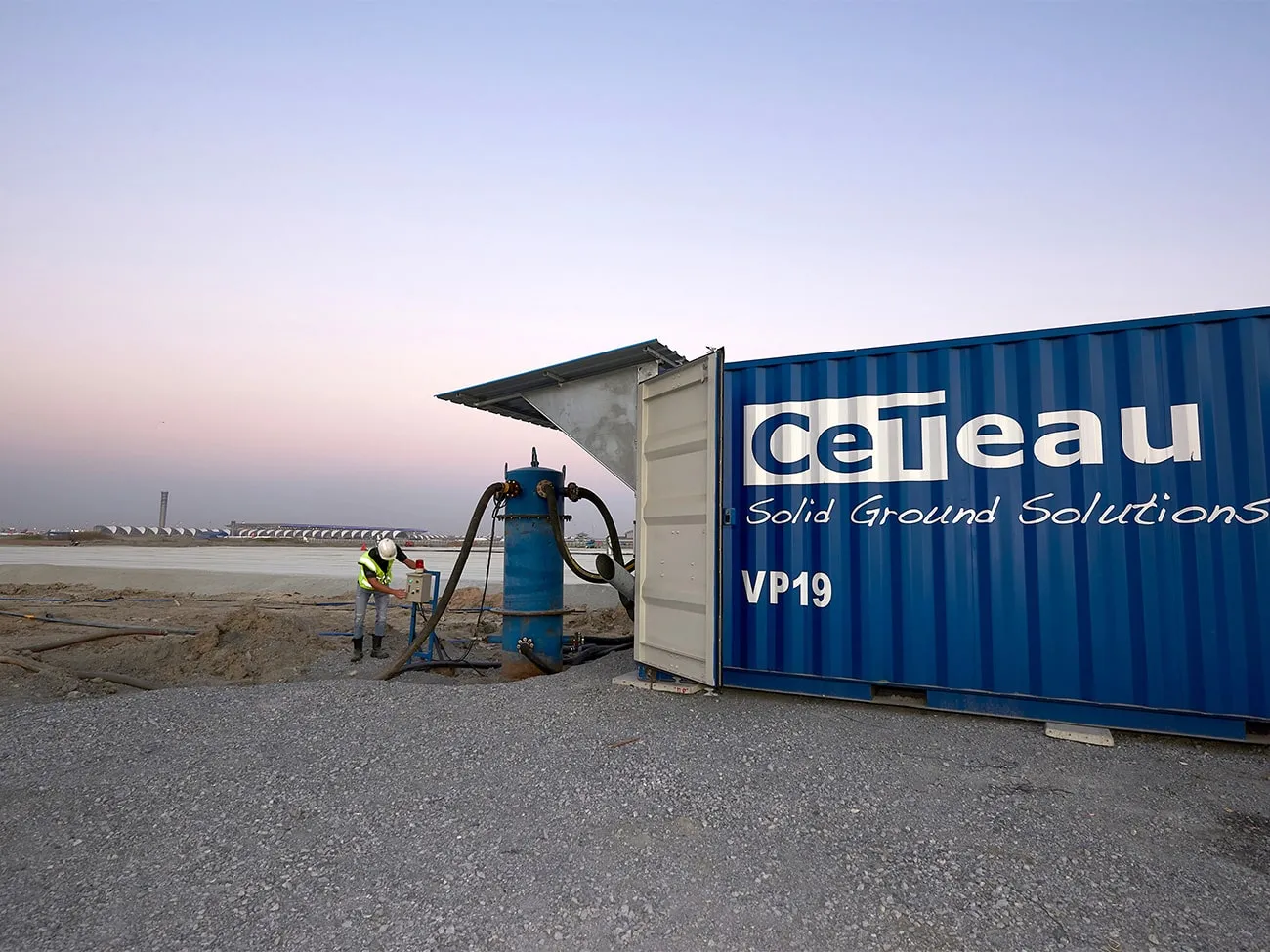
Vibro (flot) compaction (5.0 to 25.0 metres deep)
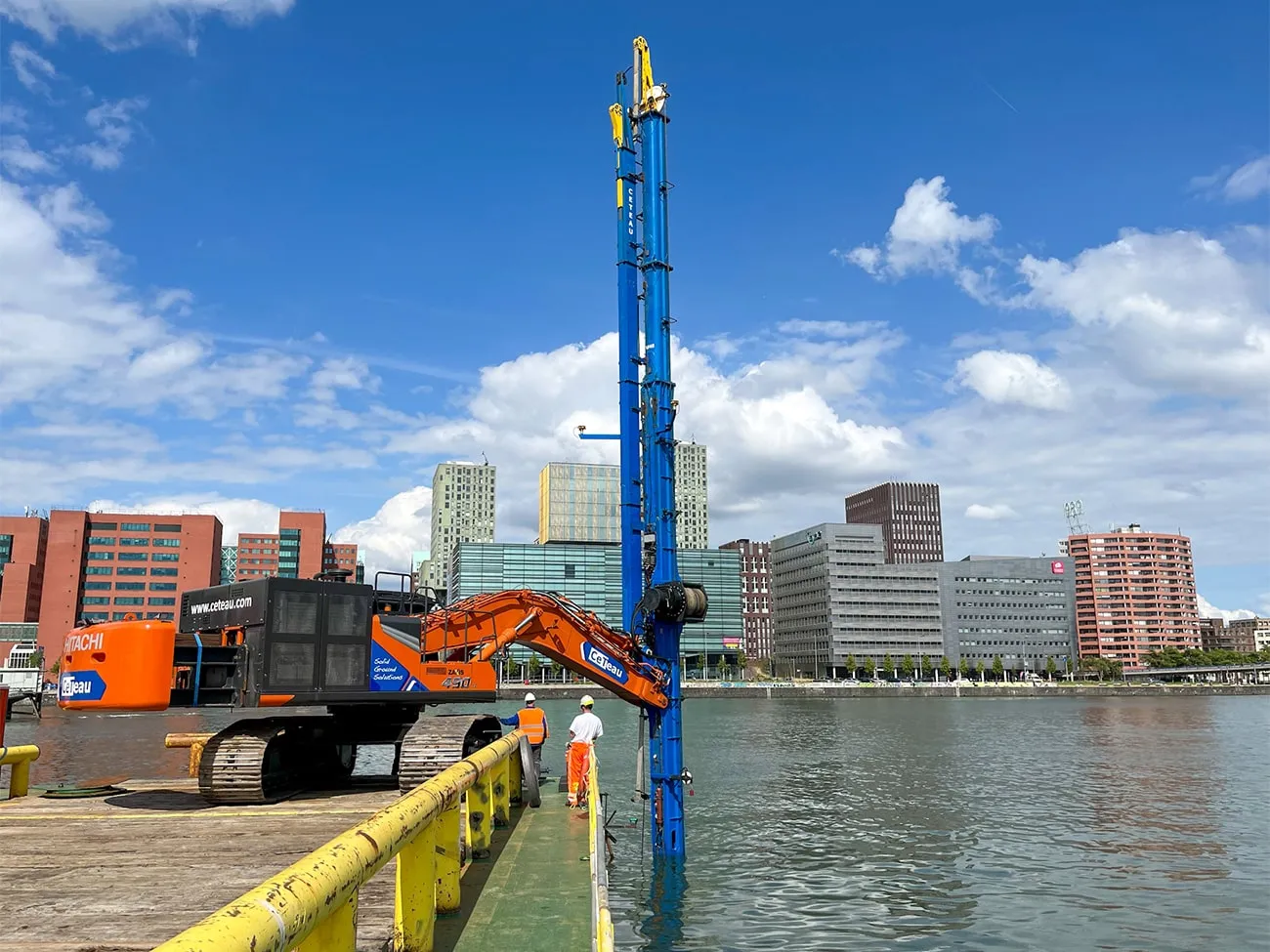
Sand layers can be compacted to great depths using the Vibro (flot) technique, also known as Vibro Compaction, says Van der Meer. “A vibro unit with an eccentric is vibrated into the ground using water and air. This restructures granular soils and densifies them. The densified column forms around the vibro unit, and the process can be carried out in a predetermined pattern.” CeTeau has gained extensive experience with the technique on major projects in Asia.
The technique is used where ground conditions allow, meaning less than 10% fines and less than 2% clay. The aim is to increase the bearing capacity of the ground and reduce settlement.
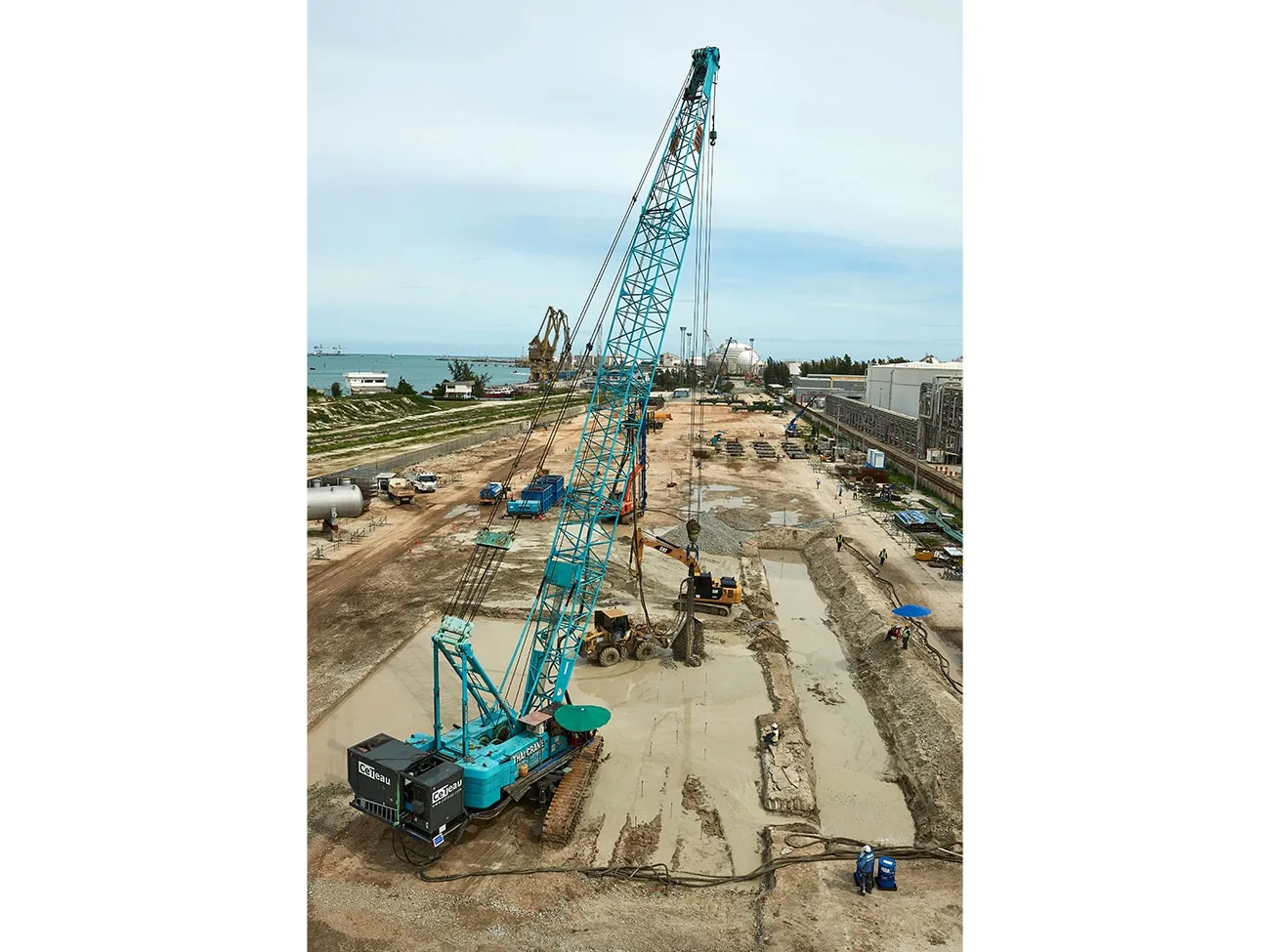
Gravel column
The Vibro (flot) technique used for Vibro Compaction can also be used to construct a gravel column. “A gravel column is installed using a Vibroflot. Fine to medium gravel and crushed rubble up to approximately 4 cm in size can be fed in and compacted using the vibro probe. This creates a firm column through which groundwater can still escape and which also provides a degree of bearing capacity, depending on the ground conditions. Our Vibroflots are deployed at various locations worldwide.”
Find out all about CeTeau’s unique consolidation and ground improvement techniques at InfraTech 2023.
Have a business enquiry for CeTeau B.V.? Get in touch
Companies in this story
Keep following this
Get an email when a new story is published. No account needed.
- SubjectInfraTech
- CompanyCeTeau B.V.
- CompanyInfraTech