Network operators and NLCS key to the energy transition
Text Bram Leyten Images Arkance
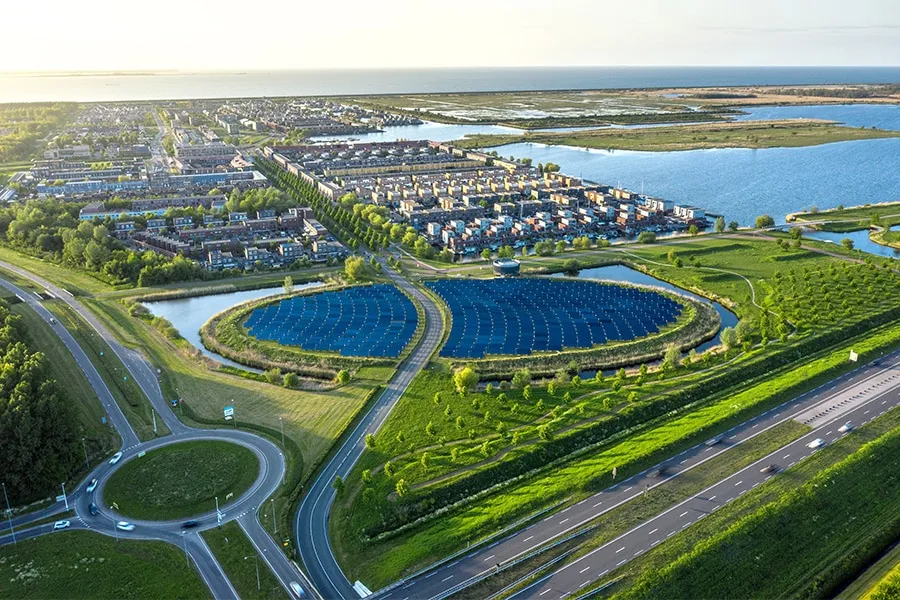
One thing is certain about the Dutch energy transition: the government, network operators and businesses must work together to manage this major change successfully. Annelies Hartman of Arkance, a company specialising in digital transformation, explains why network operators and the Dutch CAD Standard (NLCS) have an important role to play.
A key role
“The NLCS has established a strong position in the infrastructure sector. So strong, in fact, that government bodies, network operators and businesses are working together to make the common drawing standard central to their organisations and processes,” says Annelies Hartman, who has worked as a Product Manager at Arkance for several years and recently became the point of contact for the NLCS and InfraCAD. “There is a lot at stake. Global climate change is an undeniable reality. The Netherlands also has ambitious targets for achieving the Paris Agreement. And network operators and the NLCS are very important at the heart of the Dutch energy transition.”
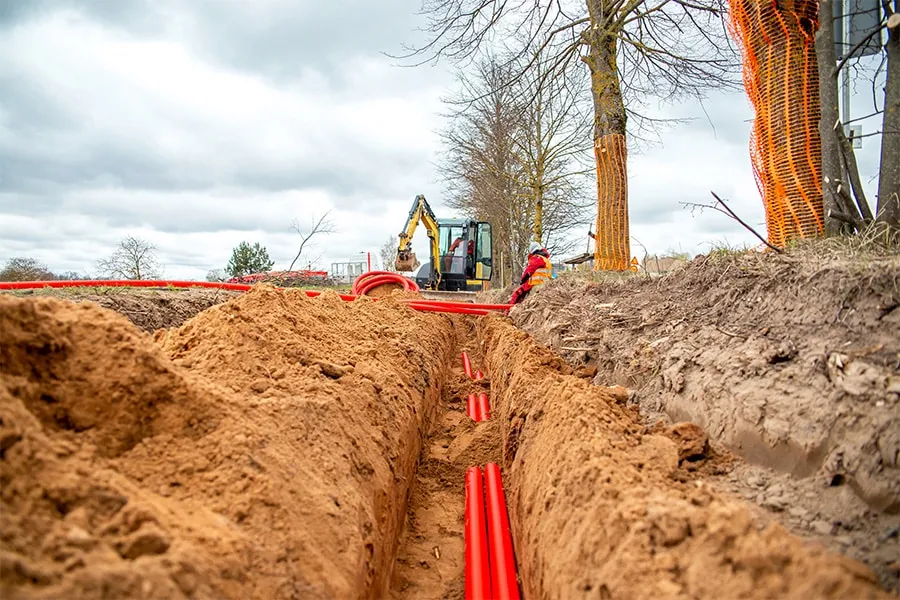
The energy transition is indeed a critical issue for network operators, with a focus on expanding ‘The Grid’. The (draft) Climate Agreement sets out a clear path for the Netherlands: switching from fossil fuels to sustainable energy sources such as solar and wind, with the aim of reducing greenhouse gas emissions by 49% by 2030 and 95% by 2050. This transition requires not only a change in mindset, but also a physical transformation: expanding and adapting our existing energy infrastructure is essential. This includes installing new cables, ducts, pipes and facilities for transport and storage, which are vital to accommodate the growth in sustainable energy sources. Network operators play a key role in transporting electricity, water and data. They are at the forefront of this change, tasked with preparing the infrastructure for the future.
Drawing standard
Dutch network operators usually originated from the merger of several smaller operators, each with its own drawing standard. A common drawing standard is a suitable solution for helping them work together more effectively, both internally and with other parties. “That is where the NLCS can make an important contribution,” says Annelies. “A single overarching standard such as the NLCS makes it easier for all parties to exchange project information, both internally and externally.” According to Annelies, working with the NLCS is much more efficient: “Drawings no longer need to be converted from one standard to another, because everyone uses the same symbols, styles and terminology. This makes drawings immediately easier to read and understand: with the NLCS, we will all speak the same language.”
It is clear why Arkance, along with much of the infrastructure sector, regards the NLCS as the drawing standard for Dutch infrastructure. The consistency and interoperability of the NLCS bring many benefits. Better collaboration reduces errors and costs, while also shortening the delivery time for networks, for example. “And that makes it attractive to network operators. They are responsible for expanding and adapting existing energy infrastructure. A shorter delivery time for ‘The Grid’ will help make the energy transition a success. And that brings us full circle,” Annelies concludes.
InfraCAD
Since 2018, the NLCS has been mandated as an “open standard” for new projects carried out by (semi-)government bodies. Several network operators have since joined forces to adopt a standard and are now developing a shared information model based on the NLCS. Some network operators have already fully switched to the NLCS, while others are working towards it. “Brabant Water is a good example,” says Annelies. “ARKANCE was involved at an early stage of the NLCS implementation. That is always beneficial, because it lets us brief the organisation in advance on the right approach and potential pitfalls. We provided broad support throughout implementation: strategy, consultancy, software and expertise. They have now been working with the NLCS and InfraCAD for some time, and are very satisfied.”
InfraCAD. It came up earlier in the conversation and seems to be a familiar name in the ‘NLCS world’. “That’s right,” says Annelies. “We recognised the potential of the NLCS at an early stage and are doing everything we can to make it standard practice across the sector. That is also why we developed InfraCAD, a CAD application for working efficiently with the NLCS. The application is fully integrated with AutoCAD, Civil 3D and AutoCAD Map 3D, and offers designers and draughtspeople a wide range of NLCS features: symbol libraries, automatic cross-sections, legends and cone penetration test data, as well as photo surveys.”
With InfraCAD 8, Arkance has taken a major step towards offering network operators even more NLCS functionality. Hartman cites NLCS Library 5.0, NLCS object data and Entity Data Viewer as examples of features that support network management. “As you can see, with InfraCAD we are always looking to the future. We are also working on new developments,” Annelies says proudly. “And the market is responding positively: InfraCAD is now the most widely used software for producing NLCS drawings.” What is clear is that the energy transition stands to benefit from the NLCS, with network operators acting as driving forces.

About Arkance
Arkance helps organisations through their digital transformation by improving processes, optimising supply chain collaboration and promoting data-driven processes. It serves the construction, infrastructure and manufacturing sectors. To this end, Arkance develops its own IP and provides software, services and training. Arkance pursues strategic partnerships and draws on its international expertise to deliver local solutions.
Een zakelijke vraag aan Arkance Systems Nederland? Get in touch
Companies in this story
Keep following this
Get an email when a new story is published. No account needed.
- SubjectDigitalisation & software
- CompanyArkance Systems Nederland