How can you prepare properly for the Cybersecurity Act?
Text Carolien Klees Image Spelt/Unsplash

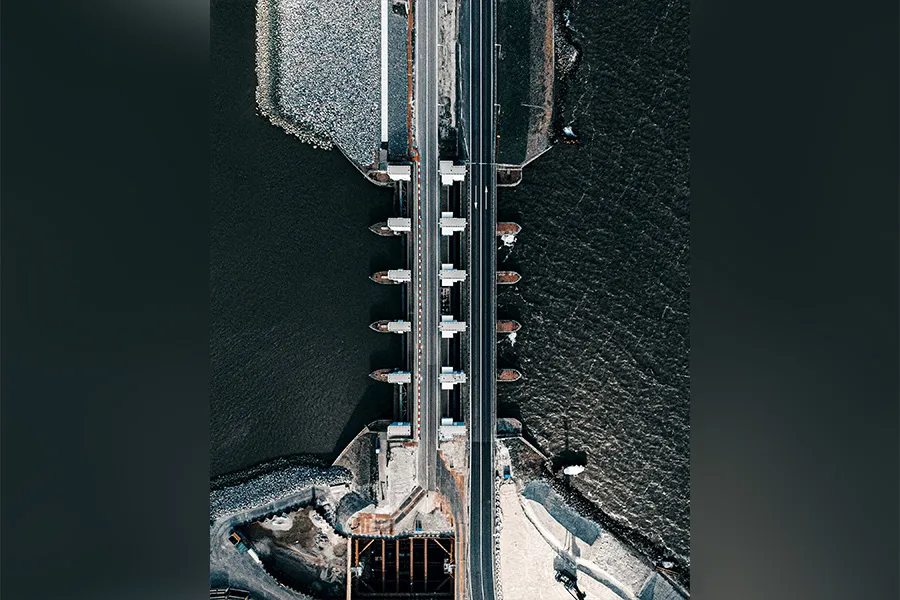
Awareness and knowledge of digital security are important when designing or renovating critical infrastructure assets. These are vulnerable assets for our economy and security. After all, the smooth flow of traffic in our country depends to a large extent on operational bridges and tunnels. And hundreds of locks, weirs and flood defences keep us dry. The number of cyberattacks is growing, with a recent hack targeting the Port of Antwerp. What is more, the Cybersecurity Act is on its way! What can companies expect, and what steps can they take now to avoid any surprises when it comes into force? We asked Patrick Spelt, Head of Cybersecurity Supervision at the Human Environment and Transport Inspectorate (ILT) of the Ministry of Infrastructure and Water Management.
The European Union Agency for Cybersecurity investigates how cybersecurity is evolving each year. The ‘Enisa Threat Landscape 2024’ report shows that ransomware and DDoS attacks pose the greatest threats. In both cases, the company’s systems are brought to a standstill, but ransomware attacks also demand payment. The report also shows that the techniques used are becoming increasingly complex and that cybercriminals are using AI tools more and more often. These tools make cyberattacks more effective, but also more accessible to attackers with less technical knowledge.

Weak link
Social engineering, such as phishing, is also still common. Hackers exploit human weaknesses by sending deceptive emails to gain access to an application or network. If staff are not sufficiently aware of the risks of handling data insecurely, for example by using their own devices or insecure video connections, this can lead to data breaches and cyberattacks. It is therefore important to recognise that uninformed staff can be the weak link in a company’s digital security.
Action needed
The NIS2 Directive came into force on 17 October last year and will be implemented in the Netherlands through the Cybersecurity Act. This European legislation aims to raise the overall level of resilience of all companies in the EU. The Directive addresses risks to network and information systems, including cybersecurity risks. Patrick has spent almost two years working on the implementation of cybersecurity legislation, its enforcement and supervision. “The Act is expected to come into force in the third quarter of 2025. It is, however, very important that companies get started straight away! After all, the risks organisations face are already here. What is more, many companies will be encountering these rules for the first time, since current legislation applies only to providers of essential services. Also bear in mind that even if your company is not required to comply with the regulations, you may work with organisations that are and that will therefore need to impose requirements on their supply chain partners.”

Taking action
Patrick recommends starting with the NIS2 Self-Assessment. This online questionnaire tells you whether your organisation falls under the NIS2 Directive. If it does, you can use the online NIS2 Directive Quick Scan. This provides a high-level overview of your obligations and the current state of your cybersecurity in line with the intent of the European NIS2 Directive.
Inspection regime
If your organisation falls under the Act and is classed as ‘essential’, the ILT will visit proactively. For organisations classed as ‘important’, supervision takes place retrospectively, only after a cybersecurity incident has occurred. “You don’t need to be afraid of the regulator, and we certainly won’t start handing out fines straight away. We have an enforcement strategy and mainly use fines for companies that really refuse to comply with the rules. If an inspection reveals that things are not in order, you will first be given time to put them right. What matters most to us is that companies understand what is required and get to work on it. That is what really contributes to resilience.” Organisations may also be dealing with other inspection services, such as the Rijksinspectie Digitale Infrastructuur. “The inspection services work together on this, so organisations don’t have to deal with two inspections that are working at cross purposes.”

Reducing costs
To tackle this issue efficiently, it is useful to know that various initiatives are available, including cyber resilience networks. Joining such partnerships can give you access to help and advice, as well as opportunities to work together. Bouwend Nederland, for example, supports its members in partnership with the Digital Trust Center (DTC). Aannemersfederatie Nederland has also signed a cooperation agreement with the Samen Digitaal Veilig (SDV) initiative.
Patrick ends with one final tip on meeting the duty of care: “Our inspection frameworks are based on industry frameworks. My tip, then, is to get to work with ISO 27001 and 27002, the NEN standards or the NIST Cybersecurity Framework. It’s money well spent, because we will be using the same frameworks.”
The website www.ncsc.nl is a good starting point for finding information on the topics covered in this article.
Question about this story? Ask your question
Keep following this
Get an email when a new story is published. No account needed.
- SubjectDigitalisation & software