Creating value with IoT in the OT domain
Text Roel van Gils Image ICT Group

Civil engineering and infrastructure is a sector that has relied on process automation in the OT domain for many decades to control, operate and monitor structures and assets. What we are seeing is that OT networks are increasingly being combined with the world of IoT. If implemented properly, this offers a range of new possibilities, according to ICT Group.
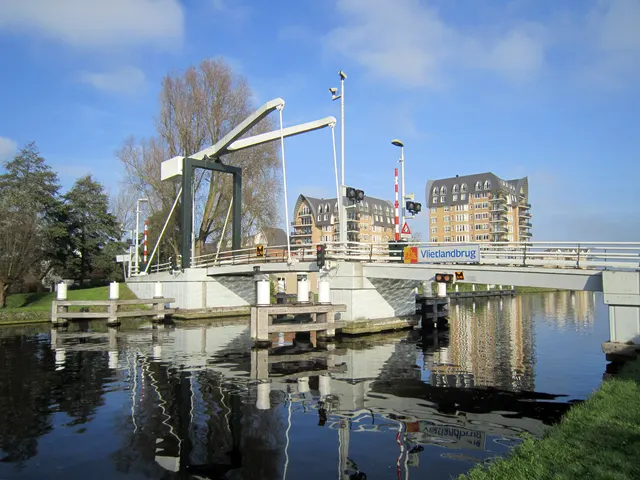
“As a water authority or an asset manager responsible, for example, for a bridge or tunnel, IoT gives you access to modern internet technology,” says Leon Huijsdens of ICT Group. “In many cases, it is a welcome addition to classic, robust OT technologies such as PLCs. Data generated by all kinds of sensors goes straight to the cloud, where you can then apply all kinds of intelligence.” His colleague Eric van der Laan illustrates the point with an example: “IoT is ideally suited to setting up monitoring networks with a time dimension, so you can see how the water level changes over a period, what the electrical conductivity of the water is, and so on. You can then analyse the data, providing a basis for any measures that may be needed.”
From reactive to preventive
IoT is generally used for supporting processes rather than the primary process itself. For example, you can monitor the condition of an asset or structure over a given period. “If the connection drops, you just have a gap in the data, but the primary process continues as normal,” says Eric. “And by monitoring the condition, you can add all kinds of intelligence. Sensor technology on a pump or pumping station can analyse measured vibrations to identify potential problems with the pump. This lets you move from reactive to preventive maintenance in your primary process. IoT has been used in road construction for some time. Loops in the road measure traffic volumes, and when these rise sharply, the variable message signs light up. That is IoT too, and ICT Group is involved in that work.” Leon adds: “The flexibility and speed of response that IoT offers mean you can react to situations very quickly. You can’t do that with OT.” Chris Bosse of ICT Group adds: “IoT lets you detect things remotely. That saves time and labour, because you can organise work much more efficiently.”
Energy optimisation
Looking to the future, it is essential to make an asset or structure as sustainable as possible to operate. Eric says: “If there is little green electricity available, electricity is expensive or the grid connection is under pressure, you could decide, for example, to pump the rainwater reservoirs at a tunnel empty later, provided the KNMI is not forecasting rain.” Leon adds: “If you do indeed have all the facts, you can use IoT to build some very good algorithms. And we are taking this a step further by combining IoT with AI to develop and apply these complex algorithms. A person can consider three to five factors in relation to one another. With AI, you can consider an unlimited number of factors and determine the optimum, then set the setpoints for the OT equipment every 15 minutes, half an hour or any other time interval.”
Asked whether integrating IoT into the OT domain entails risks, Chris answers firmly: “We are aware of the vulnerabilities, but we counter them with the best and most secure solutions. The two worlds are inevitably coming together. That is why it is vital to get things right from the outset. We understand the entire chain, in both the OT and IoT domains, and have built our own platform, ConNXT, for exchanging data and reading sensor data. Hundreds of thousands of assets are now running on it, to the full satisfaction of our customers, including water authorities and managers of bridges, locks and other assets.”
Question about this story? Ask your question
Keep following this
Get an email when a new story is published. No account needed.
- SubjectDigitalisation & software