









Working to the RAMS(HEC) principles is highly recommended
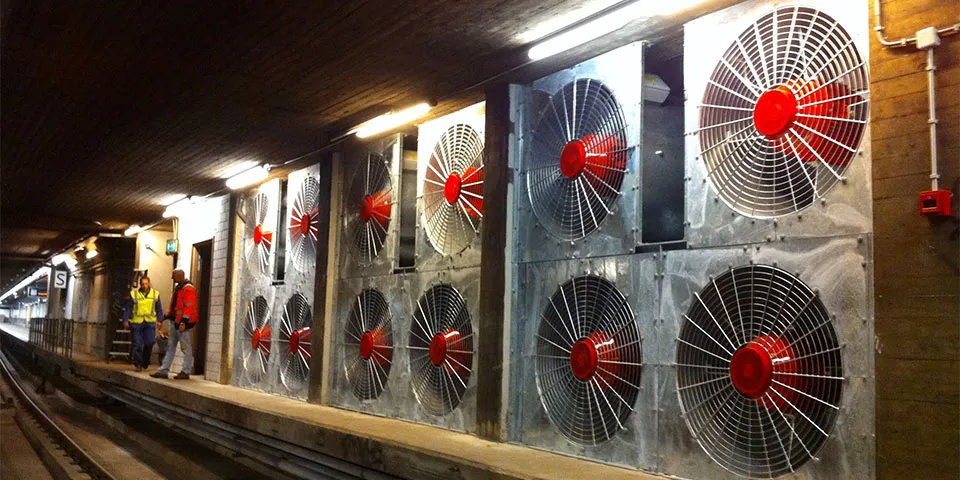
RAMS(HEC) stands for Reliability, Availability, Maintainability, Safety, Health, Environment and Cost.
The essence of this principle is to explicitly define the performance level of these parameters, which represent reliability, availability, maintainability, safety, health, environment and cost. Working to the RAMS(HEC) principles improves the quality of both services and products, optimises performance and makes working safer, all at lower cost and with a lower risk of failure.
Colt International BV works to the RAMS(HEC) method. We speak to Erik Peeters, commercial manager for fire safety, and Stan Veldpaus, project adviser for smoke control systems. They explain what RAMS(HEC) means for Colt and its customers, and illustrate this with practical examples.
Investing up front means reaping the rewards later
Stan opens the discussion: “Colt raises RAMS(HEC) with its customers at an early stage.
RAMS(HEC) can be approached scientifically, but following its principles with common sense can deliver significant progress without going into excessive detail or wasting time. Investing in this up front can pay dividends later. For example, imagine a fan being installed somewhere using a crane, after which the contractor seals everything up. How will the fan be replaced in the future if necessary? The building fabric would have to be broken into and then rebuilt. That takes a lot of time and money. Another possibility is that a grille is installed by a fan room, but without an opening section. This does nothing to improve access, and drastic measures will be needed for maintenance or in the event of a breakdown. Conducting risk analyses in advance makes it possible to quantify the RAMS(HEC) parameters at both product and process level. In the case of the fan mentioned above, this simply means making provision in advance for maintenance, repair or replacement in the quickest and least costly way. Colt also selects products in accordance with RAMS(HEC). In Rotterdam, for example, at RET, the same type of fan is used at every location. It is oversized for some locations, but it is immediately clear which make and model is used throughout, it is easy to maintain, and the parts are readily available and interchangeable, so only a limited number of spares are needed.”
Considering maintainability and economic viability
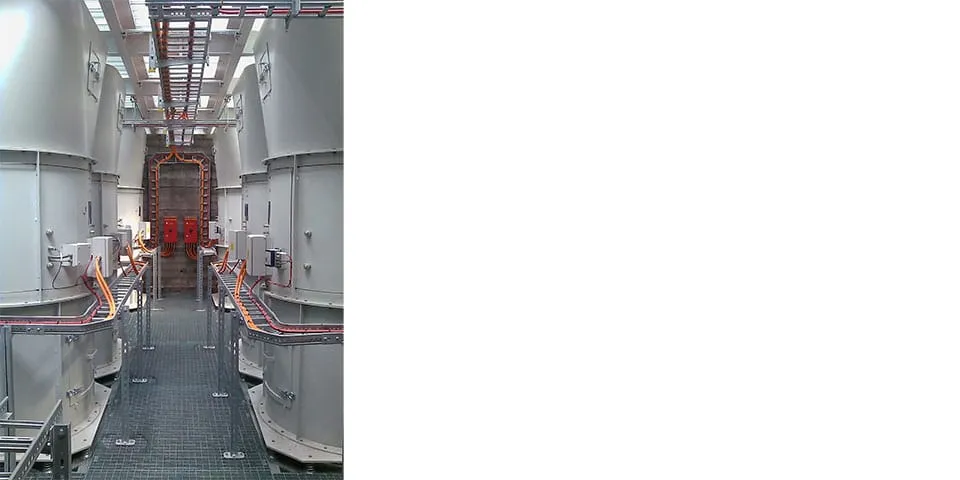
“Colt has been applying RAMS(HEC) to its products and working methods for a long time,” Erik explains. “We consider whether what we build is maintainable and economically viable. A good example is our work on the Velser railway tunnel, which was refurbished in 2008. It was the first project to be built using systems engineering. The tender specifications called for two very large fans with equally high power ratings. Our recommendation, based on RAMS(HEC), was to install 8 fans per shaft, using standard sizes and power ratings that are readily available on the market. This provides a good level of ‘Redundancy’: the project requirement stipulated that the tunnel had to close if 25% of capacity was lost. With the original option, the tunnel would have had to close if one of the two fans failed.” Stan adds: “Our solution uses less energy, and the tunnel remains operational if a fan fails. The 8 fans were ultimately installed following a VTW (request for change).”
RAMS(HEC) helps assess the consequences of decisions made today. “Fortunately, clients now look beyond initial costs to consider TCO (total cost of ownership) too. Working through RAMS(HEC) step by step helps them make sound decisions,” says Stan. Erik concludes: “Clients have already taken the first steps on RAMS(HEC), but the sector should do more to embrace it, particularly as it has been around for some time and fits perfectly with today’s requirements: less disruption, greater sustainability and improved safety.”
Question about this story? Ask your question
Keep following this
Get an email when a new story is published. No account needed.
- SubjectNews







