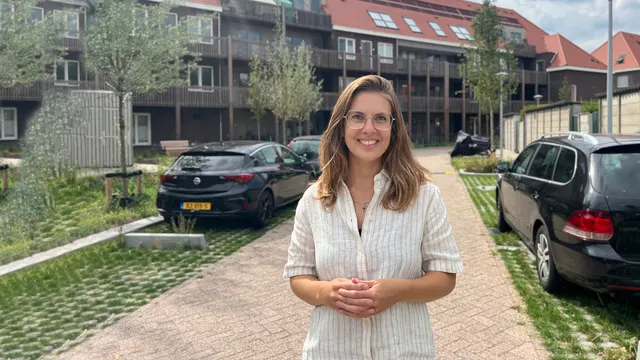
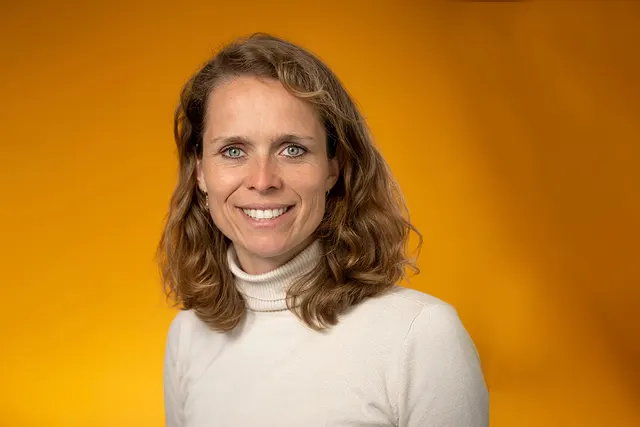
Penny Pipilikaki, senior technical adviser at Rijkswaterstaat
Text Roel van Gils Image Rijkswaterstaat
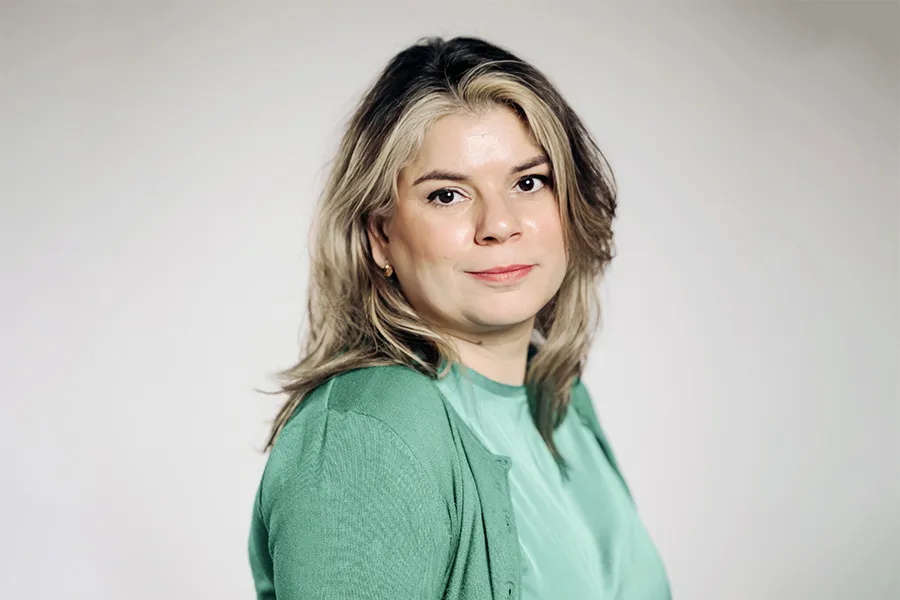
The infrastructure sector is still too often seen as a man’s world. Nothing could be further from the truth. More and more women are finding jobs and a place in the world of civil engineering. And we’re keen to introduce them to you in detail. In every issue of GWW-Bouwmat, we give a woman from the sector the opportunity to talk about her job and what makes it so rewarding. In this issue, we hear from Penny Pipilikaki, senior technical adviser at Rijkswaterstaat.
A chemical technologist from Greece, Penny has been fascinated by materials for more than 25 years, especially concrete. What began with a degree in chemical technology in Greece grew into an international career in research and innovation in the construction sector. “Materials science has been a constant thread throughout my life,” she says. “I’ve always focused on how to make materials more sustainable and extend their service life.”
During her PhD research, she focused on new, sustainable types of cement that fell outside the usual standards, and took courses at TU Delft. “I wanted to find out how we could improve cement and concrete, both in terms of sustainability and service life.” After completing her PhD, she spent several years in the Greek cement industry, working in R&D. Through that role, she came into contact with TNO, which eventually led her to move to the Netherlands in 2011.
“I worked at TNO for almost nine years in the construction cluster, and was involved in countless innovative projects involving cement-based materials, asphalt and new types of concrete,” she says. After a short spell in industry, she returned to research, and found her place at Rijkswaterstaat around 4.5 years ago. “I work here as a senior technical adviser on bridges and viaducts, specialising in concrete. I advise on new and innovative concrete in construction and pilot projects, as well as on existing concrete affected by deterioration or ageing. From a materials science perspective, you can often predict what will happen at an early stage and intervene before it becomes a structural problem.”
Alongside research under the ‘transition pathway for civil engineering structures’, a significant part of her work focuses on replacement and renovation. “Many of the challenges are not just about structural safety, but about the service life of reinforced concrete structures. That’s the key to sustainable solutions,” she says. Although construction is still a man’s world, Penny feels at home in it. “The materials side of concrete is the gentler side of construction, and a striking number of women work in that area. Still, I’m often the only woman at meetings. I don’t mind, I’m used to it. And sometimes it leads to funny situations, such as emails that begin with ‘Mr Pipilikaki’.”
What Penny finds most compelling is the social relevance of her work. “We build for society. Materials are the foundation of that. Concrete is here to stay, but its composition is changing. We’re getting ever ‘greener varieties’. My ambition is to reduce the footprint of our structures and inspire others, especially women, to contribute their ideas. Diversity brings fresh perspectives, and that’s exactly what we need to move forward.”
Question about this story? Ask your question
Keep following this
Get an email when a new story is published. No account needed.
- SubjectWomen in construction