









What should a good oil and grease separator really be able to do?
In the previous issue of this magazine, you could read how oil and grease separators bearing the CE mark can still fall badly short when it comes to quality, safety and durability. As promised, this new issue explains what a good oil and grease separator should actually be able to do.
Janssen sums up: “Annex ZA sets out the ‘essential characteristics’ that separators had to meet. CE marking is mandatory for every manufacturer, but the manufacturer itself is largely responsible for providing evidence that its products meet the standard’s requirements for these essential characteristics. Manufacturers therefore apply the CE mark (CE label) to their own products and provide a signed Declaration of Performance (DoP), stating which essential characteristics the product meets. However, this does not always go smoothly.”
Doubts over essential characteristics and the Technical Construction File
“In practice, we see that manufacturers whose products were certified before CE marking was introduced already had a Technical Construction File, particularly for KOMO products. Unfortunately, we also see products being made for which there are serious grounds to doubt whether they meet the essential characteristics for CE marking, and whether the manufacturer has a Technical Construction File at all,” Janssen observes. The essential characteristics for oil and grease separators and silt traps are:
- fire classification
- watertightness
- efficiency
- strength and stability
- durability
“Only the assessment of fire classification for combustible separators, such as those made of plastic, has to be carried out by an accredited laboratory (notified body). Manufacturers can assess the other essential characteristics themselves. But note: manufacturers are required to record evidence that the essential characteristics have been met in the ‘Technical Construction File’ (TCF), so that national supervisory authorities (ILT) can check it if necessary,” Janssen explains. “Unfortunately, we too often see products that can be described as inferior, with good reason to doubt whether they meet the essential characteristics for CE marking. That immediately raises the question of whether a TCF exists at all.”
A broken separator: negligence, or just a case of ‘greasy’ bad luck?
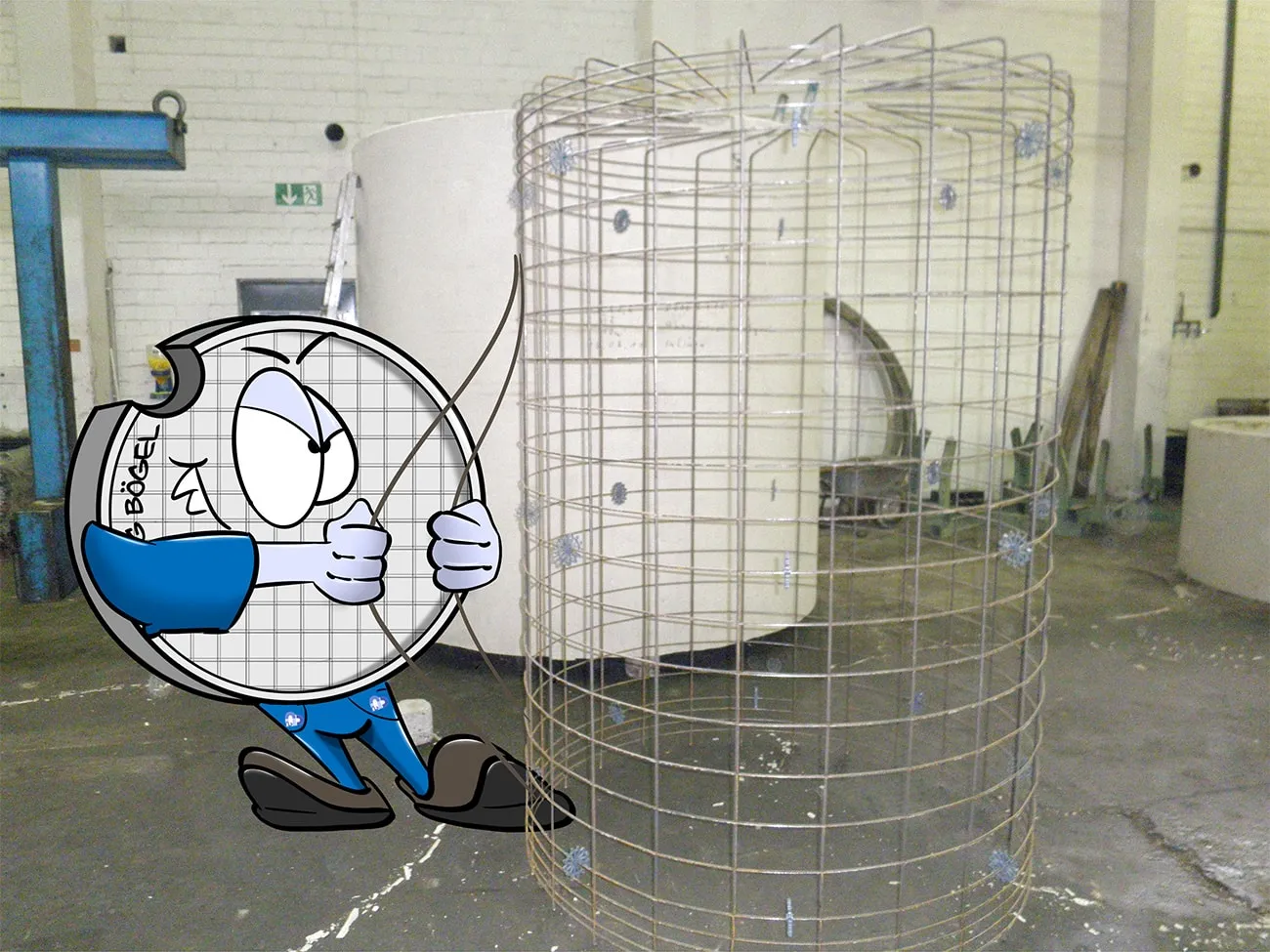
When it comes to the strength and stability, watertightness and durability of concrete separators, the key is using the right reinforcement, Janssen explains. “Separators are often subjected to heavy traffic loads and have to withstand them throughout their 20-year service life. To demonstrate that a separator meets the stability requirements, the entire concrete structure must be assessed by calculation or tested. The strength of the structure depends to a large extent on the quality of the concrete: the higher the concrete class, the stronger it is. The standard (CE) requires a minimum concrete class of C35/45 and sets no requirements for minimum wall or base thickness. Nor is reinforcement mandatory,” Janssen explains. “That last point in particular is strange. Concrete is strong and can withstand substantial compressive forces. But it has a drawback: it is poor at withstanding tensile forces, which can cause it to crack and therefore leak. To withstand these tensile forces, structures can be reinforced with steel in the cover slab, walls and base of the chamber.”
The greatest forces act on the cover slab, the base and the junction between the base and the wall. Janssen says: “When a concrete chamber and cover slab are structurally designed in accordance with the rules, the calculations take a maximum permissible crack width of 0.2 mm into account. This means minimum wall thicknesses of 100-120 mm are needed, together with reinforcement in the base, walls and cover slab. The calculations take dynamic traffic loads, earth pressure and high groundwater levels into account, in short, the most adverse operating conditions. It is strange, then, that this is not addressed by CE marking.” A concrete separator without reinforcement can therefore pose a significant environmental hazard. If it cracks, is that ‘greasy’ bad luck, or does it fall under ‘negligence’? The expertise to get it right is readily available, so choosing not to do so is a deliberate decision. “If it is a question of price, that is shameful. The damage caused to the environment by oil and grease leaks costs society far more than investing upfront in a high-quality product,” says Janssen.
An internal HDPE lining or coating adds considerable value
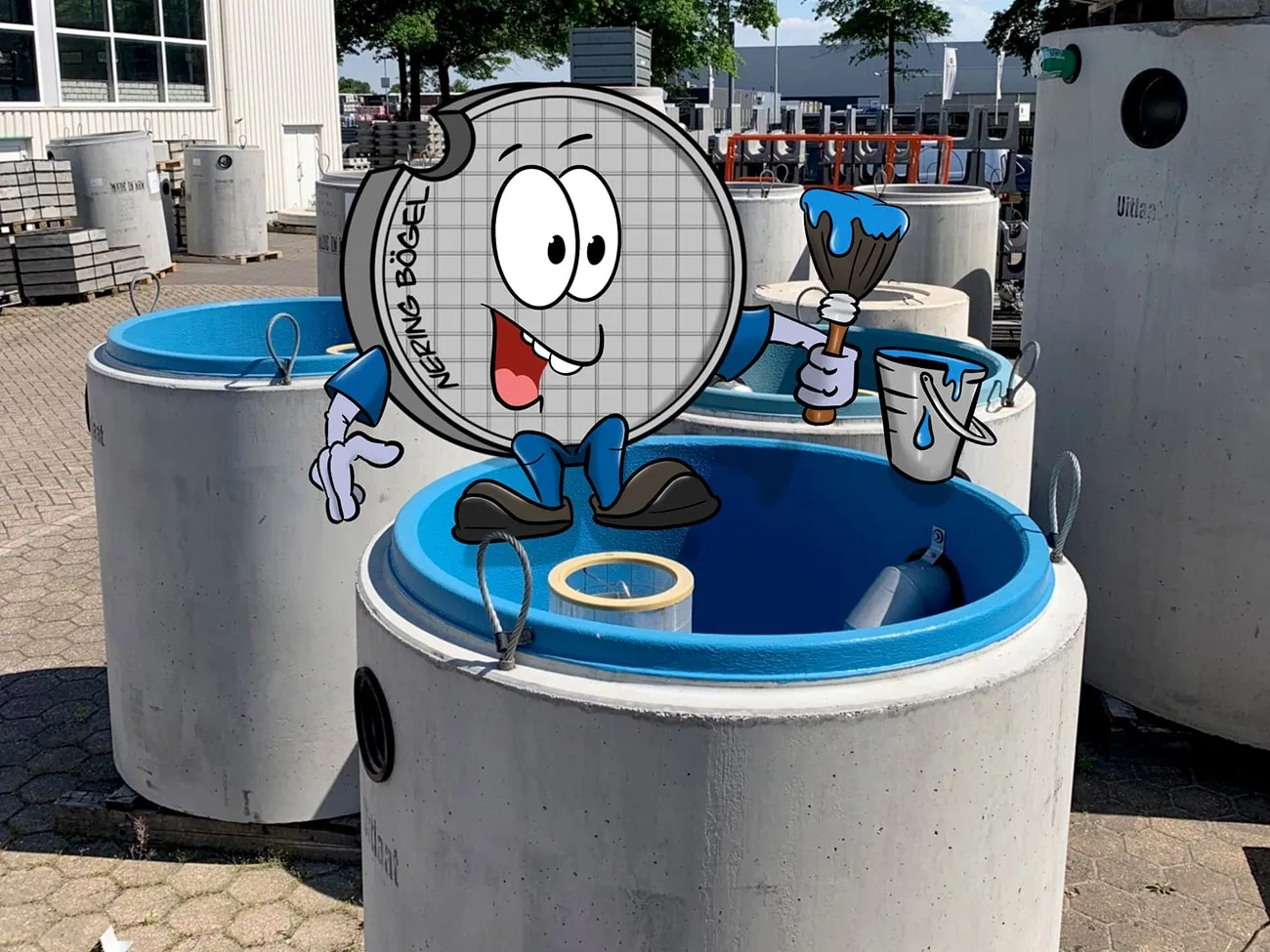
Since a separator must remain watertight while also resisting the hazardous contents, which are often aggressive to concrete, manufacturers apply an internal protective layer. “This is either a concrete coating or a cast-in HDPE lining. Under the CE requirements, these coatings and linings must be tested and approved for chemical resistance. These are costly, long-term tests using highly aggressive media. Manufacturers must be able to demonstrate that testing has been carried out if asked. But that is where the crux lies once again: who asks? Under the CE standard, an internal lining is not mandatory. Anyone who knows a little about concrete will understand that acidic liquids and the organic breakdown products in a separator’s contents will slowly eat away at it. You would think the importance of a lining or coating would be obvious to everyone. Yet in practice, more and more separators are being sold without an internal protective layer. It is fair to ask whether that concrete has been tested. And if it has, who guarantees that the concrete separator will remain intact and strong for 20 years?”
Watertightness is crucial
It goes without saying that a separator must be completely watertight and remain so throughout its entire service life. The CE requirements are strict on this point. All joints in the separator structure must also be watertight, and the primary seals that come into direct contact with the separator contents must also be chemically resistant to those contents. Janssen says: “That means using NBR (nitrile rubber) seals. The secondary seals, between the chamber and cover slab and between the components of the riser, can be made from a lower-grade rubber, such as SBR. Watertightness must be demonstrated for CE marking. In practice, this is achieved by combining a chamber with a bolted cover slab and a flat joint with a rubber seal, or by using a socket-and-spigot joint with a rubber seal. By now, it will come as no surprise that chambers are also being installed with nothing more than a mortar joint between the chamber and cover slab. Perhaps the idea is that ‘a mortar joint turns the chamber and cover slab into a single unit’? Tests show, however, that a mortar joint between the chamber and cover slab is certainly not watertight under a 5-metre water head, making it a potential source of soil pollution. And that is without considering whether the mortar joint can withstand the aggressive contents of the separator over a 20-year service life.”
There is more to it
“The EN 476 standard is linked to the separator standards for access shafts and is therefore part of CE marking. EN 476 clearly states that an access shaft must have a minimum diameter of 60 cm up to a maximum height of 45 cm. If the shaft needs to go deeper, it must widen from a depth of 45 cm to at least 800 mm, up to a maximum shaft diameter of 1000 mm. There are shortcomings in this area too. In practice, we all too often see towers 1 metre deep installed on top of separators, made up of nothing but concrete rings without seals, with a diameter of 60 cm or even less.”
The conclusion is clear: the expertise and materials needed to ensure a concrete separator operates safely for 20 years are readily available. In practice, however, major cost-cutting on quality means that products that pose a literal environmental hazard are being installed underground. “It is time to recognise that this is the wrong way to save money. There is only one right way forward if we are to protect the environment from the disastrous consequences of leaks from oil and grease separators. As the purchasing party, simply take responsibility and do not immediately opt for the cheapest supplier if they are offering an inferior product,” Janssen concludes.
Question about this story? Ask your question
Keep following this
Get an email when a new story is published. No account needed.
- SubjectNews







